Home Blog Page 123

How to Choose the Best Ecommerce Fulfillment Services

0

If your ecommerce online retail store consistently struggles to manage order fulfillment, that’s a clear sign that it’s the right time to consider outsourcing these tasks to expert third-party logistics companies. Fulfillment has become increasingly important for online retailers because it is the most important factor that determines overall customer satisfaction. Choosing the right 3PL firm to partner with to streamline your order fulfillment processes can make a huge impact on growth. Not meeting consumer expectations can lead to missed orders, shipping problems, and terrible customer shopping experiences. However, maintaining an efficient and profitable business requires you to avoid missing orders and shipping errors by investing in top-tier fulfillment centers.

3 Ways to Choose The Best Ecommerce Fulfillment Services

There are several ecommerce fulfillment companies in the US that help businesses take care of consumer orders. But with so many different options out there, choosing the right partner can be challenging. Online retailers should understand that fulfillment entails more than a daily grind. It’s one thing that can negatively affect margins. Whether you choose to partner with a 3PL or adopt a hybrid model, you can greatly improve your operational efficiency through effective order fulfillment. Here are the top four key factors to consider to help you select the right ecommerce fulfillment service provider.

  1. Industry Knowledge

Ecommerce brands should want to work with fulfillment service providers with in-depth knowledge of their industry. Good fulfillment is not a generic service, but a tailored one. Experienced third-party logistics companies like Packageman have a great understanding of the most common fulfillment challenges confronting retailers in various niches. Whether you want to optimize your subscription box fulfillment or find the best way to handle fluctuating demands of peak seasons, collaborating with expert fulfillment partners who know your business needs is essential for success.

  1. Technology Integration

It’s also necessary to ensure that the ecommerce fulfillment services provider you use has advanced technology integration, including strategic warehousing solutions to keep your business up to date. As a tip, using 3PLs with digital platforms that can easily integrate into your existing systems is a great advantage. If a third party logistics platform can seamlessly plug into your ecommerce website and order fulfillment systems, that can make it easier to use a single dashboard to monitor the state of your inventory and other stuff simultaneously.

  1. Access to Multiple Carriers

Another great way to guarantee seamless order fulfillment is to choose service providers that have partnerships with multiple carriers to improve delivery time. Rising fuel prices has had a negative impact on shipping cost around the world. With many 3PL fulfillment providers dealing with thousands of parcels weekly on the behalf of clients, ecommerce brands should try to negotiate for the cheapest shipping rates to gain a competitive advantage. Order fulfillment partners with strong networks and industry-leading carriers can offer your ecommerce business access to more convenient delivery options.

Efficient fulfillment in ecommerce includes properly handling every task ranging from product locating within your inventory to correctly picking and packing, and choosing a reliable carrier to ensure that all ordered products reach the final consumer in time. Studies show that about 70% of potential customers visiting an ecommerce site abandon their carts before purchasing, with 22% citing delivery time as a key factor. High-speed shipping, like same-day shipping services offered by Packageman 3PL, is a great tool for any ecommerce business looking to impress buyers and maintain loyalty with innovative order fulfillment. Considering essential factors like customer satisfaction, shipping rates, technology integration, and industry knowledge can help you choose a great fulfillment partner.


Fatima Bosch Fernandez of Mexico Crowned Miss Universe 2025; India’s Manika Vishwakarma Reaches Top 30

0

Fatima Bosch Fernandez of Mexico has been crowned Miss Universe 2025. India’s representative, Manika Vishwakarma, secured a place in the top 30, but could not advance to the top 12.

Fatima Bosch made headlines earlier during the sash ceremony when she protested against Miss Universe Thailand director Nawat Itsagrisil, who allegedly called her a “dumbhead.” The incident escalated when the director called security, prompting all contestants to walk out in solidarity against the misbehavior.

Fatima Bosch of Mexico has officially won the Miss Universe 2025 title. She is the same contestant who had confronted director Nawat during the sash ceremony controversy.

During the Miss Universe 2025 finale, contestants were asked hard-hitting questions about gender equality, representation, and the evolving challenges faced by women around the world.

Miss Mexico and newly crowned Miss Universe 2025, Fatima Bosch, was asked:
“From your perspective, what are the challenges of being a woman in 2025, and how will you use the title of Miss Universe to create a safe space for women around the world?”

Fatima responded with a strong message of solidarity and activism:
“I will use my voice for others. We are here to speak out, to make change, and to achieve. We are women, we are brave, and we are the ones who make history.”

Her answer drew applause for highlighting courage, collective empowerment, and the responsibility of using global platforms for advocacy.

Olivia Yasay of Côte d’Ivoire faced a similarly impactful question:
“If you were to win the Miss Universe title today, how would you use this platform to empower young girls?”

She delivered an inspiring vision for future generations:
“As Miss Universe, I would like to be the face of a new generation, representing culture and tradition. I would like to be the new face of this era — a woman who is bold, a woman who is a leader, who is not ashamed of who she is. If I become Miss Universe, I will be a role model for young girls and show them that you can do it too. Go and shine in places where you think there is no place for you.”

Both responses reflected the evolving narrative of global pageants — where beauty is matched with purpose, leadership, and the power to influence change.

Fatima Bosch Fernandez of Mexico Crowned Miss Universe 2025; India’s Manika Vishwakarma Reaches Top 30

Winter Wellness: Why beetroot and seasonal foods are your body’s natural shield

0

Winter wellness: The beetroot boost your body didn’t know it needed
Most people drink beetroot juice for its colour, but its power goes far deeper. As nutritionists explain, having beetroot juice on an empty stomach dramatically improves your body’s uptake of iron, vitamins and antioxidants because no competing foods interfere with absorption. This becomes even more crucial in winter, when our metabolism slows and blood pressure tends to fluctuate.


Beetroot’s natural nitrates help in lowering blood pressure, improving oxygen flow, and supporting heart health, something especially beneficial in the colder months when circulation often drops. Its fibre also keeps digestion stable, an underrated winter challenge.

When the season changes, so should your plate
Modern diets have become so uniform that we forget our bodies intuitively respond best to what grows in the current season. Winter produce: carrots, radish, amla, spinach, bathua was designed by nature to strengthen the body exactly when it needs protection.
Carrots, for example, are at their sweetest in winter because the cold converts starch into natural sugar. This not only makes them tastier but also richer in beta-carotene, which boosts immunity and supports vision.
Radishes work silently to detoxify the liver, helping the body handle heavier winter meals.
Amla becomes a natural vitamin C powerhouse, giving the body antioxidant support that no supplement can replicate.

Greens that warm the body and calm the gut
Spinach and bathua are winter’s most healing greens, yet most people don’t know that their mineral profile actually helps maintain body warmth. Bathua in particular has a gentle gut-healing effect; traditional households even use bathua raita as a home remedy for winter bloating and acidity. These greens provide folate, iron and fibre that urban diets often lack, making them essential for fighting seasonal fatigue.

Nature’s winter secret: timing is everything
Beetroot juice works best on an empty stomach in the morning, while amla is most effective if eaten fresh or as murabba during daytime. Carrots and greens are best consumed for lunch, when digestion is stronger. Radish, surprisingly, is best eaten before sunset to prevent gas.

Winter nutrition is not about trends, it’s about returning to rhythms our ancestors trusted. And your body still trusts them too.

Children’s Day for Whom? As Adults Celebrate, Kids Collapse Under Bullying, Beatings and Academic Pressure

0

India celebrated Children’s Day on November 14 and World Children’s Day on November 20 with enthusiasm—hashtags trended, leaders sent warm wishes, and social media was flooded with colourful posts about hope, joy, and the “future of the nation.”
But behind these festive posts lies a dark, uncomfortable truth that few dared to discuss: India’s children are crying silently, suffocating under pressure, and dying unheard.

The most heartbreaking reminder came from Jaipur, where 10-year-old Amayra, a Class IV student of the prestigious Neerja Modi School, died by suicide. A child who should have been drawing butterflies in her notebook ended up taking the most tragic step imaginable.

The details are devastating.

Amayra had repeatedly begged her teacher for help, pleading with folded hands to protect her from relentless bullying by classmates. She cried, she complained, she tried everything a child could do to escape that trauma. But no action was taken.
Reports said that there was no anti-bullying committee in the school—an essential requirement under CBSE rules—and shockingly, no representative from the school has contacted the grieving family till date.

Even though the Education Minister and the Deputy Chief Minister visited the parents and promised strict action, the family continues to wait.

This tragedy was not isolated.

On World Children’s Day itself, another horrific case emerged from Karauli, where a student ended his life after allegedly being beaten brutally by his teachers. Before dying, he told his parents, “If you want me to be happy, put my teachers behind bars.”

Across the nation, such stories appear with frightening regularity.
In Kota, the coaching hub of the country, suicide has become so routine that it barely shocks anymore. Every few weeks, another student’s life crumbles under the crushing weight of expectations, competition, and loneliness.

So, on days when we post cheerful messages about our “precious children,” we must ask:

  • Are we giving them a life worth celebrating?
  • Why are our schools and coaching centres escaping accountability?
  • Who is monitoring teachers, institutions, counsellors—or the lack of them?
  • How many more children must die before the system wakes up?

The biggest sufferers are the parents—helpless spectators who lose everything, yet continue to fight a system that has repeatedly failed them.

Children’s Day wishes mean nothing when children are dying unheard.
The nation owes its kids more than smiles and social media posts—
it owes them protection, dignity, and the right to live.

Circulate this post till it awakens each parent to come forward and give justice to tiny soul Amayra who was too small to take this big step, to this student in Karauli who might have dreamed of some good career and to every student who succumbed under pressure…

Let’s pledge to releive this society from creating such cookers where students are succumbing under pressure.

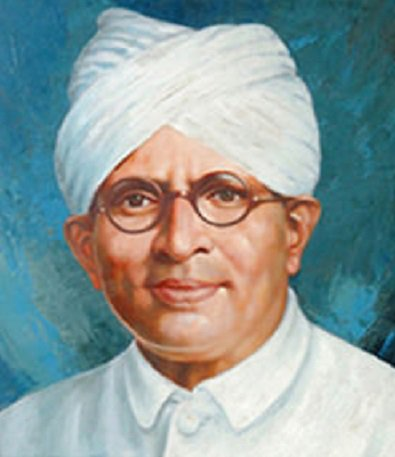
Walchand Hirachand: The Man Who Dreamed a Nation Into Motion

0

Walchand Hirachand: Long before India became an independent nation, one man dared to imagine an India that could build its own ships, fly its own planes, and drive its own cars. He was Walchand Hirachand Doshi (1882–1953) an industrialist who was a dreamer of impossible dreams, a visionary who believed that self-reliance was not just a political ideal but an industrial mission.

At a time when India was still under colonial rule and modern industries were scarce, Walchand set out to create what had never been attempted before. He founded India’s first aircraft factory, shipyard, and car manufacturing unit—each one a symbol of courage, ambition, and unshakeable belief in the country’s potential.

According to his Marathi biography, Walchand Hirachand played a pivotal role in building the foundation of India’s modern transport industry, which later became a driving force of the nation’s industrial growth. At a time when the British Indian government offered little support and largely acted in its own colonial interests, Walchand dared to “make in India” long before the slogan existed.

Earnest Beginnings

Born in 1882 into a well-off Doshi family in Sholapur, Walchand lost his mother days after birth and was raised by his aunt. His father, Hirachand, a cotton trader-turned-moneylender, moved the family to Bombay, where he ensured Walchand received higher education at St Xavier’s College. However, frequent plague outbreaks forced the family to move between Bombay and Poona, and the tragic loss of two elder brothers compelled Walchand to abandon his studies and support his father.

After an early setback in cotton trading, Walchand shifted to supplying firewood to mills—a move that proved profitable. A chance meeting with Laxman Balwant Pathak led him to railway contracting. Their first project, laying a line between Yedhi and Tadwal, launched Walchand into a rapid rise. Keen to master engineering and cost management, he soon bagged major contracts in Bombay, including challenging stretches between Reay Road and Kurla and between Vikhroli and Bhandup.

Venturing Into Shipping

During World War I, Walchand earned the Army’s confidence through profitable construction projects. After the war, shipping became his next frontier. Encouraged by an associate of the Gwalior Maharaja, he purchased his first ship, Loyalty, even though he knew nothing about the field. His biggest rival was the British India Steam Navigation Company, which dominated Indian waters for decades.

Despite initial losses, Walchand expanded his fleet by acquiring six cargo ships in Liverpool. Unable to access major ports due to British control, he operated from smaller ports like Porbandar, trading with Burma and Java, and became the first Indian to run a shipping company with an all-Indian crew.

In 1941, after two decades in shipping, he founded India’s first modern shipyard—Scindia Shipyard—in Visakhapatnam. Rajendra Prasad laid the foundation stone, and India’s first fully built ship was launched in 1948. The company later became Hindustan Shipping Limited.

Giving Wings to Indian Aviation

In 1939, a U.S. visit inspired Walchand to set up an aircraft manufacturing unit in India. With support from the Mysore State, which provided 700 acres near Bangalore, he founded Hindustan Aircraft Limited (HAL) on December 23, 1940. The runway and main buildings were completed in just three months. By March 1941, HAL had produced its first aircraft, the Harlow PC-5 Trainer. During World War II, the company became vital to Allied operations and was nationalised in 1942. After Independence, HAL evolved into Hindustan Aeronautics Limited, now the backbone of India’s defence aviation.

The Race to Build India’s First Car

Walchand had also envisioned an Indian-made car. In 1939, he approached Chrysler and visited major U.S. auto plants. But World War II halted automobile production in America, and delays in India slowed his plans. Rival industrialist G.D. Birla was also pursuing a car factory, but a proposed partnership did not materialise.

With support from Sir M. Visvesvaraya, Walchand founded Premier Automobiles in 1944. The company secured licences to produce Plymouth cars and Dodge trucks, beginning production in 1949. Later, it partnered with Fiat to manufacture the iconic Premier Padmini, a household name in the 1970s and 80s.

Walchand retired in 1950 due to ill health and passed away in 1953. While names like the Tatas and Birlas dominate India’s industrial narrative, Walchand Hirachand remains a remarkable yet under-recognised pioneer who shaped India’s shipping, aviation, and automobile industries

Walchand Hirachand reminded India of a simple truth—
that the future belongs to those who build it.

Who Was Jhalkari Bai, The Warrior Who Became A Part of 1857 Revolt With Rani Lakshmibai

0

Jhalkari Bai (22 November 1830 – 4 April 1858) was one of the most remarkable yet lesser-known warriors of the Indian Rebellion of 1857. A fiercely courageous Dalit woman soldier, she rose from humble origins to become a trusted advisor, strategist, and frontline fighter in the army of Rani Lakshmibai of Jhansi.

Early Life and Training

Born in a family in the Jhansi region to Suba Singh and Jamuna Devi, Jhalkari Bai’s father trained her in horseback riding, archery, weapon handling, and martial skills. Legends from Bundelkhand describe her extraordinary bravery—once driving away dacoits single-handedly, and in another instance, killing a tiger with an axe.

Entry into Rani Lakshmibai’s Army

Jhalkari Bai married a soldier in the Jhansi army. During a festival at the Jhansi fort, Rani Lakshmibai noticed her striking resemblance to the queen herself. When informed about Jhalkaribai’s skills and courage, the queen inducted her into the Durga Dal, the women’s regiment of the Jhansi army. Soon, she became a close confidant and military advisor to the Rani.

Role in the 1857 Revolt

In 1858, when British forces under Field Marshal Hugh Rose attacked Jhansi, Jhalkari Bai played a crucial strategic role. After betrayal by a commander weakened Jhansi’s defenses, Rani Lakshmibai fled to regroup her forces.

To protect her queen, Jhalkari Bai disguised herself as Rani Lakshmibai and infiltrated the British camp. Her uncanny resemblance created massive confusion among the British troops, delaying their advance and allowing the real queen to escape. Jhalkaribai continued fighting until her death on 4 April 1858, defending her motherland.

Legacy

Jhalkari Bai is revered across Bundelkhand—particularly among Dalit communities—as a symbol of courage and sacrifice. Her birth anniversary is celebrated as Jhalkaribai Jayanti.
A statue of her was installed in Gwalior in 2001, and the Government of India issued a commemorative postage stamp in her honour.

She remains one of the greatest unsung heroines of India’s freedom struggle—brave, loyal, and unforgettable.

56th IFFI Begins: Four Anupam Kher Films Screened — “A First in the History of Cinema,” Says Actor

0

The 56th International Film Festival of India (IFFI) opened today in Panaji, Goa, with Bollywood veteran Anupam Kher, filmmaker Shekhar Kapur, and Telugu star Nandamuri Balakrishna inaugurating the Waves Film Market. The festival runs from November 20–28, showcasing some of the finest films from across the globe.

Four Anupam Kher Films Selected

Anupam Kher expressed immense joy as four of his films—each in a different category—have been selected for screening at IFFI 2025. The films include:

  • “Tanvi the Great” – Indian Panorama
  • “The Bengal Files” – International Section
  • “1942: A Love Story” – Special Screening
  • “Kalari” – Canadian film by Indo-Canadian director Isha Marjara

“Kalari” will also host a masterclass at the festival.

Calling the rare achievement an “unofficial retrospective,” Kher said, “I don’t think any actor has had four films selected in different sections at a single festival in the history of cinema. I say this with love and humility.”

‘Giving Up Is Not a Choice’: Kher’s Masterclass

The actor, who has been attending festivals since 1984—when Saaransh was first screened—said he is thrilled with Goa’s growing identity as a global cinema hub.

Kher will conduct a masterclass titled “Giving Up Is Not a Choice.” He shared that over the years he has shaped his sessions to inspire aspiring artists, writers, and directors.
“People assume those with a name are always successful. But in 41 years, my life has seen many ups and downs. I’ve never given up, and that’s what I want young filmmakers to understand.”

Celebrating Cinema

Earlier on social media, Kher wrote that being able to showcase such diverse work—productions from home banners, collaborations with filmmakers like Vivek Agnihotri, and international cinema—feels special after a career spanning 41 years and 549 films.

“Very few actors get an opportunity like this at such a prestigious festival. See you all in Goa! Let’s celebrate the spirit of cinema.”

Indian-born Cheetah Mukhi Gives Birth to Five Cubs at Kuno: Know Cheetah History in India and Details on Project Cheetah too…

0

In a landmark moment for India’s wildlife conservation, Mukhi, a cheetah born at Kuno National Park in 2023 to Namibian female Jwala, has given birth to five healthy cubs. This is the first time a cheetah born in India has reproduced—an encouraging sign that the species is adapting well to Indian habitats.

Madhya Pradesh Chief Minister Mohan Yadav and Union Environment Minister Bhupender Yadav announced the news, calling it a major milestone for Project Cheetah, launched in 2022 to revive a species that disappeared from India more than seven decades ago. The large litter also lifts hopes for establishing a self-sustaining cheetah population, with Kuno now recording a cub survival rate higher than the global average.

A Species Lost and Found

Cheetahs once ran wild across India—from Punjab and Rajasthan to the Deccan Plateau. Mughal emperors and Indian royalty famously used them as hunting animals, a tradition that eventually contributed to their decline. Excessive trapping, habitat loss, trophy hunting during the British Raj, and a bounty system pushed the species to the brink.

The last three known cheetahs were killed in 1947, and in 1952, India officially declared the cheetah extinct.

The Return to Indian Grasslands

India began correcting that ecological loss in September 2022, when African cheetahs were reintroduced to Kuno National Park under one of the world’s most ambitious wildlife relocation programmes.

Mukhi’s successful litter marks a turning point—a signal that the species is beginning to settle, breed, and rebuild its future on Indian soil. Conservationists hope this momentum will help restore the balance of India’s grassland ecosystems and bring the world’s fastest land animal back to its historic home.

From IPC to English Classrooms: The Colonial Blueprint Macaulay Left Behind

0

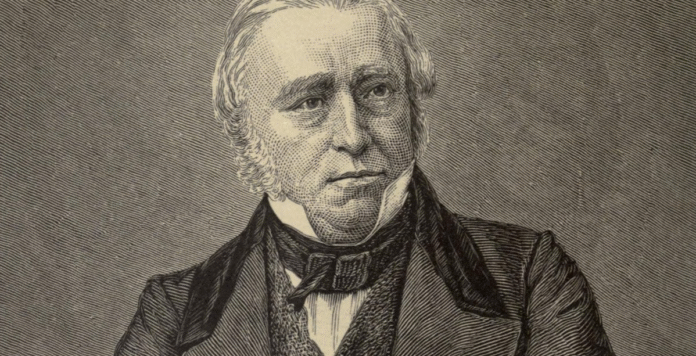
Why PM Modi says India paid a “heavy price” for one man’s philosophy. At the Sixth Ramnath Goenka Lecture, PM Narendra Modi reignited a powerful question: Did Thomas Babington Macaulay shape modern India or silently weaken its spirit? Modi called Macaulay’s mindset “his biggest crime,” accusing him of creating a class of Indians who were “Indian by appearance but British at heart.” According to the PM, this colonial psychology shattered national confidence and planted a long-lasting inferiority complex.

But who was this man whose ideas continue to guide India’s laws, schools, and mindset?

Macaulay: The Man Behind the Machinery
Early Life: A Childhood That Hardened Him

  • Born: October 25, 1800
  • Eldest of nine siblings
  • Sent to boarding school at 13, separated from family, bullied, and emotionally scarred
    Historians note these early experiences made him deeply protective of his own circle, yet harsh and uncompromising toward opponents, a duality that shaped his politics in India.

A British Politician Who Suddenly Looked East
By 1832, Macaulay threw himself into Indian affairs as the British Parliament debated the renewal of the East India Company’s Charter.
He complained that Parliament cared more about “minor English incidents” than the governance of millions in India.

The Law Reformer Who Created the IPC
Key Highlights:

  • Arrived in India in 1834 as the first Law Member
  • Chaired the Law Commission
  • Drafted the Indian Penal Code (IPC) in 1837
  • IPC came into force in 1862
  • Its influence spread across almost all former British colonies
    Macaulay had little courtroom experience, yet his sharp mind helped consolidate criminal law into a uniform code. Offences like “sodomy” were criminalised across the empire because of his draft.

The Education Shockwave: The 1835 English Manifesto
The biggest storm, however, came from his Minute on Education (2 February 1835).

What Macaulay Proposed:

  • Create a class of Indians “English in taste, opinions, morals, and intellect.”
  • Use English as the primary medium of education.
  • Close or minimise funding to Persian, Arabic, and Sanskrit institutions.
  • Build elite English institutions instead of mass schooling.
    This decision split Indian society uplifting some, alienating millions.

Two Centuries Later… Still Debating Him
Macaulay’s fingerprints remain on:

  • India’s courts
  • school textbooks
  • administrative structure
  • the dominance of the English language
    And now, nearly 200 years later, India is trying to reverse the blueprint he left behind.

Was Macaulay a moderniser or the architect of mental colonisation?
The debate is far from over.

Catstanbul: Inside the City Where Cats Rule the Streets

0

In Istanbul, the city never walks alone—because a cat is always just a step away.

Turkey’s cultural capital, spread across Europe and Asia, is home to nearly 250,000 street cats who roam freely through mosques, markets, ferries, cafés, and historic alleys. They’re not exactly pets, not quite strays—more like cherished citizens with full community rights.

Photographer Marcel Heijnen, who documented them in City Cats of Istanbul, calls them “a community treasure”. Residents feed them, shopkeepers leave bowls outside their doors, and every municipality runs free veterinary care and neutering services. Even private clinics offer discounts for street cats—proof that Istanbul’s love for felines is more than folklore.

This bond runs deep. During the Ottoman era, the city even had official mancacıs—“cat sitters”—whose job was to feed and protect street cats. And long before that, Phoenician and Ottoman traders brought cats aboard ships to guard precious goods from rodents, creating centuries of coexistence.

Today, visitors find Istanbul’s cats everywhere: sunbathing on ancient walls, curled up on metro seats, or rolling atop yellow taxis. In a bustling city of 15 million, they offer the softest pauses—quiet companions who turn chaos into calm.

When an Istanbul cat hops into your lap amid the aromas of kebab, saffron and grilled corn, the city suddenly feels gentler. That’s why many call it not just Istanbul, but Catstanbul—a city shared by humans, history and a purring population that truly rules the streets.