Home Blog Page 121

Surya Kant to Become 53rd Chief Justice of India. Know His Career, Education and Family Details…

0

Justice Surya Kant is set to assume office as the 53rd Chief Justice of India on 24 November 2025, succeeding Justice B. R. Gavai. His appointment is historic as he will be the first person from Haryana to hold the highest judicial office in the country.

From humble Haryana roots to the Supreme Court


Born on 10 February 1962 in Petwar, a small village in Hisar district of Haryana, Surya Kant grew up in modest circumstances. His father was a Sanskrit teacher; his mother, a homemaker. As a child, he studied in a village school with no benches students sat on the floor. Even while in school, he helped with farm work to support his family.
He graduated from Government Post Graduate College, Hisar in 1981, and went on to earn his LL.B. from Maharishi Dayanand University, Rohtak, in 1984.

A steady legal climb


Justice Kant began his legal career in 1984, practicing at the District Court in Hisar. Just a year later, he shifted to Chandigarh to work in the Punjab & Haryana High Court, specializing in constitutional, service, and civil

At just 38 years old, he became the youngest Advocate General of Haryana on 7 July 2000, and a year later, was designated a senior advocate. In 2004, he was appointed a permanent Judge of the Punjab & Haryana High Court.
In 2007, he was nominated to the Governing Body of the National Legal Services Authority (NALSA) for two terms terms (2007-2011)

Academic excellence and judicial leadership


Never one to set aside learning, Justice Kant completed his LL.M. in 2011 via distance education from Kurukshetra University, graduating First Class First.
He became Chief Justice of the Himachal Pradesh High Court on 5 October 2018. On 24 May 2019, he was elevated to the Supreme Court of India.
As of 12 November 2024, he also serves as the Chairman of the Supreme Court Legal Services Committee.

Personal life & values


Justice Kant comes from a close-knit family. According to his profile, he is one of five siblings. He is married to Savita Sharma, a retired college lecturer and principal, and they have two daughters, both pursuing postgraduate law education. Notably, he refused to accept dowry when he married a testimony to his strong moral principles.

What Drives Him


Colleagues and observers describe Justice Surya Kant as a jurist of “deep learning” and “measured wisdom.” He has shown a special sensitivity to public resource protection, land acquisition, compensation rights, and reservation policies.
His background growing up in rural Haryana, studying by the dim light of lamps, and working through adversity gives him a grounded understanding of the struggles ordinary citizens face. As he steps into his role as Chief Justice, many hope his life story will influence a more accessible, empathetic, and principled judiciary.
Justice Surya Kant’s journey from a modest village school to the Supreme Court’s top post is a powerful reminder that perseverance, integrity, and commitment to learning can shape not just a career, but the future of a nation’s justice system.

Op Drishti Eye Camp: Over 2,000 Screened & 400+ Free Eye Surgeries Completed at Command Hospital, Northern Command in Jammu & Kashmir

0

Op Drishti, a first-of-its-kind advanced surgical eye camp in Jammu & Kashmir, was organised at the Command Hospital, Northern Command, Udhampur from November 18–22, 2025. Conducted in collaboration with the expert ophthalmic team from Army Hospital (Research & Referral), New Delhi, the mega camp surpassed expectations by screening more than 2,000 patients and performing over 400 free eye surgeries, including complex cataract, glaucoma, and retinal procedures. Beneficiaries included serving personnel, dependents, Veer Naris, and civilians from remote districts such as Doda, Rajouri, Poonch, Kishtwar, Ramban, and Udhampur.

The surgeries were led by Brigadier SK Mishra, Head of the Ophthalmology Department at Army Hospital (R&R), who is renowned for operating on two former Presidents of India.

During the virtual closing ceremony, Defence Minister Rajnath Singh praised the Northern Command and Armed Forces Medical Services (AFMS) for delivering critical medical support to the people of J&K. Chief of Army Staff General Upendra Dwivedi also addressed the gathering, appreciating the successful execution of this large-scale healthcare outreach. J&K Lieutenant Governor Manoj Sinha attended the ceremony, while Lt Gen Pratik Sharma, GOC-in-C Northern Command, was present on-site.

Op Drishti Eye Camp: Over 2,000 Screened & 400+ Free Eye Surgeries Completed at Command Hospital, Northern Command in Jammu & Kashmir

On November 20, Union Minister Dr Jitendra Singh visited the camp, interacted with patients, and reviewed the hospital’s state-of-the-art ophthalmology facilities. He commended the Indian Army for its humanitarian services, highlighting its crucial role in providing free medical camps and specialised eye care to citizens in peace as well as during crises.

Op Drishti Eye Camp: Over 2,000 Screened & 400+ Free Eye Surgeries Completed at Command Hospital, Northern Command in Jammu & Kashmir

The eye camp transformed lives across the region.
Surinder Singh (72) from Poonch regained vision after 2–3 years of blindness worsened by trauma from Pakistan’s shelling during Operation Sindoor.
Abdullah Shafeeq (56), a retired soldier from Mendhar, helped mobilise conflict-affected residents to benefit from the camp.
Rajkumari Devi (96) experienced restored eyesight after years of visual impairment.

Op Drishti was conceptualised by Defence Minister Rajnath Singh following a request from LG Manoj Sinha. Acting promptly, the Chief of Army Staff directed AFMS leadership to create a fully equipped specialised surgical eye camp in Udhampur, ensuring world-class ophthalmic care reached underserved populations of Jammu & Kashmir.

Udaipur’s Grandest Wedding of 2025: Netra Mantena and Vamsi Gadiraju’s ₹300-Crore Celebration Making Headlines. Watch Pics and Videos

0

Udaipur is glittering like a dream these days as the wedding of Netra Mantena and Vamsi Gadiraju transforms the City of Lakes into a global celebration venue. Lavish lights, grand floral décor, luxury convoys, and continuous VIP movement have turned the city into what looks like an extravagant film set. This is not a royal wedding, yet its scale has surpassed many royal celebrations. The daughter of Indian-American billionaire Ramaraju (Raju) Mantena, Netra is marrying Vamsi Gadiraju in what is being widely described as the most expensive wedding of 2025, with an estimated cost of around ₹300 crore.

The wedding has drawn over 125 elite guests from 40 countries, making it an international spectacle. From Bollywood stars to top global celebrities, including Donald Trump Jr., Justin Bieber, and Jennifer Lopez, the guest list resembles that of a Hollywood gala. Amid the celebrations, one iconic symbol of Raju Mantena’s wealth has resurfaced in public memory — the famous 28-kilogram gold “Sahasranama Mala” he donated to the Tirupati Balaji Temple in 2017. Studded with 1,008 gold coins bearing inscriptions of Lord Venkateswara, the offering was then valued at ₹8.36 crore and remains one of the most talked-about temple donations in recent history.

Raju Mantena, known for his philanthropic contributions and luxurious lifestyle, frequently makes headlines. In 2023, he purchased a ₹400-crore mansion in Manalapan, Florida — a 16-bedroom waterfront property equipped with stables, a private pool, and advanced security systems. Though based in the US, he maintains deep ties with Indian traditions and spirituality, a fact reflected in his grand offerings and culturally rooted celebrations.

The groom, Vamsi Gadiraju, is a rising star in the tech world. A Columbia University graduate and co-founder of the AI company Superorder, he was named in Forbes’ ‘30 Under 30’ list in 2024. His company builds AI-driven tools to streamline restaurant operations and has developed an innovative system capable of creating a full restaurant website through voice input. With an estimated valuation of $18–25 million, Gadiraju represents the new generation of global Indian innovators.

The wedding ceremonies will continue until November 24, spread across iconic Udaipur landmarks, from floating decorations on Lake Pichola to high-security arrangements and entertainment by international stars. With its sheer extravagance, global guest list, and emotional cultural connect, the Mantena–Gadiraju wedding has firmly established itself as one of the grandest celebrations India has ever witnessed.

National Integration Tour: Manipur Students Visit Cultural Sites of Jaipur and Sapta Shakti Command

0

As part of the National Integration Tour, students from Churachandpur, Manipur, visited Jaipur and Headquarters Sapta Shakti Command to experience the rich cultural heritage and vibrant history of Rajasthan, as well as the pivotal role of the Indian Army in nation-building.

During their visit on November 22, 2025, the students had the unique opportunity to interact with Lieutenant General HS Vandra, Chief of Staff, Sapta Shakti Command. The interaction offered valuable insights into the ethos and leadership of the Indian Army and its continuous efforts toward fostering unity, inclusivity, and national integration. The participants expressed deep appreciation for the Army’s role in safeguarding India’s diversity and strengthening social harmony.

National Integration Tour: Manipur Students Visit Cultural Sites of Jaipur and Sapta Shakti Command

The touring group also explored several iconic landmarks of Jaipur, including Amer Palace and Fort—symbols of Rajput grandeur and architectural brilliance—Birla Planetarium, Hawa Mahal, local markets such as Bapu Bazaar, Jal Mahal set amid the tranquil waters of Man Sagar Lake, and Nahargarh Fort overlooking the Pink City. The visit to Gaurav Tower offered a glimpse of the modern, youthful spirit of Jaipur.

National Integration Tour: Manipur Students Visit Cultural Sites of Jaipur and Sapta Shakti Command

The tour provided the students with a memorable blend of cultural education, historical awareness, and meaningful engagement with senior Army leadership. It further strengthened their understanding of India’s unity in diversity and inspired them to contribute positively to a harmonious and progressive nation, said Lt Col Nikhil Dhawan, PRO Defence, Rajasthan.

Australia Under-16 Social Media Ban

0

Australia has expanded its forthcoming national ban on social media use for those aged 16 and under by adding Twitch to the restricted platforms list. The update comes ahead of the law’s rollout on 10 December, making Australia the first country to impose such wide-ranging age-based restrictions on social media access.

Revised List of Restricted Platforms

Regulators confirmed that Twitch will join major platforms such as Instagram, TikTok and Snapchat under the ban. Companies that fail to take reasonable compliance measures may face penalties reaching 49.5 million Australian dollars. Pinterest, however, has been excluded after assessments found its content generally low-risk compared with services known for real-time or high-engagement interactions.

Rationale Behind Targeting Twitch

Authorities highlighted Twitch’s live-streaming model as a primary concern. Real-time broadcasts allow unfiltered interactions that can expose minors to harassment, explicit material and harmful behaviour. Officials argue that the platform’s limited safeguards for spontaneous content make it unsuitable for young users under the new policy framework.

Part of a Broader Online Safety Overhaul

The decision forms part of reforms under the Online Safety Act, which is undergoing review due to concerns about screen addiction, grooming risks and exposure to inappropriate content. The government maintains that strong restrictions are necessary to protect mental health and prevent cyberbullying among teenagers, though critics warn the approach may limit access to educational and creative communities.

Facts

  • Australia’s age-based social media ban for under-16s takes effect on 10 December.
  • Non-compliant platforms may face penalties up to 49.5 million Australian dollars.
  • Twitch was included due to risks from unfiltered live-stream interactions.
  • Pinterest remains accessible because of its comparatively low-risk content model.

Industry Response and Expected Impact

Twitch has yet to issue an official reaction, though analysts predict a significant impact on its Australian audience due to strong youth participation. Pinterest welcomed its exclusion, reinforcing its positioning around inspirational and moderated content. Observers expect ongoing debate as the new restrictions test the balance between digital safety and online access for young users.

Oscars 2026: Animation, Documentary and International Films Announced

0

The Academy of Motion Picture Arts and Sciences has released the full list of films eligible for the 98th Oscars across Best Animated Feature, Best Documentary Feature and Best International Feature categories. This year’s lineup features a diverse global mix, including major streaming hits, animated blockbusters and acclaimed international titles.

Strong Contenders in Best Animated Feature

Netflix’s global success “KPop Demon Hunters” headlines the list of 35 eligible animated features. Its qualifying theatrical run in key US cities ensured compliance with Academy rules. Other major entries include Disney’s “Elio” and “Zootopia 2,” Neon’s “Arco,” GKids’ “Little Amelie or the Character of Rain,” Japan’s “Demon Slayer: Kimetsu no Yaiba Infinity Castle,” and India’s high-grossing “Mahavatar Narsimha.” Notably, China’s “Ne Zha 2” is absent from the list.

Record Submissions in Documentary Category

The documentary feature race has attracted 201 submissions, the highest among all categories this year. Members of the documentary branch will vote to produce a shortlist of 15 films on 16 December, which will later be narrowed to five official nominees. A number of high-profile investigative, cultural and historical documentaries are expected to compete intensely for limited slots.

International Feature Race Gains Momentum

A total of 86 international films have been deemed eligible, representing varied cinematic traditions worldwide. Notable entries include “Homebound” from India, “Sentimental Value” from Norway, “Sirat” from Spain, “The Secret Agent” from Brazil and “The Voice of Hind Rajab” from Tunisia. Several titles, including the co-produced “2000 Meters to Andriivka,” are competing in both the documentary and international categories.

Facts

  • There are 35 eligible films in the Best Animated Feature category.
  • The documentary category received 201 submissions, the highest among all sections.
  • International feature submissions total 86 for the 98th Oscars.
  • Shortlists for animation, documentary and international categories will be announced on 16 December.

Anticipation Builds Ahead of Nominations

Fans are closely watching whether “KPop Demon Hunters,” regarded as a strong contender, secures a nomination on 22 January. Its original song “Golden” is also in contention in the Best Original Song category. Winners will be announced when the 98th Academy Awards airs live on 15 March, marking the climax of a highly competitive awards season.

150 Years of Vande Mataram: A Melody That Became a Movement

0

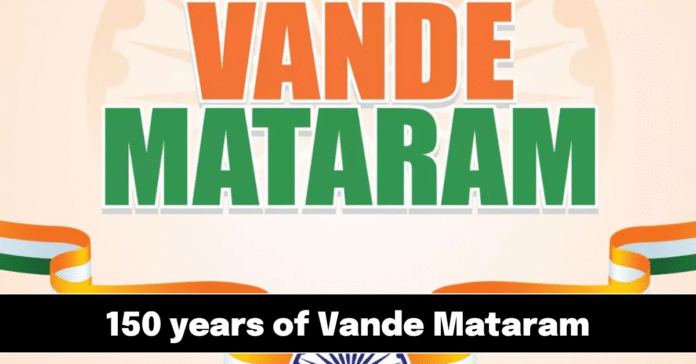
150 Years of Vande Mataram: On 7 November 2025, India commemorates 150 years of Vande Mataram—a timeless salutation meaning “Mother, I bow to thee.” The iconic composition, which stirred the hearts of generations of freedom fighters and nation builders, remains a profound symbol of India’s national identity and collective consciousness.

Written by Bankim Chandra Chatterjee and first published in the literary journal Bangadarshan on 7 November 1875, the hymn was later incorporated into his celebrated novel Anandamath (1882) and set to music by Rabindranath Tagore. Over the decades, Vande Mataram evolved from a literary creation into an anthem of India’s civilizational, cultural, and political awakening. Marking this milestone provides an opportunity to reaffirm its eternal message of unity, sacrifice, and devotion to the motherland.

Historical Background

Understanding Vande Mataram requires tracing its journey from a poetic composition to a national symbol of resistance.

The first publication of the song in 1875 is supported by references such as Sri Aurobindo’s article in the English daily Bande Mataram dated 16 April 1907, where he notes that “thirty-two years ago” Bankim had composed the hymn, though it initially received little attention.

Before Anandamath appeared as a book, it was serialized in the Bengali magazine Bangadarshan, with “Vande Mataram” featured in its very first installment (March–April 1881).

The song’s influence soon crossed borders. In 1907, at Stuttgart, Madam Bhikaji Cama unfurled the first Indian tricolour on foreign soil—bearing the words Vande Mataram.

Anandamath and the Religion of Patriotism

At the heart of Anandamath lies a band of monks, the Santanas, who dedicate their lives to the liberation of their motherland. Their devotion is embodied in the song Vande Mataram, which captures the essence of what Sri Aurobindo described as the “religion of patriotism.”

The Santanas worship the motherland through three symbolic images:

  1. The Mother That Was – magnificent and resplendent,
  2. The Mother That Is – fallen and enslaved,
  3. The Mother That Will Be – restored to glory.

In Sri Aurobindo’s words:
“The Mother of his vision held trenchant steel in her twice seventy million hands and not the bowl of the mendicant.”

Bankim Chandra Chatterjee

Bankim Chandra Chatterjee (1838–1894), one of the tallest figures in 19th-century Bengal, played a decisive role in shaping modern Bengali prose and India’s early nationalist consciousness. A prolific novelist, poet, and essayist, his works—Durgeshnandini (1865), Kapalkundala (1866), Anandamath (1882), and Devi Chaudhurani (1884)—captured the social and cultural anxieties of a colonised society seeking identity.

Vande Mataram stands as his most enduring contribution—an emotional and spiritual invocation of the motherland that laid the ideological foundation for India’s nationalist movement.

Vande Mataram: Song of Resistance

By the early 20th century, Vande Mataram had become a rallying point for political mobilisation.

In 1905, the Bande Mataram Sampradaya emerged in North Calcutta to popularise the hymn as a patriotic mission. Its members organised Prabhat Pheris every Sunday, singing Vande Mataram and collecting voluntary contributions. Rabindranath Tagore himself sometimes joined these marches.

On 20 May 1906, Barisal (now in Bangladesh) witnessed an unprecedented procession of over 10,000 people—Hindus and Muslims alike—marching under the Vande Mataram flag.

That same year, the English daily Bande Mataram, edited by Bipin Chandra Pal and later Sri Aurobindo, became a powerful voice of political awakening. Its fearless editorials inspired nationalism, unity, and self-reliance.

Alarmed by its growing influence, the British administration imposed restrictions. Educational institutions in Eastern Bengal were prohibited from singing Vande Mataram, with warnings of derecognition. Students faced fines, threats of expulsion, and even police action for chanting the slogan.

From Rangpur to Dhulia to Belgaum, punitive measures only strengthened the people’s resolve—turning Vande Mataram into an act of defiance.

Battle Cry for Resurgent Nationalism

During the anti-partition and Swadeshi movements of 1905, the emotional power of Vande Mataram reached its peak. It transcended regional boundaries, echoing from Bengal’s lanes to Bombay’s mills and Punjab’s fields.

Students, leaders, and revolutionaries chanted it at meetings, protests, and even before imprisonment. Despite suppression, the hymn emerged as a unifying moral force, fueling the dream of swaraj and fostering cultural pride.

  • Rabindranath Tagore first sang Vande Mataram at the 1896 Congress Session.
  • In 1905, the Indian National Congress adopted it for all-India events.

By 1950, the Constituent Assembly formally recognised Vande Mataram as India’s National Song—cementing its legacy as the soundtrack of the freedom struggle.

Delhi HC just drew a line around Raj Shamani’s Identity – And it’s a first in India

0

In a first-of-its-kind ruling in India’s creator economy, the Delhi High Court has granted content creator and podcaster Raj Shamani interim protection over his personality rights, officially recognising that his name, face, voice, likeness and digital identity are intellectual property deserving legal protection.

This landmark ruling arrives at a time when AI-driven deepfakes, fake ads, scam endorsements and impersonation accounts have begun threatening the credibility of public figures.

Inside the Case: When Deepfakes Crossed the Line
Shamani approached the court after discovering rampant misuse of his digital persona – AI-generated videos, edited clips, fake endorsements promoting betting platforms and crypto scams, scam Telegram accounts, morphed parody videos, and even unauthorized booking pages offering him for events.

Justice Manmeet Pritam Singh Arora acknowledged Shamani as a well-recognised public figure with established goodwill, making him vulnerable to exploitation. The court restrained known and unknown entities from using any part of his persona for commercial gains without his permission.

What is a John Doe order & why it matters
A John Doe order is a powerful legal injunction issued against unknown persons especially when violations are happening anonymously or through untraceable accounts.
In India, courts pass John Doe orders when:The identity of the offenders is unknown, misuse is widespread across digital platforms, there is a risk of reputational or financial damage and lastly immediate action is required to prevent further harm.

In Shamani’s case, the order enables platforms like Google, Meta, and Telegram to take down infringing content and disclose the Basic Subscriber Information of anonymous violators within 72 hours.

A win for all Indian creators
Beyond personal victory, this ruling sets a judicial precedent affirming that digital identity is real IP. Shamani’s fight now acts as a blueprint for Indian creators dealing with AI misuse, deepfakes, impersonation and fraudulent endorsements.
With the next hearing scheduled for April 24, 2026, enforcement and monitoring will continue as platforms work to curb future violations.

This case marks a pivotal shift, India is finally recognising the legal boundaries of the digital self, and creators are no longer unprotected in the age of AI.

Miss Universe 2025 Erupts in Chaos — Fatima Emerges Stronger Amid Walkouts and Backlash

0

The 74th Miss Universe pageant set in Bangkok, Thailand was meant to be a dazzling celebration of global beauty and empowerment. Instead, it unraveled into one of the most explosive controversies in the pageant’s history, igniting walkouts, resignations, diplomatic reactions, and accusations of rigging.

    The confrontation that started it all
    The storm broke during a pre-pageant meeting when Miss Universe Thailand director Nawat Itsaragrisil launched into a harsh tirade against Miss Mexico, Fátima Bosch, accusing her of failing to promote Thailand on social media. His remarks allegedly included calling her a “dumbhead.”

    The situation escalated so severely that security was summoned to escort Bosch out. Outraged, contestants including Denmark’s Victoria Theilvig walked out in solidarity, defying Nawat’s threat: “If anyone wants to continue the contest, sit down.”

    Backlash goes global
    Social media erupted. Fans, journalists, and even Mexico’s President Claudia Sheinbaum condemned the incident as humiliating and disrespectful. Under immense pressure, the Miss Universe Organization restricted Nawat’s involvement. He later issued tearful apologies twice, attempting damage control.

    Judges resign & rigging allegations erupt
    Just days before the grand finale, controversy deepened. Judge and composer Omar Harfouch resigned, alleging that a “secret committee” had already pre-selected the Top 30. He further claimed conflicts of interest, including an alleged affair between a contestant and a selection committee member.

    Soon after, judge Claude Makélélé withdrew without explanation.
    The Miss Universe Organization denied any impropriety, banned Harfouch from the brand, and reaffirmed the integrity of the evaluation process.

    Amid the chaos, a Queen emerges
    Despite the turbulence, the show went on. Fátima Bosch of Mexico was crowned Miss Universe 2025, earning global praise for her composure and her final message on women’s dignity and empowerment.

    With 122 contestants, high drama, and unprecedented scrutiny, Miss Universe 2025 will be remembered less for its crown and more for the earthquake it caused in the pageant world.

    World Boxing Cup Finals: India lands a perfect punch, Girl power leads Nine-Gold triumph

    0

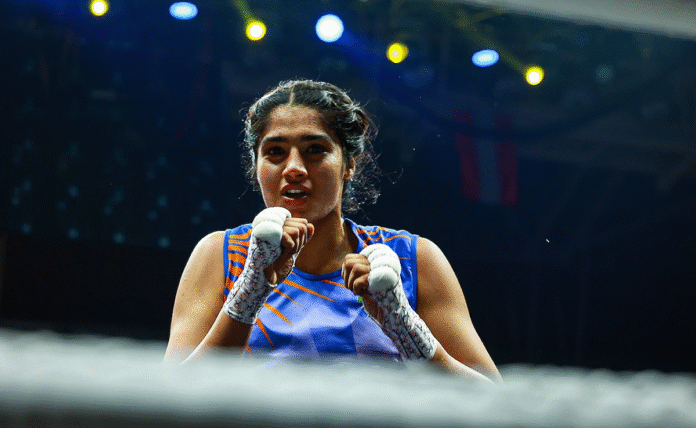
    India delivered a knockout performance at the World Boxing Cup (WBC) Finals, finishing with an extraordinary 20 medals including nine gold, six silver, and five bronze marking one of the nation’s most dominant outings in international boxing.

    Women rule the ring
    The spotlight belonged to India’s women boxers, who powered an inspiring gold rush. Seven women clinched the top podium, including reigning world champions Minakshi Hooda and Jaismine Lamboria, alongside the ever-reliable Nikhat Zareen, who displayed her trademark aggression and precision.

    Their victories come at a time when Indian women athletes are scripting one of the most successful years in the country’s sporting history. Just weeks earlier, the Indian women’s cricket team made headlines by lifting the ICC Women’s Champions Trophy, earning global praise and breaking long-standing barriers in the sport.
    Together, these triumphs signal a powerful shift women aren’t just participating; they’re leading India’s sporting revolution.

    Men bring the heat too
    Adding to the glory were Hitesh Gulia and Sachin Siwach, who struck gold in their respective men’s categories. Both posted dominant wins, keeping the momentum alive and contributing to India’s overall sweep.

    A medal in every category – literally
    As the host nation, India fielded competitors across all 20 weight categories and achieved the rare feat of winning a medal in every single one. This perfect medal record reflects the strength of India’s bench, coaching program, and strategic preparation for a home event of this scale.

    A golden chapter for Indian sport
    The WBC Finals turned into a celebration of India’s boxing revolution, especially the rise of women boxers who continue to redefine excellence. With nine gold medals and a performance that blended precision, power, and passion, India has sent a loud message to the world: a new boxing powerhouse has arrived, and it’s here to stay.
    From the cricket field to the boxing ring, 2025 is emerging as a year where India’s women are leading from the front, inspiring millions and rewriting sporting history. The WBC Finals were not just a tournament they were a declaration: India’s era of unstoppable girl power has officially begun.