Home Blog Page 115

World’s Tallest Shivlingam Measuring 33-Foot Carved with Monolithic Stone Starts A Sacred Journey from Tamil Nadu to Bihar

0

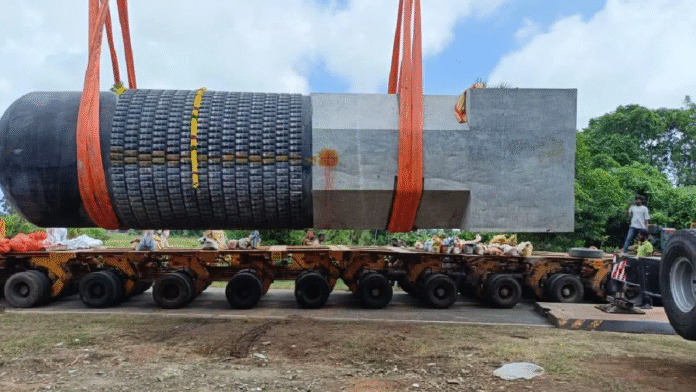
In a rare confluence of faith, craftsmanship and modern engineering, a colossal 33-foot-tall granite Shivling has begun an extraordinary journey from Mahabalipuram in Tamil Nadu to East Champaran in Bihar—a distance of nearly 2,100 kilometres. Believed to be the world’s largest Shiva Linga carved from a single block of granite, the monolith is destined to become the spiritual centrepiece of the upcoming Virat Ramayan Temple, one of India’s most ambitious religious projects.

Weighing an astonishing 210 tonnes, the Shivling is not merely being transported; it is undertaking what devotees are calling a moving pilgrimage, watched and welcomed by thousands along its route.

A Decade Carved in Stone

This monumental Shivling did not emerge overnight. It is the result of nearly ten years of painstaking labour by master artisans in Pattikadu near Mahabalipuram, a region renowned for its ancient stone-carving traditions. Sculpted from a rare diamond granite block sourced from Tirunelveli district, the structure reflects exceptional balance, symmetry and spiritual symbolism.

What sets it apart even further is its intricately designed base, adorned with 1,008 miniature shivlingas, carefully arranged in multiple tiers. This sacred configuration has earned it the revered name “Sahasra Shivlingam”, symbolising cosmic energy and infinite devotion.

An Epic Journey on Wheels

Moving a 210-tonne sacred monolith across India is no ordinary logistical feat. A custom-built 96-wheel hydraulic trailer has been deployed to transport the Shivling, with the journey expected to take 20 to 25 days. Roads are being reinforced, turns carefully calculated and bridges assessed to ensure safe passage.

But beyond engineering, the journey has taken on a deeply spiritual character. Villages and towns along the route are preparing to receive the Shivling with rituals, flowers, lamps and chants, transforming highways into corridors of devotion. For many, witnessing the monolith pass through is akin to a once-in-a-lifetime darshan.

Virat Ramayan Temple: A Spiritual Colossus in the Making

The Shivling’s final destination is Chakia in East Champaran, where it will be installed at the Virat Ramayan Temple, being developed by the Mahavir Mandir Trust, Patna. Planned as one of the largest temple complexes in the world, the structure will stretch over 1,000 feet in length, with towering spires, 22 subsidiary shrines, and grand murals depicting scenes from the Ramayana.

The Shivling is expected to serve as a major focal point of the temple, symbolising the deep spiritual connection between Shaivite devotion and the broader Hindu civilisational narrative.

World Record or Spiritual Benchmark?

While the Shivling is often described as the world’s tallest monolithic Shiva Linga, scholars and experts draw an important distinction. Taller Shiva structures exist, such as the 126-foot Shivling in Assam, but these are typically constructed installations, not single-stone carvings.

The Mahabalipuram Shivling stands apart as a true monolith—carved entirely from one continuous block of granite, placing it in a rare and prestigious category of sculptural achievement.

What Lies Ahead

Once the Shivling reaches Bihar, it will be carefully installed using heavy-lift cranes, followed by the sacred Pran-Pratishtha ceremony, likely scheduled for early 2026. The unveiling is expected to significantly enhance Bihar’s spiritual tourism, drawing devotees, historians, and art enthusiasts from across India and beyond.

As it rolls across the country, this towering symbol of devotion reminds India that even in an age of speed and screens, faith still moves mountains—sometimes, quite literally, on 96 wheels.

Rob Reiner: Know About Director and Actor Found Dead at Los Angeles Home Along with Wife Michele Singer Reiner

0

Rob Reiner death: Hollywood in shock as police investigate “apparent homicide”

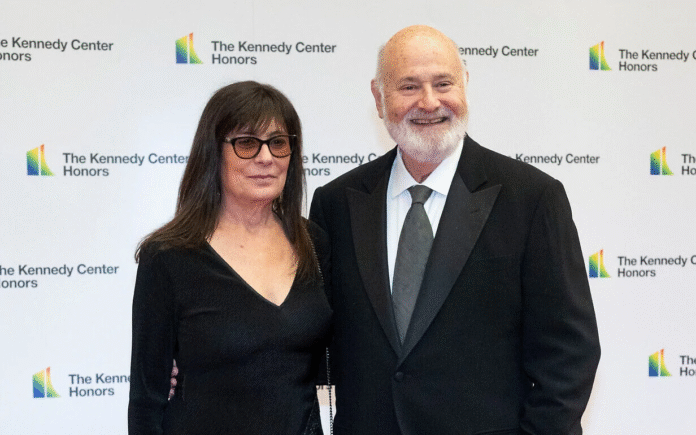
Renowned filmmaker and actor Rob Reiner, best known for classics such as When Harry Met Sally, Stand By Me, The Princess Bride, Misery and This Is Spinal Tap, has been found dead at his Los Angeles home along with his wife, Michele Singer Reiner. Reiner was 78, while his wife was 68.

According to reports, authorities discovered the bodies on Sunday afternoon at Reiner’s residence in Brentwood, Los Angeles, after the Los Angeles Fire Department responded to a medical aid call. The Los Angeles Police Department (LAPD) later confirmed that detectives from the robbery-homicide division are investigating the deaths as an “apparent homicide.” Media reports citing law enforcement sources said both victims appeared to have suffered injuries consistent with a knife attack.

A spokesperson for the Reiner family confirmed the deaths in a statement issued Sunday evening. “It is with profound sorrow that we announce the tragic passing of Michele and Rob Reiner. We are heartbroken by this sudden loss and ask for privacy during this unbelievably difficult time,” the statement said.

At a press conference on Sunday night, LAPD chief detective Alan Hamilton said the investigation remains ongoing. “At this time, the LAPD is not seeking anyone as a suspect or person of interest,” he said, adding that no one has been detained and no arrests have been made so far. Family members will be interviewed as part of standard procedure.

Reiner had been married to photographer Michele Singer Reiner since 1989. The couple met during the making of When Harry Met Sally, a film whose famously optimistic ending was inspired by their relationship.

Born in the Bronx in 1947, Reiner was the son of legendary comedian Carl Reiner and singer Estelle Reiner. He first rose to fame as actor Michael “Meathead” Stivic in the iconic sitcom All in the Family, earning multiple Emmy and Golden Globe nominations. He later became one of Hollywood’s most respected directors, debuting with This Is Spinal Tap (1984) and following it with an extraordinary run of critically acclaimed and commercially successful films.

Over his career, Reiner received four Golden Globe nominations for best director and three Directors Guild of America nominations. His final film was Spinal Tap II: The End Continues, released in 2025.

Tributes have poured in from across Hollywood, with many calling Reiner “one of the greatest filmmakers of his generation.” As the investigation continues, the film industry and fans worldwide mourn the loss of a storyteller whose work shaped generations of cinema lovers.

Google Unveils Project Suncatcher to Develop Solar-Powered Data Centres in Space

0

Google has announced an ambitious long-term research initiative, Project Suncatcher, aimed at deploying solar-powered data centres in space. Revealed by Google CEO Sundar Pichai, the project is expected to begin experimental launches by 2027. The initiative reflects growing interest among global technology firms in moving data-intensive infrastructure beyond Earth as demand for artificial intelligence computing accelerates.

What Project Suncatcher Involves

Project Suncatcher will focus on building satellite-based data centre prototypes powered entirely by solar energy. These satellites will be equipped with Google’s Tensor Processing Units, specialised chips designed for large-scale machine learning tasks. Optical laser links between satellites will enable high-speed communication, allowing them to function collectively as a distributed computing network. Google plans to test radiation-resistant hardware capable of operating in harsh space environments, with two prototype satellites scheduled for launch in partnership with Planet Labs by early 2027.

Google Unveils Project Suncatcher to Develop Solar-Powered Data Centres in Space

Why Data Centres Are Moving Beyond Earth

The rationale behind space-based data centres lies in the mounting environmental and operational costs of terrestrial infrastructure. AI-driven data centres consume vast amounts of electricity and water, much of it generated from fossil fuels. Analysts estimate global data centre power demand could rise sharply by 2030, intensifying climate pressures. Space offers uninterrupted solar energy, insulation from natural disasters, and freedom from undersea cable disruptions. Data sovereignty concerns also make space attractive, as outer space is governed by international law rather than national jurisdiction.

Legal, Economic and Technical Considerations

International treaties, including the 1967 Outer Space Treaty, prevent national ownership of celestial bodies, potentially allowing multinational data hosting from a single orbital or lunar facility. Falling launch costs have made experimental missions more feasible. However, challenges remain significant. Construction and maintenance costs would be high, repairs complex, and real-time data transmission limited by distance. Cybersecurity in space-based systems also remains an unresolved concern.

Facts

  • Project Suncatcher aims to test space-based data centres by 2027.
  • Tensor Processing Units are Google’s custom AI computation chips.
  • The Outer Space Treaty of 1967 governs non-appropriation of space.
  • Laser-based optical links enable satellite-to-satellite communication.

India Ranks as World’s Third Most Competitive Nation in Artificial Intelligence, After US and China

0

India has emerged as the world’s third most competitive country in Artificial Intelligence, ranking behind only the US and China. The finding comes from Stanford University’s Global AI Vibrancy Tool, highlighting India’s growing influence in the global AI race despite its lower-middle-income status.

Stanford AI Vibrancy Rankings

According to the latest data, the United States leads global AI competitiveness with a vibrancy score of 78.6, reflecting its dominance across research, infrastructure, policy, and economic impact. China ranks second with a score of 36.95, driven by strong performance in talent development, infrastructure, and AI-led economic activity. India stands third with a score of 21.59, outperforming several advanced economies, including the United KingdomJapanGermany, France, CanadaSingapore, and South Korea.

Factors Behind India’s Strong Performance

Stanford’s AI Vibrancy Tool aggregates multiple indicators, including research and development, talent availability, investment flows, infrastructure readiness, public perception, and governance frameworks. India’s high ranking is largely attributed to its vast pool of skilled engineers, growing AI research output, and a rapidly expanding startup ecosystem. The country also features among the top three globally in AI talent, reflecting its strength in technology education and workforce scale.

India’s Unique Position Among Income Groups

The report highlights a clear correlation between national income levels and AI competitiveness, with high-income countries dominating the top tier. However, India stands out as the only lower-middle-income country to secure a top-three position. This underlines its unique role in the global AI landscape, bridging the gap between advanced economies and emerging markets through innovation-led growth.

Facts

  • Stanford University publishes the Global AI Vibrancy Tool.
  • The US ranks first globally in AI competitiveness.
  • India ranks among the top three countries in AI talent.
  • AI vibrancy is measured using R&D, talent, investment, policy, and infrastructure indicators.

Implications For Global AI Landscape

The report also cautions that widening gaps in AI capability could deepen global inequality if access to AI-driven growth remains uneven. For India, however, the ranking is a major boost, reflecting rising investments, stronger policy focus, and increasing global relevance in artificial intelligence.

Messi Tour Gets Messy in Kolkata: From Chaos to His Visit to Hyderabad – How the GOAT India Tour Unfolded

0

For football fans across India, the mere mention of Lionel Messi sparks excitement, debate, and anticipation. But what was supposed to be a dream visit for Kolkata turned into a rollercoaster of confusion, misplaced announcements, and frustration only for all eyes to shift to Hyderabad, where the Argentine superstar finally landed, reigniting hope and frenzy.

The Kolkata build up: Dreams and hype

The buzz started when organisers hinted that Messi could include Kolkata in his India tour. Social media exploded with memes, banners sprouted across the city, and fans envisioned the unthinkable: the World Cup-winning icon walking the streets, visiting iconic football stadiums, and interacting with local supporters. Kolkata, a city synonymous with football passion, embraced the idea wholeheartedly.

Big promises, bigger expectations

Organisers and local authorities painted grand plans. Messi was expected to attend football events, meet fans, and inspire grassroots football programs. With every press statement, fan expectations skyrocketed. Yet, amidst all the hype, there was no official confirmation from Messi’s camp or his club, Inter Miami, leaving a huge gap between dream and reality.

Kolkata chaos: Confusion and contradictions

As the dates approached, inconsistencies surfaced. Proposed venues remained unbooked, announcements were retracted, and officials gave conflicting statements. Fans were left bewildered. Social media oscillated between excitement and disappointment. What was meant to be a historic footballing moment gradually turned into a public embarrassment, and the city’s football pride took an unintended hit.

Hyderabad to the rescue: Messi finally arrives

While Kolkata’s hype fizzled into confusion, Hyderabad became the focal point of the tour. Lionel Messi landed in the city, sparking an unparalleled frenzy. Thousands of fans thronged the streets and stadiums, determined not to miss even a glimpse of the GOAT. Unlike Kolkata, Hyderabad managed a more organised reception, turning anticipation into a tangible celebration. Fans flooded social media with videos, pictures, and reactions as Messi’s presence brought the dream back to life.

The GOAT lives up to the hype in Hyderabad

For fans, the Hyderabad arrival reaffirmed Messi’s superstar status. After the chaos in Kolkata, witnessing Messi in action, interacting with fans, and spreading his magic on Indian soil reminded the nation why he is revered worldwide. Kolkata’s disappointment faded into memory, but the lessons remain and the Messi mania in India is far from over.

Sardar Vallabhbhai Patel Death Anniversary: 5 Lessons From the ‘Iron Man’ of India

0

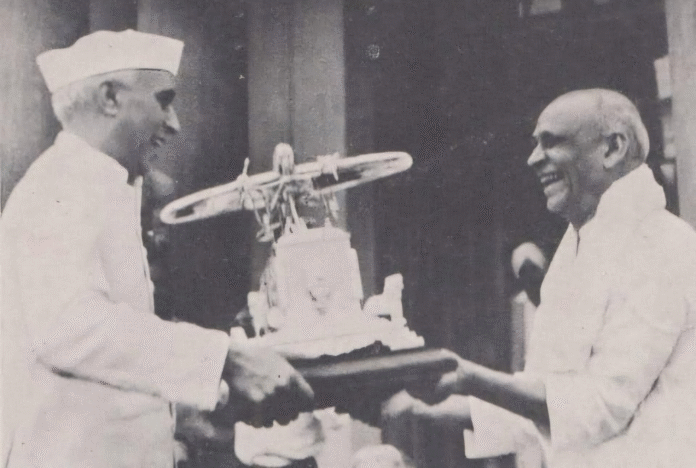
Every year on December 15, India remembers Sardar Vallabhbhai Patel — the man who welded a fragmented nation into one unified Republic. Known as the Iron Man of India, Patel was not just a freedom fighter and statesman, but also a master strategist, a patient negotiator, and a leader with unwavering resolve.

As India marks his death anniversary, Patel’s life offers lessons far beyond politics and nation-building. Surprisingly, many of his principles resonate deeply with the modern stock market — a space driven by volatility, discipline, long-term vision and emotional control.

Here are five lessons one can learn from Sardar Vallabhbhai Patel’s extraordinary life.

1. Determination: Ironclad Focus Amid Uncertainty

Patel’s commitment to India’s freedom and unity never wavered — even when the odds were stacked against him. Colonial resistance, political pressure and post-Independence chaos did not deter his focus.

2. Tactical Vision: Strategy Over Impulse

From leading the Bardoli Satyagraha to negotiating with hundreds of princely states, Patel combined courage with calculation. His actions were strategic, not reactive, and always aligned with a long-term vision of national unity.

3. Learning Is Key: Knowledge Builds Confidence

Patel was a trained lawyer who believed deeply in preparation and understanding before action. His sharp legal mind and ability to read people and situations came from continuous learning.

Diversification: Unity in Diversity

Patel’s greatest achievement was integrating over 550 princely states — each with its own culture, politics and challenges — into one nation. This diversity strengthened India rather than weakening it.

Patience: The Power of Perseverance

Nation-building was not an overnight success. Patel’s patience, negotiation skills and consistency played a decisive role in shaping modern India.

A Legacy That Still Guides Us

Sardar Vallabhbhai Patel served as India’s first Deputy Prime Minister and Home Minister from 1947 to 1950. Born in Nadiad, Gujarat, and raised in rural surroundings, he rose to become one of the most influential architects of modern India.

On his death anniversary, remembering Patel is not just about history — it’s about applying his principles to life, leadership and even financial decision-making.

Because whether it’s building a nation or a portfolio, the fundamentals remain the same:
vision, discipline, patience and unity.

SHANTI Bill: Know What it Is Which Opens Nuclear Power Sector to Private Participation

0

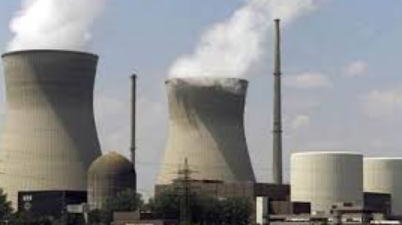
The Union Cabinet has approved the Sustainable Harnessing and Advancement of Nuclear Energy for Transforming India (SHANTI) Bill, marking a major policy shift by opening India’s tightly regulated nuclear power sector to private participation. The move is seen as critical for achieving the national target of 100 gigawatt nuclear power capacity by 2047 and supporting long-term energy security.

Opening Nuclear Sector to Private Players

The SHANTI Bill proposes allowing private companies to enter civil nuclear power generation under strict government oversight. While operational participation will be opened up, the Department of Atomic Energy will retain control over core strategic functions such as nuclear material production, heavy water management and radioactive waste handling. The reform aims to mobilise large-scale investment that the public sector alone cannot sustain.

Key Legal and Investment Reforms

A central feature of the Bill is the amendment of India’s civil nuclear liability framework. It seeks to shield plant operators and cap the liability of equipment suppliers, addressing long-standing concerns that have deterred private and foreign investment. Operator insurance cover is proposed to be redesigned at ₹1,500 crore per incident through the Indian Nuclear Insurance Pool. The Bill also allows up to 49 per cent foreign direct investment and proposes a unified legal framework for atomic energy, including a specialised nuclear tribunal.

Role in Energy Transition and Net-Zero Goals

Officials said the reforms are driven by rising domestic energy demand, rapid growth of data centres and India’s commitment to achieve net-zero emissions by 2070. Nuclear power is being positioned as a stable, low-carbon base-load source to complement renewable energy. The government has also announced a ₹20,000 crore Nuclear Energy Mission for research and development of small modular reactors, with plans to operationalise five indigenous SMRs by 2033.

India Forex Reserves Rise to $687.26 Billion

0

ndia’s foreign exchange reserves recorded a marginal increase of $1.03 billion to $687.26 billion in the week ended December 5, according to RBI’s latest Weekly Statistical Supplement. The rise was primarily supported by higher gold reserves, even as foreign currency assets declined slightly. The overall level of reserves remains close to the all-time high of $704.89 billion achieved in September 2024.

Gold Reserves Drive Weekly Increase

Gold reserves rose by $1.033 billion to $106.984 billion during the reported week. The increase reflects the recent uptrend in global gold prices, driven by heightened geopolitical uncertainties and strong investment demand for the safe-haven asset. The rise in gold holdings helped offset the modest fall in other components of the reserve basket.

Foreign Currency Assets See Marginal Dip

Foreign currency assets, which form the largest share of India’s forex reserves, stood at $556.88 billion. This represented a decline of about $151 million from the previous week. Despite short-term fluctuations, the RBI has maintained that the overall reserve position remains robust and adequate to manage external sector risks.

External Sector Strength and RBI Assessment

Following its latest monetary policy review, the RBI stated that India’s foreign exchange reserves are sufficient to cover more than 11 months of merchandise imports. The central bank has expressed confidence in the country’s ability to comfortably meet external financing requirements, highlighting resilience in the external sector amid global volatility.

Facts

  • India’s forex reserves stood at $687.26 billion in the week ended December 5, 2025.
  • Gold reserves increased to $106.984 billion, rising by over $1 billion in one week.
  • Foreign currency assets form the largest component of India’s forex reserves.
  • India’s highest-ever forex reserves were recorded at $704.89 billion in September 2024.

Trends in Reserves and Rupee Management

In recent years, India’s forex reserves have shown varied trends, rising by about $58 billion in 2023, increasing modestly in 2024, and expanding by nearly $47–48 billion so far in 2025. The RBI actively manages reserves by buying dollars when the rupee is strong and selling them during periods of weakness, as the currency has depreciated by over 5 per cent on a cumulative basis this year.

Supriya Sahu IAS: Meet the Tamil Nadu Officer Who Won the UN’s Highest Environmental Award

0

At a time when climate change headlines are filled with warnings and missed targets, one Indian civil servant’s work has quietly caught the attention of the world. Supriya Sahu, a senior IAS officer from Tamil Nadu, has been honoured with the United Nations Champions of the Earth Award, the highest recognition given by the UN for environmental leadership. The award places her among a select global group whose ideas have translated into real change on the ground.

How a career bureaucrat became a climate leader

Supriya Sahu belongs to the 1991 batch of the Indian Administrative Service and has spent more than three decades in governance. 

Her career did not begin in environmental policy. She worked across public health, administration and even national broadcasting institutions. This wide exposure shaped a governance style that later helped her approach climate challenges not as abstract concepts, but as everyday problems affecting people’s lives.

Currently, she serves as the Additional Chief Secretary for Environment, Climate Change and Forests in Tamil Nadu, a role that gives her direct responsibility over the state’s ecological future.

Turning climate plans into measurable impact

What drew international attention to Sahu’s work is her focus on implementation. Under her leadership, Tamil Nadu expanded forest cover, restored degraded land and strengthened mangrove ecosystems along the coast. Wetlands were revived and biodiversity protection was linked directly with climate resilience, reducing the impact of floods and heatwaves.

The simple idea that helped beat extreme heat

Among her most talked-about initiatives is the Cool Roof programme. Instead of expensive infrastructure, the project used reflective paint, natural ventilation and basic design changes to lower indoor temperatures in schools and homes. In some areas, temperatures dropped by several degrees, offering relief to communities most vulnerable to extreme heat.

Cleaning hills, creating jobs

In the Nilgiris and other ecologically sensitive regions, Sahu led campaigns to reduce plastic waste and protect water sources. These efforts were built around community participation, ensuring that environmental protection also created livelihoods. Large-scale green initiatives under her leadership have generated thousands of employment opportunities linked to conservation and eco-restoration.

Why the UN took notice

The UN has highlighted her work for addressing multiple crises at once climate change, pollution and biodiversity loss while keeping people at the centre of solutions. The Champions of the Earth Award recognises leadership that delivers results, not just promises.

story bigger than one award

Supriya Sahu’s recognition reflects a larger shift in how climate leadership is emerging from within governance systems. Her work shows that sustainable change does not always come from grand speeches, but from practical decisions taken quietly and consistently.

As climate risks grow, her approach offers a rare example of how policy, people and the planet can move forward together.

Sanskrit in Pakistan University: In a First Since Partition, Ancient Language to Be Taught in College

0

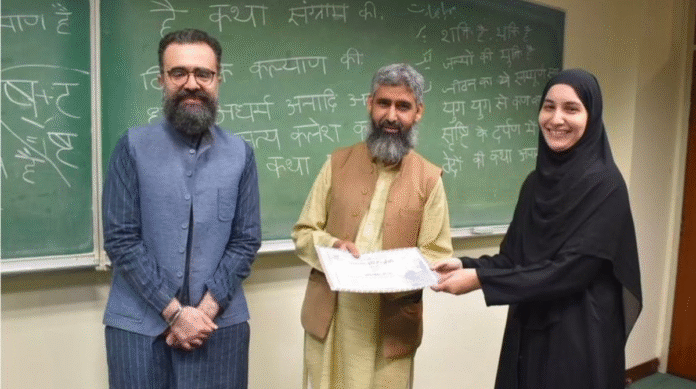
In a move that has drawn attention across South Asia, a Pakistani university is set to introduce Sanskrit as an academic subject, marking the first such initiative since the Partition of India in 1947. The decision is being viewed as a significant cultural and educational moment, especially given the complex political and historical relationship between India and Pakistan.

The Initiative has been announced by the University of Engineering and Technology (UET), Lahore, which plans to offer Sanskrit as part of its academic curriculum. 

The course is expected to include the study of classical texts such as the Mahabharata and the Bhagavad Gita, approached from literary, historical and philosophical perspectives rather than religious instruction. University officials have emphasised that the subject will be taught purely as a language and civilizational study.

Why Sanskrit matters in the Pakistani context

Sanskrit is one of the oldest classical languages in the world and has deep roots across the Indian subcontinent, including regions that are now part of Pakistan. Ancient centres of learning like Taxila once thrived in this region, where Sanskrit and related languages were used in scholarly discourse. Studying Sanskrit allows access to a vast body of knowledge on ancient science, mathematics, philosophy and governance that shaped early South Asian civilisation.

An academic move, not a religious one

Authorities involved in the programme have clarified that the introduction of Sanskrit is not meant to promote religious beliefs. Instead, it aims to help students, historians and researchers engage directly with original historical texts, inscriptions and manuscripts. This academic framing has helped position the initiative as an intellectual expansion rather than a cultural provocation.

break from post-partition educational trends

After Partition, Sanskrit gradually vanished from Pakistan’s education system as curricula evolved around Islamic studies and Persian-Arabic literary traditions. Reintroducing the language after nearly eight decades is therefore symbolically significant. It suggests a willingness within academic spaces to explore shared heritage and pre-partition history without ideological barriers.

Mixed reactions, wider implications

The announcement has been welcomed by scholars in India and abroad, who see it as a step toward cultural openness and academic collaboration. 

Within Pakistan, reactions have been mixed, with appreciation from academic circles and scepticism from more conservative voices. Despite this, the move highlights how education can create space for dialogue beyond political divides.

While the number of students enrolled may be limited initially, the decision carries broader meaning. It underlines the idea that languages and knowledge transcend borders, and that revisiting history academically can open new paths for understanding in a divided region.