Home Blog Page 114

International Day of Persons with Disabilities: Inclusion, Rights, Theme & Accessibility

0

The International Day of Persons with Disabilities is an annual United Nations observance held on December 3rd, dedicated to promoting the rights and well-being of persons with disabilities across all areas of society. This significant day focuses on increasing awareness about disability issues, fostering understanding, and mobilising support for the dignity, rights, and inclusion of persons with disabilities in political, social, economic, and cultural spheres.

The observance serves multiple purposes: breaking down barriers, challenging stereotypes, and encouraging communities to recognise the valuable contributions that persons with disabilities make to society. Through various activities and initiatives, the International Day of Persons with Disabilities creates opportunities for meaningful dialogue about creating more inclusive environments where everyone can participate fully.

Why is International Day of Persons with Disabilities Observed?

The International Day of Persons with Disabilities exists to address the ongoing challenges faced by persons with disabilities worldwide. Despite progress in recent decades, millions of people continue to experience disability discrimination in education, employment, healthcare, and social participation. This observance highlights these inequalities whilst promoting solutions that ensure equal opportunities for all.

The day also celebrates the achievements and contributions of persons with disabilities, showcasing their resilience, talents, and leadership. By raising awareness about accessibility empowerment, communities can better understand how inclusive design and supportive policies benefit everyone, not just those with disabilities. The observance encourages governments, businesses, and individuals to take concrete actions towards creating barrier-free societies.

Theme for International Day of Persons with Disabilities 2025

The year’s International Day of Persons with Disabilities theme recognises that when societies embrace and support persons with disabilities, entire communities benefit from increased innovation, diversity, and social cohesion. The theme also challenges us to move beyond mere compliance with accessibility standards towards genuine cultural change that values diversity and promotes equal participation for all community members.

History of International Day of Persons with Disabilities

The International Day of Persons with Disabilities history traces back to 1981, when the United Nations declared the International Year of Disabled Persons. This landmark initiative sparked global conversations about disability rights and inclusion. The momentum continued with the United Nations Decade of Disabled Persons from 1983 to 1992, which focused on equalising opportunities, rehabilitation, and prevention of disabilities. In 1992, the UN General Assembly officially proclaimed December 3rd as the International Day of Persons with Disabilities.
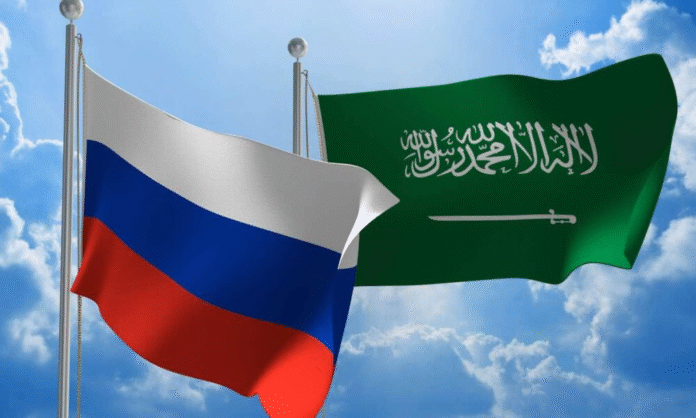
How the Saudi Arabia–Russia Visa Waiver Could Shape Travel Mobility and Tourism Growth

0

Saudi Arabia and Russia have signed a historic visa exemption agreement allowing citizens of both countries to travel visa-free for up to 90 days. The move marks the most comprehensive visa waiver granted by Saudi Arabia to any nation for holders of ordinary passports and signals a deepening phase in bilateral cooperation.

Agreement Signed at Riyadh Business Forum

The pact was formalised during the Saudi–Russian Investment and Business Forum in Riyadh. Saudi Foreign Minister Prince Faisal bin Farhan and Russian Deputy Prime Minister Alexander Novak signed the agreement in the presence of senior government and business leaders. Officials described the development as a milestone reflecting expanding collaboration in energy, investment, trade and strategic diplomacy.

Key Terms of the Visa-Free Regime

  • Applies to diplomatic, special and ordinary passports
  • Allows stays of up to 90 days in a single visit or cumulatively per year
  • Permitted purposes include tourism, business travel and family visits

However, activities such as employment, studies, long-term residency and Hajj pilgrimage are not covered under the exemption and will continue to require separate visas.

Expected Benefits: Travel, Trade and Cultural Exchange

The simplified entry framework is expected to:

  • Boost tourism flows
  • Ease business mobility and investment exploration
  • Support cultural, academic and heritage exchanges
  • Enhance people-to-people connectivity

Officials from both sides emphasised that reducing travel barriers will accelerate cooperation across priority sectors, including energy, infrastructure, innovation and defence.

Why the Deal Matters

The agreement makes Russia the first country to receive a full-spectrum visa exemption from Saudi Arabia, reflecting Riyadh’s evolving foreign policy and growing openness to global partnerships. Analysts view the deal as part of broader Gulf efforts to diversify ties beyond traditional Western and regional partners.

Key Points

  • Allows citizens of both nations 90-day visa-free entry
  • Applies to all passport types including ordinary passports
  • Valid for tourism, business and family visits
  • Work, study, residency and Hajj are excluded
  • Russia becomes the first country granted such broad access by Saudi Arabia

IGI Becomes India’s First Water-Positive Airport

0

Delhi’s Indira Gandhi International (IGI) Airport has become the first airport in India to achieve water-positive status among facilities handling more than 40 million passengers annually. The certification marks a major milestone in India’s sustainable aviation infrastructure and reflects significant advancements in water conservation and resource management.

What Water-Positive Status Means

A water-positive establishment replenishes more freshwater than it consumes. IGI Airport earned this status by scaling up rainwater harvesting capacity, expanding groundwater recharge systems, and strengthening wastewater recycling mechanisms. The recognition was awarded at the Water Innovation Summit 2025, under the NITI Aayog–CII water neutrality framework.

How IGI Achieved the Status

Key infrastructure and initiatives include:

  • 625 rainwater harvesting structures, enabling large-scale collection and recharge.
  • Two underground water storage reservoirs with a combined capacity of 9 million litres.
  • A 16.6 MLD zero-liquid-discharge sewage treatment plant (STP) ensuring 100% wastewater recovery and reuse.

These systems enable the airport to replenish more water into the environment than it extracts.

Smart Reuse and Efficiency Measures

Recycled water is utilised for:

  • Cooling and HVAC systems
  • Landscape irrigation
  • Toilet flushing and maintenance

Automated sprinklers, drip irrigation networks and smart monitoring further reduce wastage. Meanwhile, a dedicated potable water treatment facility ensures high-quality drinking water for passengers.

Why This Matters

Delhi International Airport Limited (DIAL) says the milestone strengthens IGI’s climate resilience and supports its long-term target of achieving net-zero emissions. The development also sets a national benchmark for sustainable airport operations and highlights growing momentum toward responsible water use in Indian infrastructure.

Key Facts

  • IGI Airport is India’s first water-positive airport handling over 40 million passengers annually.
  • It operates 625 rainwater harvesting systems and two reservoirs with 9 million-litre capacity.
  • A 16.6 MLD zero-liquid-discharge STP recycles all wastewater.
  • Certification follows the NITI Aayog–CII water neutrality framework.

Nagpur University Appoints First Woman Vice-Chancellor in a Century

0

Nagpur University has created history by appointing Dr. Manali Makarand Kshirsagar as its first woman Vice-Chancellor since the institution was founded in 1923. Her appointment marks a landmark shift in the university’s leadership narrative and reflects a broader push toward modernisation and gender-inclusive governance in higher education.

Who Is Dr. Manali Makarand Kshirsagar?

Dr. Kshirsagar, 54, is an accomplished academic administrator, researcher and technologist with strong roots in Nagpur’s higher education ecosystem. An alumna of Nagpur University herself, she holds a PhD in Computer Science along with an MBA in Finance and Marketing, reflecting a rare blend of technical and managerial expertise.

Before her appointment as Vice-Chancellor, she served as Director (Technical) and Adviser at Yeshwantrao Chavan College of Engineering (YCCE), Nagpur. Known for her work in academic administration, research promotion and institutional development, she has been involved in initiatives to strengthen digital learning, academic quality assurance and innovation-led education.

A Historic Leadership Milestone

The announcement of her appointment was made by Maharashtra Governor and University Chancellor Acharya Devvrat. Her five-year tenure officially begins this week, marking the first time in more than 100 years that a woman has occupied the university’s top leadership position.

Why Her Appointment Matters

Dr. Kshirsagar’s role is significant not only symbolically, but strategically. Her expertise aligns with the university’s current priorities:

  • Strengthening academic and research standards
  • Expanding digital and technology-driven learning
  • Enhancing institutional governance and transparency
  • Building industry partnerships and innovation ecosystems

Observers believe her leadership could accelerate overdue reforms and position Nagpur University more competitively in the rapidly evolving education landscape.

Key Points

  • Nagpur University was established in 1923 and is now over 102 years old.
  • Dr. Manali Makarand Kshirsagar is the first woman Vice-Chancellor in its history.
  • She holds a PhD in Computer Science and an MBA in Finance and Marketing.
  • Her term is for five years, appointed by the Maharashtra Governor.

Looking Ahead

As Dr. Kshirsagar assumes office, expectations are high. Students, faculty and policy observers anticipate a renewed focus on research excellence, student-centric reforms, digital transformation and stronger academic governance. Her appointment is widely seen as both a symbolic breakthrough and a practical step toward a more modern and inclusive institutional future.

Centre’s Sanchar Saathi Mandate: Why Pre-Loading the Cybersecurity App on All Smartphones Has Triggered a Major Debate

0

The Union government’s order directing all smartphone manufacturers — including Apple, Samsung and Xiaomi — to pre-install the Sanchar Saathi cybersecurity app on every device has sparked intense political, legal and industry backlash. While the government positions it as a necessary move to combat cybercrime and recover stolen devices, critics argue the mandate raises concerns around privacy, constitutional rights and competition — especially since the app cannot be uninstalled.

What the New Order Mandates

The Department of Telecommunications (DoT) has instructed manufacturers to:

  • Pre-install Sanchar Saathi on all smartphones sold or imported within 90 days.
  • Release software updates to install the app on devices already in use.
  • Ensure the app cannot be disabled or removed.
  • Display its features during the initial device setup.

The advisory issued without consultation also warns of enforcement action for non-compliance, heightening unease among manufacturers.

What the Sanchar Saathi App Does

Developed by the DoT, Sanchar Saathi is a national platform aimed at reducing cyber fraud, identity theft and mobile misuse. Its key features include:

  • Chakshu reporting: Flagging suspicious calls, messages and phishing attempts.
  • Spam/UCC complaint system.
  • Alerts for malicious links and unsafe apps.
  • Verification of mobile numbers linked to a user’s identity.
  • IMEI blocking and unlocking of lost or stolen phones.
  • Verification of device authenticity.
  • Reporting spoofed international calls.
  • Directory of verified customer-care numbers.

Government data claims the system has already helped block 42 lakh stolen phones and recover over 7 lakh devices, reinforcing calls for wider adoption.

Why the Government Says It’s Needed

Officials argue that with 1.2 billion mobile users, India is increasingly vulnerable to phishing, impersonation fraud and handset theft. A mandatory, non-removable app, they say, ensures universal access and faster reporting — especially for users who may not install cybersecurity tools voluntarily.

Why Manufacturers Are Concerned

The directive challenges long-standing software and device policies. Apple, for instance, does not allow third-party undeletable apps. Android manufacturers fear this could set a precedent for future forced government app rollouts.

Industry worries also include:

  • Compliance costs
  • Software redesign requirements
  • Conflicts with international privacy standards
  • Lack of prior consultation

Political and Privacy Criticism

Opposition leaders have labelled the mandate an overreach and warned it may violate the right to privacy, affirmed by the Supreme Court as part of Article 21. Congress leader KC Venugopal called the move “beyond unconstitutional”, while Shiv Sena (UBT)’s Priyanka Chaturvedi criticised it as the government entering personal devices “through the backdoor”. Privacy experts argue that even if not intended for surveillance, a compulsory state app creates an architecture that could enable it.

The Larger Policy Debate

The controversy is less about the app’s utility and more about larger governance questions:

  • Should cybersecurity tools be voluntary or imposed by mandate?
  • Can the state require undeletable apps without violating informational autonomy?
  • Should such tools undergo independent auditing under the Digital Personal Data Protection Act?
  • Where is the line between public safety and intrusive governance?

These questions are critical as India expands its digital-public infrastructure and finalises new technology laws.

What Happens Next

With the 90-day compliance window running, manufacturers are likely to seek clarifications or request changes — such as making the app optional or uninstallable. Privacy groups are expected to demand independent audits of the app’s data practices.

The outcome will set an important precedent: How far can the government go in embedding digital-public systems into private consumer devices? The answer may influence India’s broader technology governance model in the years ahead.

Top Winter Wedding Fashion Trends 2025: Cozy & Glam Outfit Ideas for Brides, Bridesmaids & Guests

0

Winter weddings in India = Heaven meets Hypothermia. Imagine if you’re wrapped like a burrito in your blanket, and suddenly Shaadi ka card aa gaya! That instant dread of leaving your warm cocoon hits so hard. But then it’s your best friend’s or cousin’s wedding and the excitement pumps in like adrenaline. You want to look like a star just not a shivering one.
Because let’s be honest, bacteria and cold winds love girls who believe beauty is pain. Time to break that toxic trend and rewrite the rulebook: Warmth + Style = REAL Fashion Winner.

For the queens who refuse to freeze: Winter weddings offer the perfect excuse for opulence. Think plush fabrics, royal layering, and glam that doesn’t compromise health. From velvet lehengas and embellished gowns to shararas, the richness of velvet does half the job. Add a matching velvet shawl with zardozi or sequin detailing, comfort but make it couture.

Woolen Shrugs with an Upgrade: Drop the boring cardigans. Choose embroidered or pearl-detailed woolen shrugs that perfectly complement your attire. It’s warm yet wedding-ready.

Cape the Cold Away: Cape-style jackets over sarees create a dreamy Indo-Western aesthetic. Fur borders, sheer fabrics layered with wool, or metallic studded capes, all allow drama without the shivers.

Pochus are Back: Designer woolen pochus with intricate weaving aren’t just cozy, they photograph beautifully. Perfect for open-air weddings.

Layer Like a Pro: Thermal innerwear, woolen stockings under gowns or lehenga skirts, high-neck blouses with full sleeves, smart layers that stay invisible but keep you toasty.

Faux Fur & Statement Gloves: If you’re feeling bold, add a fur stole or elegant gloves, they scream winter runway vibes.

For the gentlemen bringing the heat: Men have it easier but choosing the right winter ensemble can still elevate the entire look.

Velvet bandhgalas/sherwanis – classy, festive & climate-friendly
Layered Nehru jackets – this is where warmth meets tradition
Turtleneck + blazer – a trending combo for modern weddings
Woolen kurtas – stylish without sacrificing comfort
Suede or leather footwear – warmer alternative to open juttis
Add a tasteful stole or shawl and boom, effortless elegance.

Bonus Styling Hacks


For ladies, closed hairstyles like low buns keep your neck warm. Hot patches inside shoes is a lifesaver during late-night barat, even women are wearing coordinated shoes with lehengas or gowns so this is a life savior especially at Cold nights.

This season, let’s normalise fashion that doesn’t freeze you into a statue. Winter weddings should be about dancing your heart out not sneezing through pheras. So bundle up, sparkle on, and let your style say:
I’m warm, I’m wow, and I own this winter wedding

International Gita Festival: Devotees Take Spiritual Sojourn in Jaipur at Gupt Vrindavan Dham

0

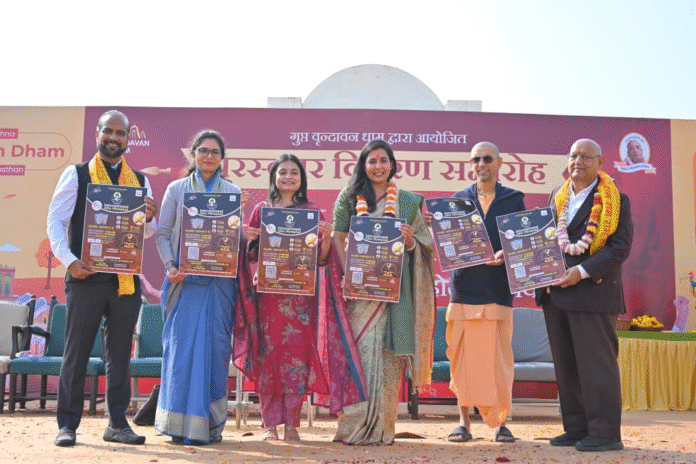
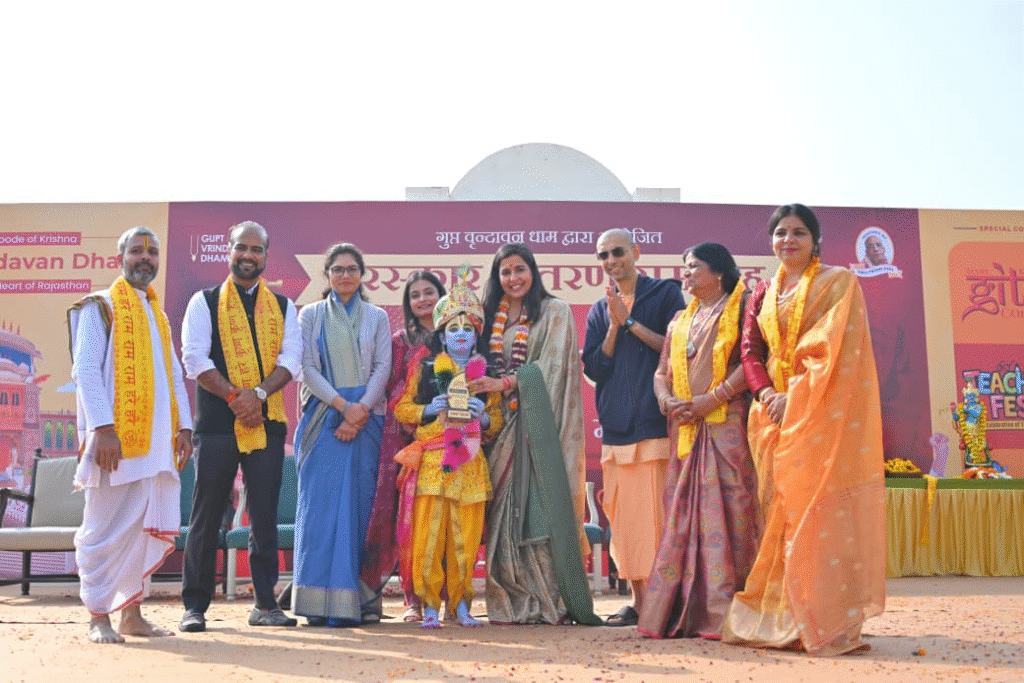
The Bhagavad Gita is not merely a religious text but a divine guide that dispels the darkness of human life. In celebration of Gita Jayanti, a grand International Gita Festival was held on December 1 at Gupt Vrindavan Dham, Jaipur, featuring a series of spiritual and cultural events.

The chief guest, Dr. Soumya Gurjar, former Mayor of Jaipur Municipal Corporation (Greater), felicitated and encouraged the winners with special awards. Other distinguished guests—including RJ Shivangi (FM Tadka), Manju Meena (Doordarshan), OP Modi (OK Plus Group), and Nirmal Dargad (ECMS)—also praised the children for their remarkable performances.

International Gita Festival: Devotees Take Spiritual Sojourn in Jaipur at Gupt Vrindavan Dham

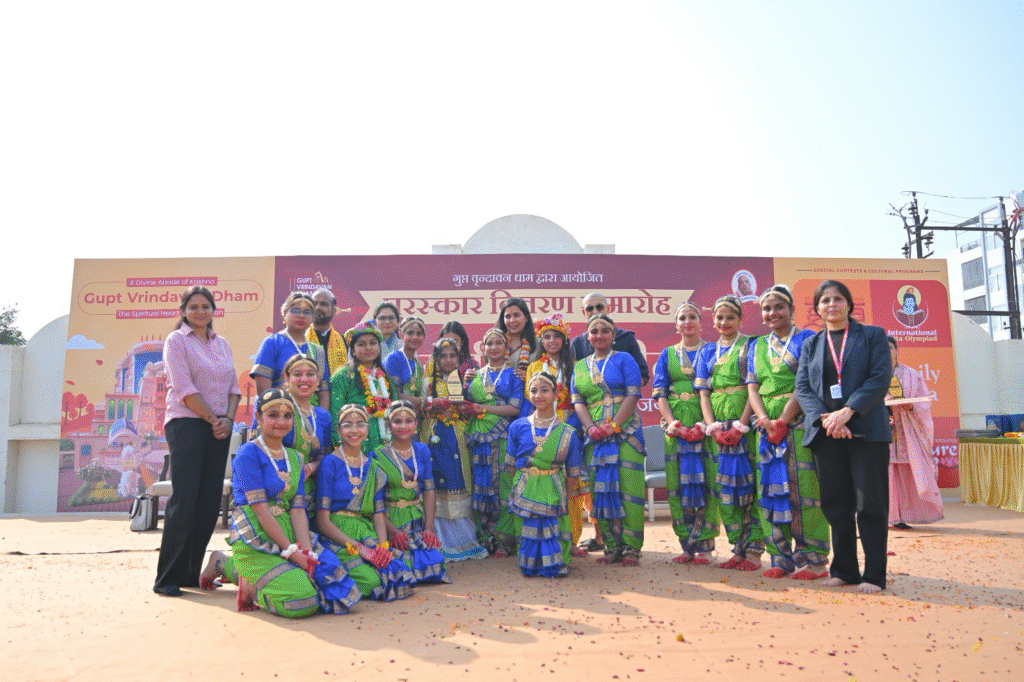
More than 500 students from 30 reputed schools of Jaipur participated in the festival, showcasing their talents in group competitions such as Gita Shloka recitation, Vedic costume presentation, classical dance-drama, and various artistic presentations.

On the sacred day of Gita Jayanti (Ekadashi), the Dham hosted Gita Parayan, Gita Yagna, Gita Daan, and special Kirtan throughout the day. The event also marked the inauguration of the International Gita Olympiad.

International Gita Festival: Devotees Take Spiritual Sojourn in Jaipur at Gupt Vrindavan Dham

Amitasana Das, President of Gupt Vrindavan Dham, stated that the International Gita Mahotsav will inspire and promote Gita-based education and cultural values in Jaipur, Rajasthan, and across the world.

International Gita Festival: Devotees Take Spiritual Sojourn in Jaipur at Gupt Vrindavan Dham

The Trend That’s Melting Our Winters: Hot Chocolate as the New Comfort Ritual

0

When the air gets crisp and the sweaters come out, there’s one indulgence that rises back to the throne, hot chocolate. No, not the quick stir-and-sip powdered drink we grew up with. We’re talking rich, velvety, artisanal hot chocolate the kind that feels like a warm hug sliding down your throat. This winter, the trend is officially back… and it’s hotter (and thicker!) than ever.

A mug full of bliss


There’s something irresistible about the moment melted chocolate meets warm milk, the aroma alone can trigger a legit foodgasm. The slow whisking, the glossy texture, the steam carrying chocolaty notes into the air, the process of making it is already dessert for the senses.

Hot chocolate doesn’t demand rush it’s a ritual. And for everyone who doesn’t vibe with chai or coffee, this is the beverage of the season. It’s soothing, luxurious, and the warmth feels like relaxation flowing right through your food pipe.

Why it’s becoming a major trend


From Instagram reels to café menus, everyone’s experimenting. Think toasted marshmallow toppings, hazelnut drizzles, peppermint infusions, even spicy Mexican-style hot chocolate. Viral Christmas aesthetics, holiday coziness, and winter weddings have only added fuel to the fire.
Winters + a perfectly thick hot chocolate = deadly combo.
The comeback is also driven by nostalgia, a childhood favorite reborn with a gourmet twist. Suddenly, hot chocolate isn’t a kid’s drink anymore.

Quick homemade hot chocolate recipes
Classic Creamy Hot Chocolate

  1. Milk (or almond milk), pure cocoa, chopped dark chocolate, sugar, vanilla essence
  2. Simmer milk – whisk in cocoa + chocolate – add sugar + vanilla – serve thick and glossy

Peppermint Holiday Special
Make classic base – add crushed candy canes + mint essence – top with whipped cream
Spicy Mexican Style
Dark chocolate + cinnamon + a tiny hint of chili – comfort with a warm kick!

Where to learn & sip virtually
If you want to level up your chocolate game these YouTube creators are worth following:

  • Tasty – trending seasonal recipes
  • Preppy Kitchen – cozy, creamy winter drinks
  • Joshua Weissman – gourmet homemade take
  • Shivesh Bhatia – Indian-friendly dessert and beverage versions

This winter, hot chocolate isn’t just a drink.
It’s a mood, a moment, a comfort ritual we all deserve. So go ahead wrap your hands around that warm mug and let the magic melt you into a sweeter season.

The Kardashev Scale and the Future of Human Civilisation

0

When Tesla CEO Elon Musk appeared on Nikhil Kamath’s podcast People by WTF, one idea stood out among discussions of AI, cryptocurrency, and the future of humanity: the Kardashev Scale. The episode, now surpassing three million views, has sparked fresh curiosity about how we measure the progress of civilisations — not through wealth, territory, or technological milestones, but through energy.

A Scale Born from the Space Age

The Kardashev Scale was proposed in 1964 by Soviet astrophysicist Nikolai Kardashev, during an era when humanity was beginning to explore space. Instead of categorising societies by political systems or cultural achievements, Kardashev suggested that energy consumption is the most meaningful indicator of progress — because energy powers knowledge, technology, and survival.

Musk called the scale “a rational way of thinking about civilisation’s evolution,” offering a framework to imagine not only where humanity stands today, but what it may become.

Three Steps to Cosmic Maturity

The Kardashev Scale consists of three types of civilisations:

  • Type I – Planetary Civilisation
    Harnesses all available energy on its home planet, including wind, geothermal, oceans, and sunlight.
  • Type II – Stellar Civilisation
    Controls energy at the level of its star. Theoretical megastructures like a Dyson sphere could make this possible.
  • Type III – Galactic Civilisation
    Utilises energy from an entire galaxy — billions of stars — and could traverse interstellar distances with ease.

These categories are less science fiction and more strategic roadmap — a way to understand how far civilisation must travel to thrive beyond Earth.

Where Does Humanity Stand?

Despite satellites, supercomputers, and billionaires launching rockets into space, Musk estimates that humanity sits at only 0.73 on the scale — not yet a Type I civilisation.

Our progress remains limited by fossil fuels, energy inefficiency, and technological constraints. Musk emphasised that “energy is the real currency”, and the ability to generate it sustainably will define the next chapter of civilisation.

Why It Matters

Beyond theory, the Kardashev Scale raises a powerful question: What future do we choose?

Advancing on the scale requires breakthroughs in:

  • Clean and renewable energy
  • Nuclear fusion
  • Space-based solar systems
  • Interplanetary infrastructure

Such advancements could shift human society from a resource-consuming civilisation to a planetary and eventually interstellar one — capable of surviving cosmic threats, expanding into space, and harnessing energies beyond imagination.

Facts

  • Proposed by Nikolai Kardashev in 1964
  • Measures civilisation advancement based on energy utilisation
  • Humanity is currently around 0.73, below Type I
  • Type III civilisation can harness energy at a galactic scale

The Kardashev Scale remains less a ranking system and more a vision — a reminder that the future of civilisation hinges on one question: can humanity master energy before energy limits humanity?

National Pollution Control Day 2025: CPCB Lists India’s Top 10 Cleanest Cities

0

National Pollution Control Day is observed annually on December 2 to honour the memory of those who lost their lives in the Bhopal gas tragedy of 1984. The day serves as a reminder of the urgent need to reduce pollution levels and protect environmental and public health.

Marking the occasion this year, the Central Pollution Control Board (CPCB) released its latest nationwide air quality assessment. While several regions continue to struggle with rising pollution levels, the report highlights a group of cities that have successfully maintained clean air throughout the year.

Why Clean Air Matters

Clean air plays a crucial role in preserving public health. Poor air quality is linked to respiratory illnesses, cardiovascular diseases, persistent cough, and lifelong health complications. Children, the elderly and individuals with pre-existing medical conditions are particularly vulnerable.

Conversely, clean air improves lung function, strengthens immunity and enhances overall quality of life. Beyond human health, clean air also supports healthier soil, water systems and ecological balance.

Top 10 Cleanest Cities in India (2025 — CPCB Data)

According to CPCB’s latest findings, the following cities recorded the lowest pollution levels in the country:

  1. Aizawl, Mizoram
    Known for lush greenery, low traffic, and strong community discipline.
  2. Kohima, Nagaland
    Maintains low pollution due to controlled construction and preserved natural spaces.
  3. Shillong, Meghalaya
    Dense forests and minimal vehicular pressure help keep air quality high.
  4. Imphal, Manipur
    Improved transport systems and emission control contribute to cleaner air.
  5. Gangtok, Sikkim
    Strict waste management and plastic bans play a key role.
  6. Champhai, Mizoram
    Limited industrial activity helps maintain natural air purity.
  7. Lunglei, Mizoram
    Protected landscapes and low commercial pollution ensure clean conditions.
  8. Mandi, Himachal Pradesh
    Waste management systems and favourable climate support good air quality.
  9. Kottayam, Kerala
    Surrounded by green cover and public environmental awareness.
  10. Alappuzha, Kerala
    The coastal ecosystem and community-driven cleanliness efforts keep the region pollution-free.

How CPCB Measures Air Quality

CPCB monitors air quality through continuous monitoring stations across the country. These stations record concentrations of pollutants such as PM2.5, PM10, nitrogen dioxide and sulfur dioxide. Cities with lower Air Quality Index (AQI) scores reflect cleaner, safer air.

A Call to Action

National Pollution Control Day serves as an important reminder that collective action — from governments, institutions and citizens — can create meaningful environmental change. The success of these cities demonstrates that clean air is achievable through sustainable urban planning, responsible lifestyles and effective emission control.