Home Blog Page 111

Adwa Victory Monument in Ethiopia: Know Its Significance and Story Behind Battle of Adwa

0

The Battle of Adwa in 1896 marked a decisive Ethiopian victory over Italian colonial forces and became a powerful symbol of African resistance to colonial domination. It safeguarded Ethiopia’s sovereignty at a time when much of the continent was under foreign rule. The Adwa Victory Monument stands as a national and continental reminder of unity, courage, and self-determination, resonating far beyond Ethiopia’s borders.

Adwa Victory Monument and Museum

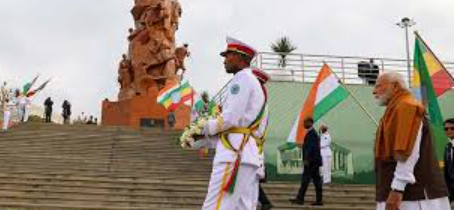
The Adwa Victory Monument is a modern commemorative complex that celebrates Ethiopia’s triumph and broader freedom struggles. It houses a museum displaying historical artefacts, weapons, and detailed dioramas depicting the battle. The complex also includes conference halls, an amphitheatre, and a library, serving as a centre for culture, research, and tourism. During his visit, Prime Minister Modi toured the Adwa Museum, where officials briefed him on Ethiopia’s history and the enduring relevance of the Adwa victory.

Parliament Address and Diplomatic Engagements

Prime Minister Narendra Modi addressed a joint session of the Ethiopian Parliament, receiving a standing ovation from lawmakers. This address marked the 18th national Parliament worldwide to be addressed by him. His two-day visit to Ethiopia, undertaken at the invitation of Prime Minister Abiy Ahmed Ali, reflects the growing strategic partnership between the two nations. In a notable diplomatic gesture, Prime Minister Abiy Ahmed personally received PM Modi at the airport and drove him to his hotel, also showing him the Science Museum and Friendship Park.

Singapore Changi Airport Named World’s Best International Airport 2025

0

Singapore Changi Airport has been voted the best international airport in the world for 2025 at India’s Best Awards, organised by Travel+Leisure. The recognition reflects strong global traveller preference, with readers ranking Changi highest for overall travel experience, comfort, and facilities among international airports.

Recognition at India’s Best Awards 2025

The honour was announced during the 14th edition of India’s Best Awards, which celebrates excellence across the global travel and hospitality sector. Winners are chosen through an online voting process involving readers from across the world. Categories span airports, airlines, hotels, cruises, and destinations, making the results a direct indicator of traveller satisfaction. Changi Airport’s top ranking highlights its consistent appeal to international passengers.

Passenger Experience Beyond Transit

Changi Airport was recognised for offering more than efficient connectivity. Its sky-lit terminals, indoor gardens, and open architectural design create a calm and spacious environment. Signature attractions such as the world’s tallest indoor waterfall, butterfly gardens, and curated art installations transform long layovers into relaxed and engaging experiences. These features have helped position the airport as a leisure space rather than merely a transit hub.

Facilities, Comfort, and Global Benchmarks

The airport provides an extensive range of dining and shopping options, featuring local Singaporean cuisine alongside global brands. Facilities such as transit hotels, sleeping pods, and designated rest areas cater to long-haul travellers. Clear terminal layouts, efficient security checks, and smooth passenger flow reduce waiting times and improve overall comfort. Travel+Leisure noted that leading airports now play a growing role in shaping travel memories, with Changi setting global benchmarks by combining operational efficiency with comfort, design, and innovation.

Facts

  • India’s Best Awards are organised annually by Travel+Leisure.
  • Singapore Changi Airport is known for the world’s tallest indoor waterfall.
  • The awards are based on global online reader voting.
  • Changi Airport is often described as a destination in itself.

Global Leadership in Air Travel

The award reinforces Singapore Changi Airport’s status as a global leader in air travel infrastructure. Readers acknowledged its ability to consistently deliver a smooth, enjoyable journey from arrival to departure, underlining its reputation for excellence in passenger-focused airport design and services.

Jammu & Kashmir Gets First Gen Z Post Office Signalling a New Phase in Postal Modernisation

0

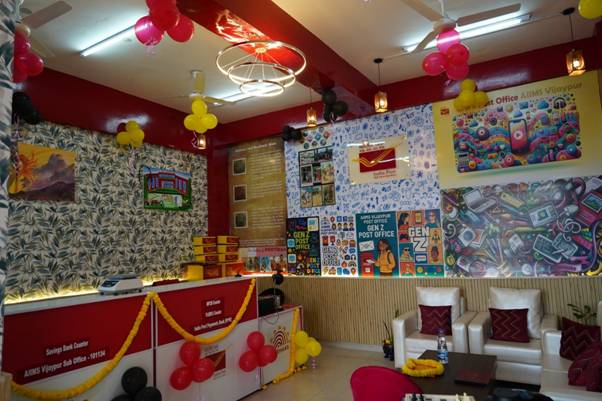
Jammu & Kashmir has marked a significant milestone in the modernisation of public service delivery with the inauguration of its first Gen Z Post Office at the AIIMS Vijaypur campus. More than a routine infrastructure upgrade, the initiative represents a strategic shift by the Department of Posts to reposition India Post as a technology-driven, user-centric institution aligned with the expectations of younger citizens. With this launch, AIIMS Vijaypur has also become the first AIIMS in the country to host a Gen Z Post Office, giving the development national significance.

Institutional Collaboration and Policy Intent

The inauguration on 17 December 2025 brought together leadership from both the healthcare and postal sectors, underlining the collaborative approach behind the initiative.

Redefining the Post Office for a New Generation

The Gen Z Post Office model moves away from the traditional perception of post offices as transaction-heavy, paper-driven spaces. Instead, it introduces a contemporary ambience, digital payment systems, simplified workflows, and integrated services. Postal, banking, and insurance facilities are offered under one roof, reducing friction and time costs for users. This design directly responds to Generation Z’s preference for speed, convenience, and digital-first interactions.

Importantly, the initiative is not limited to aesthetics or technology alone. It also aims to increase awareness of postal savings schemes, India Post Payments Bank services, and insurance products among students, healthcare professionals, and staff—groups that are often underserved or disengaged from conventional postal offerings.

Strategic Importance for India Post

Analytically, the Gen Z Post Office reflects a broader institutional recalibration. India Post is leveraging its vast physical network while simultaneously adapting to changing user behaviour. Campus-based Gen Z Post Offices serve as low-risk innovation hubs, allowing the department to pilot new service models, gauge user response, and refine its approach before wider rollout.

The issuance of a special postal cancellation on the inaugural day further reinforces the symbolic value of the initiative. It positions the Gen Z Post Office not just as an operational upgrade, but as a marker of transition in India Post’s long-term evolution.

Key Takeaways

From a governance and exam-oriented perspective, several points stand out:

  • AIIMS Vijaypur is the first AIIMS in India to host a Gen Z Post Office.
  • The initiative is part of the Department of Posts’ campus modernisation drive.
  • Gen Z Post Offices emphasise digital, youth-centric, and integrated service delivery.
  • The launch in Jammu & Kashmir signals regional inclusion in national digital reforms.

A Symbol of Future-Ready Governance

Overall, the Gen Z Post Office at AIIMS Vijaypur exemplifies how legacy institutions can reinvent themselves without losing their core public-service mandate. By combining technology, inclusivity, and strategic partnerships, India Post is positioning itself as a future-ready service provider, capable of engaging the next generation while strengthening its relevance in a rapidly changing service ecosystem.

SabhaSaar for Gram Panchayats: Know What it Means and What Is Its Use…

0

The Ministry of Panchayati Raj has launched SabhaSaar, an AI-enabled voice-to-text meeting summarisation tool, to strengthen transparency and efficiency in grassroots governance. Introduced on August 14, 2025, the digital platform is being progressively adopted by Gram Panchayats across States and Union Territories for routine Gram Sabha and Panchayat meetings.

Rapid Adoption Across Gram Panchayats

Since its launch, SabhaSaar has seen swift uptake nationwide. During the pilot phase, all 1,194 Gram Panchayats of Tripura were encouraged to use the tool for Special Gram Sabhas held on August 15, 2025. Of these, 1,047 Panchayats, or 87 per cent, successfully adopted the platform on the same day. Nationwide usage stood at 12,667 Gram Panchayats on August 15, which rose sharply to 77,198 during the Gram Sabha conducted on October 2, 2025. As of December 3, 2025, a total of 92,376 Gram Panchayats have used SabhaSaar for automated meeting summarisation.

Ease of Use and Capacity Building

The Ministry of Panchayati Raj has focused on creating awareness and ensuring smooth adoption of SabhaSaar. A standard operating procedure was shared with States and Union Territories, which further disseminated it to Panchayats. Multiple physical and virtual training sessions were organised for State and UT officials to demonstrate the tool’s functionality. These efforts were complemented by State-level initiatives to familiarise Panchayat representatives and staff with the system.

AI Infrastructure and Data Governance

SabhaSaar operates on artificial intelligence and cloud infrastructure provisioned through the India AI Compute Portal under the India AI Mission of the Ministry of Electronics and Information Technology. The India AI Mission acts as the nodal agency for governance of the AI infrastructure and the data generated. All data processing takes place within the government framework, with no sharing of information with external third-party service providers.

SabhaSaar Facts

  • SabhaSaar was launched on August 14, 2025, by the Ministry of Panchayati Raj.
  • It is an AI-based voice-to-text meeting summarisation tool.
  • Over 92,000 Gram Panchayats have used the tool as of December 2025.
  • The platform operates under the India AI Mission of MeitY.

Data Privacy and Regulatory Framework

All aspects of data privacy, storage and governance related to SabhaSaar are regulated under the Digital Personal Data Protection Rules. These rules were notified through the Gazette of India on November 13, 2025. The Ministry has emphasised that the tool complies fully with existing legal and regulatory provisions, ensuring secure handling of data while supporting digital transformation in local self-governance.

Gulmarg Gets World’s Highest Revolving Restaurant At 14,000 Feet Which Offers Dining Above Clouds

0

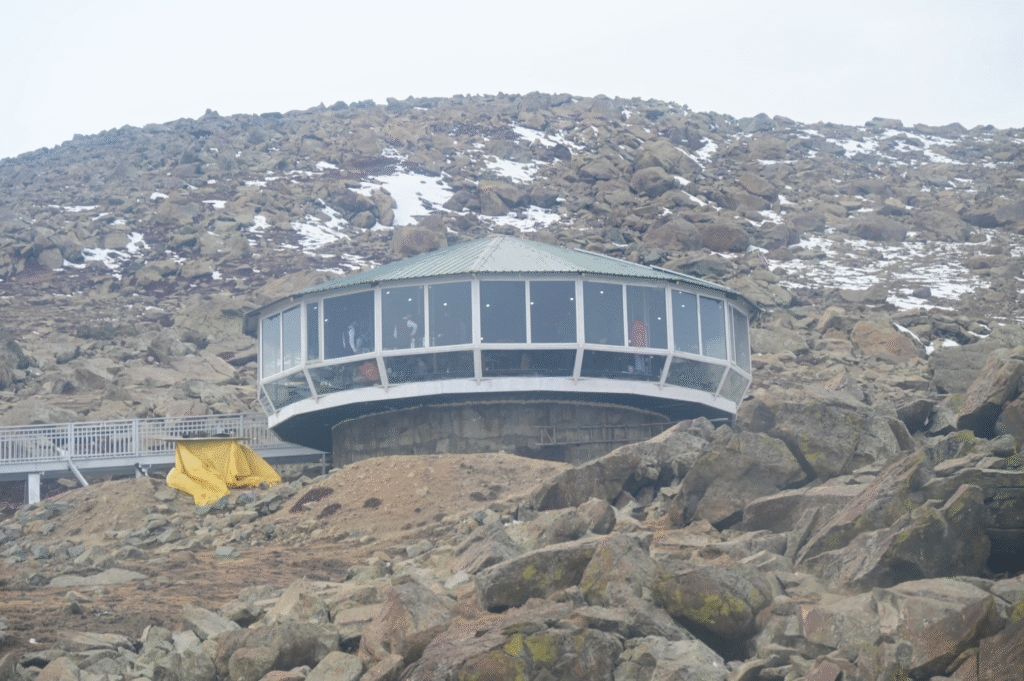
Gulmarg in Jammu and Kashmir has taken its winter tourism appeal to new heights by unveiling the world’s highest revolving restaurant at nearly 14,000 feet above sea level on Apharwat Peak. The new attraction, inaugurated on December 13, 2025 by Chief Minister Omar Abdullah, gives visitors a chance to enjoy panoramic 360 degree views of the snow clad Himalayas while dining in a uniquely warm and cosy setting above the clouds. This development boosts the hill station’s reputation as a premium destination for both luxury travel and winter sports. 

Gulmarg Gets World's Highest Revolving Restaurant At 14,000 Feet Which Offers Dining Above Clouds

What makes this dining experience unique

Unlike most mountain cafes, the restaurant slowly rotates throughout the meal, letting guests take in uninterrupted vistas of towering peaks and sweeping valleys without leaving their seats. The menu highlights local Kashmiri flavours such as aromatic Kahwa and piping hot regional delicacies, making the experience as much about taste as it is about scenery. The space also doubles as a revolving conference and meeting hall, adding a versatile element to the landmark structure. 

How this fits into Gulmarg’s bigger tourism push

The revolving restaurant is part of a larger infrastructure upgrade aimed at positioning Gulmarg as an international winter tourism hub. Alongside it, authorities inaugurated Asia’s longest ski drag lift at Kongdori, stretching over 726 metres and designed to improve slope accessibility for skiers and adventurers. These additions align with efforts to elevate the region’s facilities To global standards and attract both domestic and foreign travellers. 

Why this matters for tourism and local economy

Officials say these projects are strategic investments that create year round tourism potential, generate jobs for local youth and strengthen Gulmarg’s standing on the global winter sports map. The combination of scenic attractions, modern infrastructure and unique experiences like high altitude dining is expected to draw more visitors even amid broader challenges facing Kashmir’s tourism industry. 

Gulmarg already holds several notable records, including the world’s highest gondola, Asia’s longest ropeway and the world’s largest igloo cafe. The addition of the highest revolving restaurant adds another extraordinary element to the destination’s growing list of global firsts, making it a must visit for travellers seeking both adventure and memorable experiences high in the Himalayas. 

Lt Gen Sagat Singh: The General Who Redefined Indian Battlefield Leadership in Many Battles and Made a Mark in Goa Liberation Day…

0

Lt Gen Sagat Singh occupies a unique place in India’s military history—not merely as a victorious commander, but as a leader who consistently altered the course of campaigns through audacity, speed and an instinctive understanding of terrain and timing. From the liberation of Goa in 1961 to the creation of Bangladesh in 1971, Sagat Singh’s career offers a study in unconventional leadership, operational clarity and strategic courage.

A Soldier Shaped Outside the Mainstream

Born in Churu, Rajasthan, Sagat Singh did not emerge from the traditional British Indian Army officer pipeline. He began his career in the Bikaner State Forces as a Jamedar in 1938, a background that gave him a practical, field-oriented outlook rather than a doctrinaire one. His World War II experience further hardened his understanding of real combat—where improvisation matters more than manuals.

This outsider trajectory shaped his leadership style. Sagat Singh valued results over hierarchy, speed over hesitation, and battlefield reality over theoretical caution.

Goa 1961: Speed as Strategy

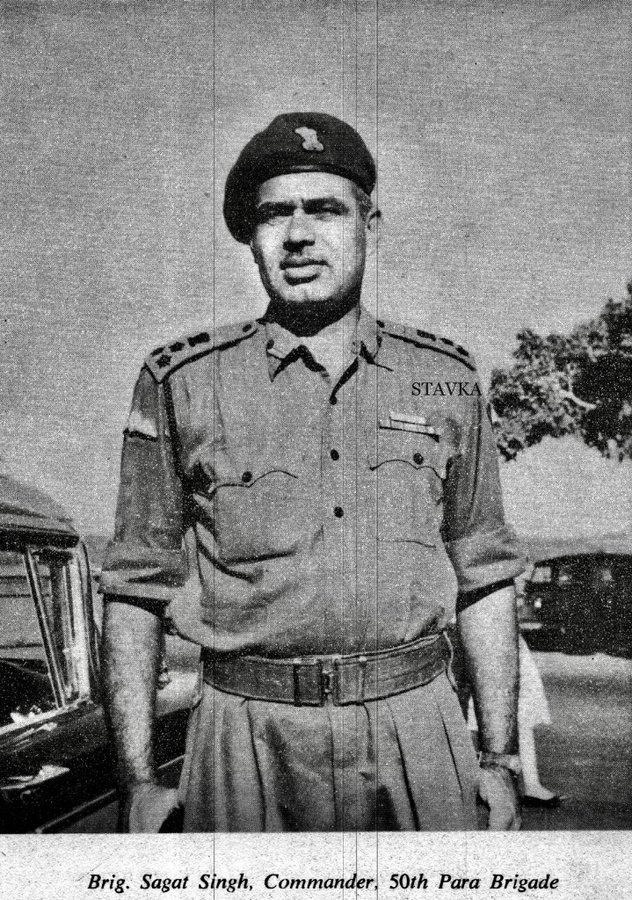
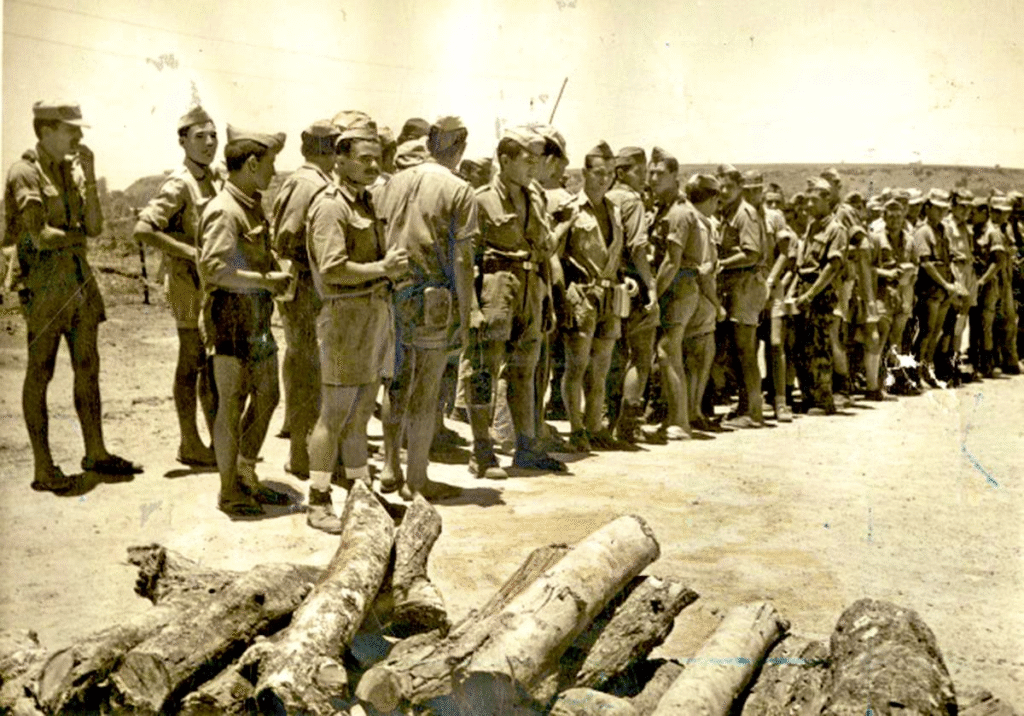
Operation Vijay, the military action to liberate Goa, is often described as swift—but its success owed much to Sagat Singh’s decisions on the ground. Commanding the 50th Para Brigade, he rejected predictable routes and ordered his troops to advance through smugglers’ paths, bypassing Portuguese defences.

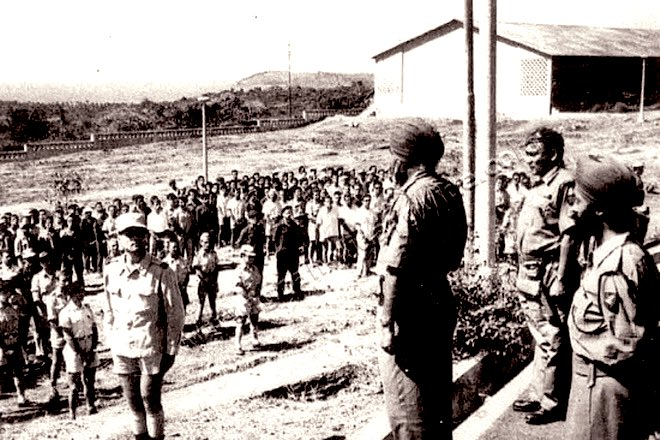
His most symbolic act—ordering soldiers to replace steel helmets with maroon berets while entering Panjim—was not theatrics. It was psychological warfare. It signalled confidence, reduced the appearance of occupation, and reassured the civilian population. Within 36 hours, Goa was liberated, and Sagat Singh emerged as the operational face of the victory.

Yet, the Indian state did not award gallantry medals for the Goa operation—an early indication of how political caution sometimes eclipsed military achievement.

1971: The Meghna Gamble

Sagat Singh’s finest hour came during the 1971 Bangladesh Liberation War, where his command of IV Corps demonstrated his genius for manoeuvre warfare. While conventional wisdom dictated slow advances with secure supply lines, Sagat Singh ordered a bold helicopter-borne crossing of the Meghna River—deep into enemy territory.

This move shattered Pakistani defensive planning. By bypassing strongholds instead of confronting them head-on, Sagat Singh accelerated the collapse of Pakistani resistance in eastern theatre. The fall of Dhaka soon followed.

The “Meghna Helibridge” is now studied as a classic example of operational audacity—where risk, when calculated correctly, shortens wars and saves lives.

Leadership Traits That Set Him Apart

Sagat Singh’s leadership was defined by three core traits:

  1. Decentralised Command: He trusted junior officers, empowering them to act independently within a clear intent.
  2. Terrain Mastery: Rivers, jungles and unconventional routes were not obstacles but tools.
  3. Moral Courage: He took responsibility for bold decisions, understanding that indecision often costs more than failure.

Ironically, such qualities also made him uncomfortable within rigid bureaucratic systems. Despite his achievements, his post-war career did not match his battlefield stature, and he retired without ever commanding the Army as Chief.

Recognition Abroad, Ambivalence at Home

While India awarded him the Padma Bhushan, Bangladesh formally acknowledged his decisive role in its liberation decades later. Within India, however, Sagat Singh remains underrepresented in textbooks and public memory—overshadowed by political narratives and more institutionally favoured figures.

His life highlights a recurring paradox in Indian military history: commanders who deliver decisive victories are often celebrated selectively, depending on political context rather than strategic impact.

Why Sagat Singh Matters Today

In an era where warfare increasingly values speed, integration and joint operations, Sagat Singh’s campaigns feel strikingly modern. His belief that wars should be ended quickly, decisively and humanely—by collapsing enemy will rather than engaging in attrition—offers enduring lessons for military planners and policymakers alike.

Lt Gen Sagat Singh was not merely a general who won wars. He was a commander who changed how India fought them. Remembering him is not about nostalgia—it is about recognising the kind of leadership that secures nations when history demands bold choices.

Goa Liberation Day: Watch Pics and Videos When Goa Was Freed from Clutches of Portugal Rule…

0

Goa Liberation Day 2025 is observed on 19 December, marking 64 years of Goa’s freedom from Portuguese rule. The day commemorates Operation Vijay (1961)—a swift and decisive military action that ended over 450 years of colonial rule and completed India’s territorial integration after Independence.

While most of India gained freedom in 1947, Goa remained under Portuguese control for another 14 years. Goa Liberation Day serves as a reminder that India’s independence was a process achieved through sustained struggle, diplomacy, and ultimately decisive action when peaceful means failed.

Goa Liberation Day: Watch Pics and Videos When Goa Was Freed from Clutches of Portugal Rule...

Goa Liberation Day 2025: History, Significance and Operation Vijay

0

Goa Liberation Day 2025, observed on 19 December, marks 64 years of Goa’s freedom from Portuguese rule. The day commemorates Operation Vijay (1961)—a swift and decisive military action that ended over 450 years of colonial rule and completed India’s territorial integration after Independence.

While most of India gained freedom in 1947, Goa remained under Portuguese control for another 14 years. Goa Liberation Day serves as a reminder that India’s independence was a process achieved through sustained struggle, diplomacy, and ultimately decisive action when peaceful means failed.

Historical Background

The Portuguese arrived in India in 1498 and captured Goa in 1510, making it the capital of Portuguese India. Unlike other colonial powers, Portugal refused to relinquish control even after India became independent. Lisbon claimed Goa was an integral part of Portugal, not a colony.

For years, India pursued diplomatic negotiations, international appeals, and economic measures to resolve the issue peacefully. However, these efforts proved unsuccessful, leaving Goa under foreign rule for more than four centuries.

The Goa Liberation Movement

The refusal of Portugal to negotiate led to the rise of the Goa Liberation Movement. In 1946, leaders such as Dr Ram Manohar Lohia and Dr Juliao Menezes openly challenged Portuguese restrictions, inspiring mass resistance.

Peaceful protests, strikes, and civil disobedience became widespread. The Portuguese administration responded with arrests, censorship, and repression, but the spirit of resistance among Goans remained unbroken.

Why Military Action Became Inevitable

India initially avoided military action as Portugal was a NATO member and New Delhi sought to prevent international escalation. However, tensions intensified in November 1961 when Portuguese forces fired on Indian fishermen and detained civilians. These actions made it clear that diplomacy had failed.

Operation Vijay, 1961

In December 1961, Prime Minister Jawaharlal Nehru approved Operation Vijay, a joint operation by the Indian Army, Navy, and Air Force to liberate Goa, Daman, and Diu.

Key highlights of the operation:

  • Deployment of around 30,000 Indian troops
  • Rapid land advance by the Army
  • Naval blockade by ships including INS Delhi and INS Mysore
  • Air support by the Indian Air Force using Canberra bombers

The operation was completed in just 36 hours with minimal casualties. On 19 December 1961, Portuguese Governor-General Manuel António Vassalo e Silva surrendered unconditionally, ending Portuguese rule in India.

Impact of Liberation

Following liberation, Goa became a Union Territory in 1961 and attained statehood in 1987. The region witnessed major political, social, and economic transformation.

Today, Goa is one of India’s leading tourism destinations. Portuguese influences in architecture, cuisine, language, and festivals have evolved into a distinctive cultural identity rather than symbols of colonial rule.

Goa Liberation Day 2025 Celebrations

Goa Liberation Day is celebrated with pride across the state, particularly in Panaji. Key events include:

  • Official ceremonies and tributes by the Governor and Chief Minister
  • Parades and torchlight processions
  • Cultural programmes and exhibitions
  • Special events in schools and colleges

Significance of Goa Liberation Day

The significance of Goa Liberation Day 2025 extends beyond history. It symbolises:

  • The completion of India’s freedom struggle
  • National unity and sovereignty
  • The sacrifices made for independence
  • Respect for India’s cultural diversity

Goa Liberation Day reminds the nation that freedom was not achieved in a single moment, but through perseverance, sacrifice, and decisive leadership.


New Insurance Bill 2025 Explained How Sabka Bima Sabki Raksha Law and 100 per cent FDI could Reshape India’s Insurance Sector

0

Parliament has cleared the Sabka Bima Sabki Raksha Bill 2025, a major reform that is set to redefine India’s insurance landscape. The bill allows 100 percent foreign direct investment in the insurance sector, raising the previous cap of 74 percent, and introduces long awaited changes aimed at expanding coverage, strengthening policyholder protection and modernising decades old insurance laws.

What is the Sabka Bima Sabki Raksha Bill

The Sabka Bima Sabki Raksha Bill is an amendment to multiple insurance related laws, including the Insurance Act of 1938, the IRDAI Act of 1999 and the Life Insurance Corporation Act of 1956. The government says the objective is to make insurance more accessible, inclusive and robust while aligning the sector with India’s long term financial goals.

Why the government opened insurance to 100 percent FDI

By allowing full foreign ownership, the government aims to attract global insurers with deeper capital, advanced technology and global risk management expertise. Officials believe this move will improve competition, encourage innovation and help insurers reach underinsured and uninsured populations across India.

What changes for insurance companies and investors

Foreign companies can now own Indian insurance firms without requiring an Indian partner. This could lead to new market entrants, expansion of existing players and faster growth in health, life and general insurance segments. Industry experts say it may also improve solvency levels and operational efficiency across the sector.

How policyholders are expected to benefit

The bill places strong emphasis on protecting consumers. It proposes clearer regulatory powers for IRDAI, stronger grievance redressal mechanisms and the creation of a policyholders’ protection and education fund. The government argues that increased competition will also lead to better priced products and wider choices for customers.

What concerns were raised during parliamentary debate

Some opposition members questioned whether full foreign ownership could reduce domestic control over a critical financial sector. Others sought greater scrutiny through a select committee, citing data security and long term regulatory risks. Despite these concerns, the bill was passed after detailed debate in both houses.

Why this reform matters in the long run

India’s insurance penetration remains low compared to global averages. The government has set an ambitious target of achieving near universal insurance coverage by 2047. Policymakers believe this reform could be a key step toward that goal by bringing in capital, expertise and scale needed to insure a growing economy.

What happens next after the bill’s passage

With parliamentary approval secured, regulatory changes and implementation guidelines are expected in the coming months. Analysts anticipate increased merger activity, new product launches and a gradual transformation of the insurance ecosystem as global players begin to expand their presence in India.

Missed Planning Your Holiday? These Top 8 Destinations Still Make a Perfect December Escape

0

Think December is already booked out for travel plans Think again. Even as the year rushes toward its final days, there are several destinations that remain surprisingly doable for a last minute getaway. From snow covered Himalayan slopes to island beaches and visa friendly international picks, these places prove that spontaneous travel can still end the year on a high.

Why December remains ideal for spontaneous trips

December sits at a sweet spot for travel. The weather is pleasant across most regions, holiday energy is high and many destinations are In their peak season. While popular spots may look crowded at first glance, smart choices and flexible planning can still unlock memorable trips without months of advance booking.

Auli turns into a snow dream just in time

For travellers chasing winter magic, Auli in Uttarakhand delivers postcard perfect views by December. Snow covered slopes, cable car rides and crisp mountain air make it a favourite among skiing enthusiasts and first time snow seekers alike. Even short stays here feel like a full fledged winter holiday.

Bhutan offers calm when the year feels loud

If your idea of a year end break is slowing down, Bhutan stands out. Winter brings clear skies, peaceful monasteries and quieter streets. With easy entry for Indian travellers, the country offers culture, nature and reflection wrapped into one serene December escape.

Island life shines in Andaman and Lakshadweep

For those who prefer sun over snow, island destinations still make sense in December. The Andaman Islands and Lakshadweep offer calm seas, excellent visibility for diving and uncrowded beaches. From coral reefs to sunset kayaking, these islands promise a refreshing way to close the year.

The Rann of Kutch transforms into a cultural wonder

Winter is when the salt desert of Kutch truly comes alive. The vast white landscape, combined with folk performances, handicrafts and local cuisine, creates a rare travel experience. December nights under the stars here feel unlike anywhere else in India.

Dubai proves quick trips can still feel grand

Dubai remains one of the easiest international escapes for last minute planners. With year end events, shopping festivals and family friendly attractions, the city offers something for every kind of traveller. Short flight duration and seamless connectivity make it a stress free choice.

Vietnam and Uzbekistan bring history and flavour

Travellers craving culture and architecture can look toward Vietnam and Uzbekistan. From historic towns and vibrant street food scenes to ancient Silk Route cities, these destinations balance affordability with depth. December weather adds to the comfort of exploring both countries.

Why waiting no longer makes sense

Year end travel does not need perfect planning or fixed itineraries. Sometimes, the best trips happen when decisions are made late but lived fully. These destinations prove that even in December, there is still room for adventure, rest and a memorable goodbye to the year.