Home Blog Page 103

SHANTI Bill: Know What it Is Which Opens Nuclear Power Sector to Private Participation

0

The Union Cabinet has approved the Sustainable Harnessing and Advancement of Nuclear Energy for Transforming India (SHANTI) Bill, marking a major policy shift by opening India’s tightly regulated nuclear power sector to private participation. The move is seen as critical for achieving the national target of 100 gigawatt nuclear power capacity by 2047 and supporting long-term energy security.

Opening Nuclear Sector to Private Players

The SHANTI Bill proposes allowing private companies to enter civil nuclear power generation under strict government oversight. While operational participation will be opened up, the Department of Atomic Energy will retain control over core strategic functions such as nuclear material production, heavy water management and radioactive waste handling. The reform aims to mobilise large-scale investment that the public sector alone cannot sustain.

Key Legal and Investment Reforms

A central feature of the Bill is the amendment of India’s civil nuclear liability framework. It seeks to shield plant operators and cap the liability of equipment suppliers, addressing long-standing concerns that have deterred private and foreign investment. Operator insurance cover is proposed to be redesigned at ₹1,500 crore per incident through the Indian Nuclear Insurance Pool. The Bill also allows up to 49 per cent foreign direct investment and proposes a unified legal framework for atomic energy, including a specialised nuclear tribunal.

Role in Energy Transition and Net-Zero Goals

Officials said the reforms are driven by rising domestic energy demand, rapid growth of data centres and India’s commitment to achieve net-zero emissions by 2070. Nuclear power is being positioned as a stable, low-carbon base-load source to complement renewable energy. The government has also announced a ₹20,000 crore Nuclear Energy Mission for research and development of small modular reactors, with plans to operationalise five indigenous SMRs by 2033.


India Forex Reserves Rise to $687.26 Billion

0

ndia’s foreign exchange reserves recorded a marginal increase of $1.03 billion to $687.26 billion in the week ended December 5, according to RBI’s latest Weekly Statistical Supplement. The rise was primarily supported by higher gold reserves, even as foreign currency assets declined slightly. The overall level of reserves remains close to the all-time high of $704.89 billion achieved in September 2024.

Gold Reserves Drive Weekly Increase

Gold reserves rose by $1.033 billion to $106.984 billion during the reported week. The increase reflects the recent uptrend in global gold prices, driven by heightened geopolitical uncertainties and strong investment demand for the safe-haven asset. The rise in gold holdings helped offset the modest fall in other components of the reserve basket.

Foreign Currency Assets See Marginal Dip

Foreign currency assets, which form the largest share of India’s forex reserves, stood at $556.88 billion. This represented a decline of about $151 million from the previous week. Despite short-term fluctuations, the RBI has maintained that the overall reserve position remains robust and adequate to manage external sector risks.

External Sector Strength and RBI Assessment

Following its latest monetary policy review, the RBI stated that India’s foreign exchange reserves are sufficient to cover more than 11 months of merchandise imports. The central bank has expressed confidence in the country’s ability to comfortably meet external financing requirements, highlighting resilience in the external sector amid global volatility.

Facts

  • India’s forex reserves stood at $687.26 billion in the week ended December 5, 2025.
  • Gold reserves increased to $106.984 billion, rising by over $1 billion in one week.
  • Foreign currency assets form the largest component of India’s forex reserves.
  • India’s highest-ever forex reserves were recorded at $704.89 billion in September 2024.

Trends in Reserves and Rupee Management

In recent years, India’s forex reserves have shown varied trends, rising by about $58 billion in 2023, increasing modestly in 2024, and expanding by nearly $47–48 billion so far in 2025. The RBI actively manages reserves by buying dollars when the rupee is strong and selling them during periods of weakness, as the currency has depreciated by over 5 per cent on a cumulative basis this year.

Supriya Sahu IAS: Meet the Tamil Nadu Officer Who Won the UN’s Highest Environmental Award

0

At a time when climate change headlines are filled with warnings and missed targets, one Indian civil servant’s work has quietly caught the attention of the world. Supriya Sahu, a senior IAS officer from Tamil Nadu, has been honoured with the United Nations Champions of the Earth Award, the highest recognition given by the UN for environmental leadership. The award places her among a select global group whose ideas have translated into real change on the ground.

How a career bureaucrat became a climate leader

Supriya Sahu belongs to the 1991 batch of the Indian Administrative Service and has spent more than three decades in governance. 

Her career did not begin in environmental policy. She worked across public health, administration and even national broadcasting institutions. This wide exposure shaped a governance style that later helped her approach climate challenges not as abstract concepts, but as everyday problems affecting people’s lives.

Currently, she serves as the Additional Chief Secretary for Environment, Climate Change and Forests in Tamil Nadu, a role that gives her direct responsibility over the state’s ecological future.

Turning climate plans into measurable impact

What drew international attention to Sahu’s work is her focus on implementation. Under her leadership, Tamil Nadu expanded forest cover, restored degraded land and strengthened mangrove ecosystems along the coast. Wetlands were revived and biodiversity protection was linked directly with climate resilience, reducing the impact of floods and heatwaves.

The simple idea that helped beat extreme heat

Among her most talked-about initiatives is the Cool Roof programme. Instead of expensive infrastructure, the project used reflective paint, natural ventilation and basic design changes to lower indoor temperatures in schools and homes. In some areas, temperatures dropped by several degrees, offering relief to communities most vulnerable to extreme heat.

Cleaning hills, creating jobs

In the Nilgiris and other ecologically sensitive regions, Sahu led campaigns to reduce plastic waste and protect water sources. These efforts were built around community participation, ensuring that environmental protection also created livelihoods. Large-scale green initiatives under her leadership have generated thousands of employment opportunities linked to conservation and eco-restoration.

Why the UN took notice

The UN has highlighted her work for addressing multiple crises at once climate change, pollution and biodiversity loss while keeping people at the centre of solutions. The Champions of the Earth Award recognises leadership that delivers results, not just promises.

story bigger than one award

Supriya Sahu’s recognition reflects a larger shift in how climate leadership is emerging from within governance systems. Her work shows that sustainable change does not always come from grand speeches, but from practical decisions taken quietly and consistently.

As climate risks grow, her approach offers a rare example of how policy, people and the planet can move forward together.

Sanskrit in Pakistan University: In a First Since Partition, Ancient Language to Be Taught in College

0

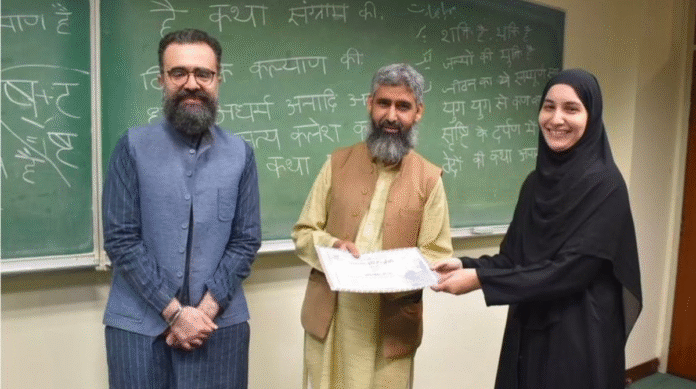
In a move that has drawn attention across South Asia, a Pakistani university is set to introduce Sanskrit as an academic subject, marking the first such initiative since the Partition of India in 1947. The decision is being viewed as a significant cultural and educational moment, especially given the complex political and historical relationship between India and Pakistan.

The Initiative has been announced by the University of Engineering and Technology (UET), Lahore, which plans to offer Sanskrit as part of its academic curriculum. 

The course is expected to include the study of classical texts such as the Mahabharata and the Bhagavad Gita, approached from literary, historical and philosophical perspectives rather than religious instruction. University officials have emphasised that the subject will be taught purely as a language and civilizational study.

Why Sanskrit matters in the Pakistani context

Sanskrit is one of the oldest classical languages in the world and has deep roots across the Indian subcontinent, including regions that are now part of Pakistan. Ancient centres of learning like Taxila once thrived in this region, where Sanskrit and related languages were used in scholarly discourse. Studying Sanskrit allows access to a vast body of knowledge on ancient science, mathematics, philosophy and governance that shaped early South Asian civilisation.

An academic move, not a religious one

Authorities involved in the programme have clarified that the introduction of Sanskrit is not meant to promote religious beliefs. Instead, it aims to help students, historians and researchers engage directly with original historical texts, inscriptions and manuscripts. This academic framing has helped position the initiative as an intellectual expansion rather than a cultural provocation.

break from post-partition educational trends

After Partition, Sanskrit gradually vanished from Pakistan’s education system as curricula evolved around Islamic studies and Persian-Arabic literary traditions. Reintroducing the language after nearly eight decades is therefore symbolically significant. It suggests a willingness within academic spaces to explore shared heritage and pre-partition history without ideological barriers.

Mixed reactions, wider implications

The announcement has been welcomed by scholars in India and abroad, who see it as a step toward cultural openness and academic collaboration. 

Within Pakistan, reactions have been mixed, with appreciation from academic circles and scepticism from more conservative voices. Despite this, the move highlights how education can create space for dialogue beyond political divides.

While the number of students enrolled may be limited initially, the decision carries broader meaning. It underlines the idea that languages and knowledge transcend borders, and that revisiting history academically can open new paths for understanding in a divided region.

Kriti Sanon Enters IMDb’s Top 10 Most Beautiful Actresses in the World And She’s the Only Indian on the List

0

Kriti Sanon: When global platforms talk beauty, talent and influence in the same breath, Kriti Sanon’s name now stands tall among the world’s finest. 

In a moment that has sparked conversations across cinema and pop culture circles, Kriti has emerged as the only Indian actress featured in IMDb’s Top 10 Most Beautiful Actresses in the World, placing her firmly on a global stage dominated by international stars. But behind this recognition lies a journey far more compelling than glamour alone.

From Engineering Classrooms to Red Carpets

Born in New Delhi on July 27, 1990, Kriti Sanon did not arrive in the film industry with a famous surname or a ready-made launchpad. Armed instead with an engineering degree in Electronics and Communication, she stepped into modelling through sheer ambition. Commercials opened doors, but it was her decision to bet on herself and leave a conventional career behind, that quietly set the foundation for what would follow.

A Debut That Changed Everything

Kriti made her acting debut in 2014, first in Telugu cinema with 1: Nenokkadineand then in Bollywood with Heropanti. The latter earned her the Filmfare Award for Best Female Debut, instantly marking her as one to watch. Yet, unlike overnight sensations, Kriti chose a steady climb experimenting, learning and evolving with every role.

Breaking the ‘pretty face’ stereotype

While commercial successes like Dilwale, Luka Chuppi and Bareilly Ki Barfishowcased her mass appeal, it was Mimi (2021) that redefined how audiences viewed her. Portraying a surrogate mother with raw honesty, Kriti delivered a career-defining performance that won her the National Film Award for Best Actress, a rare feat for an actress often associated with mainstream cinema. It was proof that beauty and depth could coexist powerfully.

Versatility that keeps audiences guessing

Post Mimi, Kriti refused to be boxed into a single image. From the horror-comedy Bhediya to the romantic sci-fi Teri Baaton Mein Aisa Uljha Jiya and the female-led entertainer Crew, double role in Do Patti, she has consistently chosen roles that challenge perception. Her upcoming projects promise further experimentation, keeping fans curious about what she’ll do next.

Beyond acting: Building a brand

Kriti’s influence extends far beyond films. She is a successful entrepreneur, co-founding the skincare brand Hyphen and launching her own production house Blue Butterfly Films, signalling her intent to shape stories not just star in them. With millions of followers and major brand endorsements, she has crafted a personal brand rooted in relatability, confidence and independence.

Why this IMDb recognition matters

IMDb’s global beauty list isn’t just about appearances it reflects popularity, global visibility and cultural impact. Kriti being the only Indian actress to feature highlights her growing international resonance, placing her alongside the world’s most admired faces.

star still rising

Kriti Sanon’s journey from an engineer with big dreams to a globally recognised actress is a reminder that persistence, reinvention and self-belief can quietly rewrite destinies. As she continues to blur the lines between commercial success and meaningful cinema, one thing is clear: this recognition is not the peak it’s just another milestone in a journey that’s still unfolding.

Isabgol Benefits 2025: Why Psyllium Husk Is Trending Again for Digestion and Gut Health

0

Isabgol (psyllium husk) in 2025 has made a strong comeback in health conversations, trending across social media, nutrition forums and wellness clinics. Once considered a simple household remedy for constipation, it is now being recognised globally for its science-backed role in improving digestion, gut health and metabolic balance. With rising digestive disorders linked to stress, processed food and sedentary lifestyles, people are turning back to this natural fibre solution.

What Exactly Is Psyllium Husk?

Isabgol is derived from the seeds of the Plantago ovata plant and is exceptionally rich in soluble dietary fibre. When mixed with water, it forms a gel-like substance that travels through the digestive tract, helping regulate bowel movements. This unique property makes it effective not just for constipation, but also for overall digestive balance.

Digestive health and gut benefits

One of the primary reasons isabgol is trending again is its ability to improve gut regularity without harsh side effects. It softens stools in cases of constipation and absorbs excess water during diarrhoea, helping normalise stool consistency. Additionally, psyllium acts as a mild prebiotic, supporting the growth of beneficial gut bacteria and improving overall gut microbiome health, which plays a crucial role in immunity and nutrient absorption.

Support for cholesterol and blood sugar control

Beyond digestion, studies show that regular psyllium intake can help lower LDL (bad) cholesterol by binding bile acids in the intestine. It also slows down carbohydrate absorption, helping prevent sharp post-meal blood sugar spikes, making it useful for people managing diabetes or insulin resistance under medical guidance.

Isabgol and weight management

Another reason for its renewed popularity is its role in appetite control. The fibre expands in the stomach, promoting a feeling of fullness and reducing unnecessary snacking. While it is not a weight-loss drug, it supports healthier eating habits when combined with a balanced diet.

Safe Usage and Important Precautions

Health experts stress that isabgol should always be taken with adequate water or milk to avoid bloating or discomfort. Overuse or dry consumption can cause digestive issues. People with intestinal blockages, swallowing difficulties, or those on medication should consult a doctor before regular use.

Why ifits perfectly into 2025 wellness trends

As wellness trends shift toward natural, affordable and evidence-based solutions, isabgol stands out as a simple yet powerful dietary fibre. Its versatility, safety and proven benefits explain why psyllium husk is once again earning its place in modern gut-health routines.

Air India’s New Paws on Board Policy: Pets Up to 10 kg Can Now Fly In-Cabin

0

Air travel for pet parents in India has become significantly more convenient with Air India introducing its upgraded ‘Paws on Board’ policy, which allows cats and dogs weighing up to 10 kg (including their carrier) to travel inside the aircraft cabin with their owners. This move marks a progressive shift in Indian aviation, as pets were traditionally restricted to cargo or checked baggage, often causing stress and safety concerns for both animals and owners.

Air India's New Paws on Board Policy: Pets Up to 10 kg Can Now Fly In-Cabin

How the in-cabin travel option works

Under the new policy, eligible pets can travel alongside their parents on select domestic and international Air India flights. Pets must be placed in a soft, ventilated carrier that fits under the seat, and are typically accommodated in the last row of economy class, usually in aisle seats for better accessibility. To ensure safety and comfort, only two pets are allowed in the cabin per flight, making early booking essential.

Booking timeline, fees and required documents

Pet travel must be booked at least 48 hours before departure, subject to approval and seat availability. Owners are required to submit valid health certificates issued by a registered veterinarian, proof of rabies vaccination, and sign indemnity forms at check-in.
Pets must be at least eight weeks old, medically fit to fly, and not pregnant or recently delivered. Sedating pets is strongly discouraged due to health risks at cruising altitude.
Applicable fees vary depending on whether the flight is domestic or international.

Weight rules and international route restrictions

Air India has clearly defined travel categories based on weight. Pets weighing up to 10 kg are allowed in the cabin, those between 10 kg and 32 kg must travel as checked baggage, while animals exceeding 32 kg are accepted only as cargo.
However, certain international destinations including the US, Canada, Australia and some UK airports have stricter animal import regulations, which may prohibit in-cabin pet travel regardless of airline policy.

Breed and safety regulations

Special safety considerations apply to brachycephalic (short-nosed) breeds such as Pugs, Bulldogs and Shih Tzus, which are prone to breathing difficulties. These breeds are generally not permitted in cargo and are carefully assessed even for cabin travel. Carriers must allow adequate ventilation and movement, and pets must remain inside them throughout the journey.

Is Air India the only airline offering this?

While Air India’s policy has drawn significant attention, it is not alone in moving toward pet-friendly flying. Akasa Air also allows small pets to travel in the cabin on domestic routes under its “Pets on Akasa” initiative, with relatively flexible booking windows. Alliance Air permits limited in-cabin pet travel with stricter weight limits. However, most major Indian carriers including IndiGo and Vistara continue to restrict pets to cargo or checked baggage only.

Why this policy matters

Air India’s Paws on Board reflects a growing global recognition of pets as family members rather than cargo. By allowing small pets to stay close to their owners, the airline has reduced travel anxiety and improved animal welfare standards. While regulations remain strict, this policy signals a meaningful shift toward more compassionate, inclusive and modern air travel in India.

TIME magazine has named “The Architects of AI” as its 2025 Person of the Year

0

TIME magazine has named “The Architects of AI” as its 2025 Person of the Year, recognising individuals shaping artificial intelligence at the intersection of technology, society, and power. Among those honoured are two Indian-American figures, Karandeep Anand and Sriram Krishnan, whose work reflects how AI is simultaneously transforming personal lives and global geopolitics.

Shift From Inventors to System Builders

The 2025 recognition marks a departure from celebrating lone innovators to acknowledging leaders who operate within complex systems. Artificial intelligence is no longer experimental or distant. It is embedded in daily products, national strategies, and institutional decision-making. Anand and Krishnan represent this shift, influencing AI not only through innovation but also through governance, ethics, and scale.

Karandeep Anand and Human-Centred AI

As Chief Executive Officer of Character.AI, Karandeep Anand has focused on the emotional dimension of artificial intelligence. His platform enables users to engage in conversational and imaginative interactions, positioning AI as a form of digital presence rather than a productivity tool. The rapid adoption of Character.AI, especially among younger users, highlighted AI’s role in addressing isolation and the need for connection. At the same time, it triggered debates around emotional dependence, safety, and ethical boundaries, placing Anand at the centre of discussions on how deeply AI should integrate into human relationships.

Sriram Krishnan and AI as Strategic Power

Sriram Krishnan operates in a markedly different arena. As a senior adviser on artificial intelligence in the White House, he works on aligning technological advancement with national interest. His approach treats AI as critical infrastructure, where data centres, chips, and regulation directly affect global competitiveness. Krishnan’s career across major technology firms, venture capital, and government reflects a focus on accelerating deployment and reducing policy friction, ensuring the United States maintains strategic leadership in AI development.

Facts

  • TIME Person of the Year highlights individuals shaping global change.
  • Character.AI is known for conversational and role-based AI systems.
  • Artificial intelligence is increasingly viewed as strategic infrastructure.
  • Indian-Americans lead several major global technology companies.

Indian-American Influence in the AI Era

The prominence of Anand and Krishnan reflects a broader trend of Indian-American leadership in artificial intelligence. Leaders such as Sundar Pichai, Satya Nadella, Arvind Krishna, and Aravind Srinivas are steering major platforms and institutions through the AI transition. Together, they demonstrate how artificial intelligence has become an organising principle of modern life, shaping both individual experience and global power structures.

Depression Treatment: US Approves Its First At-Home Medical Device…

0

The United States has approved its first at-home medical device for treating depression, marking a major shift in mental health care delivery. The US Food and Drug Administration has cleared a headset developed by Flow Neuroscience, allowing adults with moderate to severe depression to receive treatment outside clinical settings. The device is expected to be launched in the US by mid-2026.

FDA Clearance and Device Overview

The newly approved device, named FL-100, is a prescription headset designed for home use. It delivers a mild electrical current to specific areas of the brain linked to mood regulation. According to the manufacturer, the device offers a non-drug alternative to antidepressant medication, which can cause side effects with prolonged use. The FDA approval followed a higher regulatory threshold introduced for brain stimulation devices in recent years.

How the Headset Treats Depression

FL-100 works using transcranial direct current stimulation, a technique that applies low-level electrical stimulation through pads placed on the forehead. The current targets the dorsolateral prefrontal cortex, a region associated with mood control and stress response. Patients typically undergo a 12-week treatment plan, starting with frequent sessions that gradually taper. Each session lasts around 30 minutes and is conducted at home under medical guidance.

Clinical Evidence and Safety Profile

FDA clearance was based on clinical trials involving 174 adult participants. Results showed a significant reduction in depression symptoms among those using the device compared to control groups. Over half of the treated patients achieved remission during the study period. Reported side effects were mild and temporary, including headaches and skin irritation. The FDA stated that the benefits, though modest, outweigh the potential risks.

Facts

  • The device uses transcranial direct current stimulation technology.
  • It is approved for adults aged 18 years and above.
  • The FDA revised rules for brain stimulation devices in 2019.
  • The clinical trial results were published in Nature Medicine in 2024.

Cost, Availability and Mental Health Impact

Flow Neuroscience estimates the device will cost between 500 and 800 US dollars, with no subscription or maintenance fees. Insurance coverage discussions are ongoing, with announcements expected in early 2026. Depression affects over 20 million adults in the US, with rates rising sharply over the past decade. Officials and experts believe at-home treatment options like FL-100 could improve access to care and reduce dependence on medication-based therapies.

December 13 in History: Abel Tasman Discovered New Zealand in 1642

0

Abel Tasman: The first reported European discovery of New Zealand was made by him in 1642.

Abel Janszoon Tasman was born in the Netherlands and was an experienced sailor. Tasman and his crew of 110 men on two ships, the Heemskerck and the Zeehaen set sail from Jakarta in August 1642. The aim of the voyage was to find resources and suitable land for settlement. He discovered Tasmania (as it would later be called) on 24 November, naming it Van Diemen’s Land after Anthony van Diemen, the governor general of the Dutch East Indies.

From there Tasman sailed further east, becoming the first to cross the sea now known as the Tasman Sea.

On 13 December 1642 the Dutch sighted ‘a large land, uplifted high’ – probably the Southern Alps. After sighting land, Tasman’s ships turned south, then north to pass Cape Foulwind and Cape Farewell. He sailed around Farewell Spit into what is now called Golden Bay, where he anchored on 18 and 19 December.

One of Tasman’s small boats, passing between the two ships, was rammed by a Māori waka. Four of Tasman’s party were killed. It is likely that the Māori, of the Ngāti Tūmatakōkiri tribe, saw these strange newcomers as threatening, especially when the Dutch responded by shooting and hitting one Māori. Tasman named the place where he anchored Murderers Bay.

Despite the tragic encounter, Tasman was impressed by the new country. He wrote that the place was ‘a very fine land’. Bad weather and lack of food and water lead to Tasman leaving in early January 1643.

It was Tasman who opened the way for the European history of New Zealand.

British Pacific expeditions

The first Englishman to sail the Pacific, Francis Drake, crossed it from east to west during his 1577–1580 circumnavigation of the globe. Later the English interest in the Pacific grew due to England’s rivalries with Spain, Holland and France. In 1767 Samuel Wallis was the first European to discover Tahiti. By the time Wallis returned to England in May 1768, another expedition to the Pacific was already being organised.

The Royal Society wanted to see the transit of Venus (the passage of Venus across the face of the sun) which could be observed in the South Pacific. The observation would make it possible to accurately calculate distances from the Earth to both Venus and the sun. When Wallis returned with news of his discovery of Tahiti, the expedition was instructed to go there to make the observations. Lieutenant James Cook was made commander of the expedition.

In his youth Cook had been a sailor in the North Sea coal trade. In 1768 he was approaching 40 when he was given the job of commanding the South Pacific expedition.

In the name of science

After observing the transit of Venus, the expedition was to investigate if there was land to the south of Tahiti. The voyagers were then to turn west towards Abel Tasman’s New Zealand, to see how far it extended to the east. They also had to try and find where Australia’s eastern coastline lay.

December 13 in History: Abel Tasman Discovered New Zealand in 1642The goals of the voyage were to be scientific. Yet the English also wanted to expand trade and empire. Cook was careful to include in his reports information about the resources of the lands he visited, and if those lands were suitable for settlement by Britain.

On 8 October 1769 Cook landed at Poverty Bay and continued to explore New Zealand’s coast until April 1770. Cook completed two more voyages to New Zealand between 1772 and 1779.