Home Blog Page 101

Jairangam 2025 to Celebrate 100 Years of Guru Dutt with ‘Dastaan-e-Guru Dutt’ in Unique Dastangoi Format

0

Jairangam 2025: Marking the centenary of legendary filmmaker and artist Guru Dutt, the 14th edition of Jairangam (Jaipur Theatre Festival) will present Dastaan-e-Guru Dutt, a specially curated dastangoi that narrates his extraordinary life and creative journey. The festival, to be held from 18 to 21 December at Jawahar Kala Kendra, will feature a rich confluence of theatre, music, storytelling and cultural dialogue, including 11 productions, international participation from New Zealand, and performances by renowned theatre and film personalities such as Makarand Deshpande and Filmfare OTT Awards 2025 winner Zahan Kapoor.


To immerse the people of Rajasthan in the vibrant colours of theatre, the 14th Jairangam (Jaipur Theatre Festival) is being organised from 18 to 21 December at Jawahar Kala Kendra. The festival is being jointly organised by 3M Dot Bands Theatre Family Society, Department of Art and Culture, Rajasthan, and Jawahar Kala Kendra, Jaipur, where a rich confluence of theatre, art, culture, music and dialogue will be witnessed.

Renowned Bollywood actor Makarand Deshpande and Jairangam Festival Director Mann Gera addressed the media interaction. Sanjay Harpawat, Dr Hema Gera, J K Jaju and Y K Narula were also present on the occasion. Makarand Deshpande highlighted the golden journey of Jairangam and said that Deepak Gera’s vision has today taken a grand form as Jairangam. He added that Deepak Gera always inspired innovation, and it was his motivation that made it possible to create a play like Einstein. He also said that Jaipur’s audience is very special and has kept theatre alive. Appreciating the theme, he said that this year Jairangam is raising women’s voices, which is truly commendable.

Festival Director Mann Gera said that the festival has been curated with the colours of theatre, art and culture. She also shared that this year the festival has been designed keeping women at the centre.

The festival will begin on Thursday, 18 December at 12 Noon with the staging of Makarand Deshpande’s play Einstein for children at the Krishnayan Auditorium. At 2.00 PM, a talk show on “Ajit Rai – Theatre, Cinema and Everything in Between” will be held, featuring Makrand Deshpande, Gulab Singh Tanwar, Dharmendra Nath Ojha, Rajkumar Rajak and Abhishek Goswami. At 4.00 PM, Samina Zehra’s play The Girmit will be staged at Rangayan, followed by an evening performance of Einstein at 7.00 PM, open to audiences of all ages.

Special Highlights of Jairangam This Year

— Over four days: 11 theatre productions, musical performances, dastangoi, exhibitions and more
— Nine plays will be staged in Rajasthan for the first time
— Under the Spotlight Segment, six plays are proposed this year, featuring works by women theatre directors
— Seven plays are directed by women theatre directors
— For the first time, heritage walks will be organised at Jairangam, covering routes from Gem Cinema to Sanganeri Gate, Badi Chaupar, Hawa Mahal, Town Hall to Ram Prakash Theatre, offering insights into Jaipur’s architecture, culture and everyday life
— The Girmit, directed by Samina Zehra, is a theatre production from New Zealand, being staged in India for the first time. Jairangam is not only a platform for international productions but also a strong medium for connecting local artists with global performers. Jaipur’s own artist Mohammad Zaman will share the stage with international artist Nadia Freeman, reflecting meaningful cultural exchange and Jairangam’s commitment to providing an international platform to local talent
— As in previous editions, renowned film and theatre personalities will share the stage at Jairangam, including Makarand Deshpande, Filmfare OTT Awards 2025 winner Zahan Kapoor, international artist Nadia Freeman, Aditya Rawal, Shilpika Bordoloi, Mallika Taneja, Saurabh Nayyar, Girish Sharma, Mahir Mohiuddin, Srinivas Basetti, Nikita Saraf, Suruchi Sharma and Fauzia Dastango, among many others
— Raag–Mad, a folk and classical music fusion directed by Sandeep Ratnu, will be presented for the first time
— Marking 100 years of legendary artist Guru Dutt, Dastaan-e-Guru Dutt will narrate his story in a unique dastangoi format

Jairangam 2025 – Detailed Schedule

(Daily: ‘Bheetar/Bahar’ exhibition at Surekh Art Gallery, designed by Suruchi Sharma)

18 December

12.00 PM – Play: Einstein, Director: Maksrand Deshpande
Venue: Krishnayan Auditorium (For School Children Only)

2.00 PM – Dialogue Session: Ajit Rai – Theatre, Cinema and Everything in Between
Speakers: Makrand Deshpande, Gulab Singh Tanwar, Dharmendra Nath Ojha, Rajkumar Rajak, Abhishek Goswami
Venue: Krishnayan Auditorium

4.00 PM – Play: The Girmit, Director: Samina Zehra
Venue: Rangayan

7.00 PM – Play: Einstein, Director: Makrand Deshpande
Venue: Krishnayan Auditorium (Open to All)

19 December

12.00 PM – Play: Majuli, Director: Shilpika Bordoloi
Venue: Krishnayan Auditorium

2.00 PM – Play: Garam Roti, Director: Durga Venkatesan
Venue: Srikriti Art Gallery

4.00 PM – Play: Dhai Akhar Prem Ke, Director: Ruchi Bhargav Narula
Venue: Rangayan

7.00 PM – Raag Mad – Folk and Classical Music Fusion
Director: Sandeep Ratnu
Venue: Madhyavarti

20 December

9.00 AM – Heritage Walk: Jaipur – The Seen, The Unseen

12.00 PM – Play: Do You Know This Song, Director: Mallika Taneja
Venue: Krishnayan Auditorium

2.00 PM – Musical Performance: Mary and Jenny
Venue: Srikriti Art Gallery

4.00 PM – Play: Cross Roads, Director: Riju Bajaj
Venue: Rangayan

7.00 PM – Dastangoi: Dastaan-e-Guru Dutt
Venue: Madhyavarti

21 December

9.00 AM – Heritage Walk: Jaipur – The Seen, The Unseen

12.00 PM – Play: Waiting for Naseer, Director: Srinivas Basetti
Venue: Krishnayan Auditorium

2.00 PM – Play: Nanga Kapda, Director: Priyakshi Agrawal
Venue: Outside Library

4.00 PM – Play: Siachen, Director: Makarand Deshpande
Venue: Rangayan

7.00 PM – Play: Golden Jubilee, Director: Saurabh Nayyar

International Migrants Day 2025: Why It Is Observed on 18 December

0

International Migrants Day, observed every year on 18 December, is both a moment of reflection and a global call to action. The day highlights the rights, safety and dignity of migrants and refugees, while urging governments and societies to work towards safer, more orderly and humane migration systems.

Migration is a defining reality of the modern world. Millions of people cross borders due to conflict, climate change, economic hardship or lack of opportunities. International Migrants Day draws attention to the risks migrants face—ranging from exploitation and discrimination to violence and unsafe travel routes—and stresses the need for fairness, protection and compassion.

Focus on remembrance
In 2025, a key focus of the day is remembrance. The International Organization for Migration (IOM) has called on the global community to honour migrants and refugees who have died or gone missing during dangerous journeys. Overcrowded boats, unsafe border crossings and irregular migration routes have led to countless tragedies worldwide, making remembrance an essential part of the observance.

Role of international organisations
Organisations such as the IOM work closely with governments and communities to improve migrant safety, provide humanitarian assistance and promote responsible migration practices. On 18 December, these organisations advocate stronger international cooperation, better legal pathways and effective systems to protect vulnerable migrants.

Why the day matters
International Migrants Day also recognises the vital contribution migrants make to societies and economies. Migrants play essential roles in healthcare, construction, agriculture and service sectors. Protecting their rights ensures fair wages, safe working conditions and dignity, strengthening communities as a whole.

The message of International Migrants Day is clear: migration should never cost someone their life. Governments, institutions and citizens share the responsibility of creating safer migration pathways, countering misinformation and fostering empathy for those on the move.

Minorities Rights Day in India: Date, Meaning and Significance

0

Minorities Rights Day, observed annually on 18 December, is more than a symbolic date. It reaffirms the idea that India’s diversity is its strength and that protecting the rights of minority communities strengthens the nation as a whole. The day highlights the importance of awareness, dialogue and empathy in ensuring that every community feels safe, heard and valued.

When is Minorities Rights Day observed in India?

Minorities Rights Day is observed every year on 18 December. The day is dedicated to preserving, protecting and promoting the rights of minority communities, while reinforcing the principles of equality, dignity and mutual respect.

Why Minorities Rights Day matters

India is home to a rich mix of cultures, languages, religions and traditions. Minority communities are an integral part of this social fabric. Observing Minorities Rights Day draws attention to key issues such as social inclusion, access to opportunities, safety and equal treatment.

Minorities Rights Day in India: Date, Meaning and Significance

The day also serves as a reminder that equal rights are not optional, but essential for a healthy and functioning democracy.

What the day stands for

Minorities Rights Day focuses on raising awareness about the constitutional rights and legal protections available to minority groups. It emphasises the right to live without fear, discrimination or exclusion, and promotes harmony and peaceful coexistence in a plural society.

How the day is observed

Across the country, the day is marked through awareness campaigns, seminars, panel discussions and community events. Educational institutions, civil society groups and social organisations organise talks and workshops to inform citizens—especially young people—about minority rights and shared civic responsibility.

Role of awareness and education

Awareness and education are central to protecting minority rights. Events held on 18 December often focus on explaining legal safeguards, countering misinformation and encouraging constructive dialogue.

By understanding each other’s cultures and concerns, communities can reduce prejudice and build trust. Safety and inclusion remain core themes, highlighting the need for environments where minorities feel secure and respected.

Respect for diversity in workplaces, schools and neighbourhoods is as important as policy-level protections, reinforcing the idea that social inclusion begins with everyday actions.

Top 7 Indian Cities Food Lovers Crave to Visit: Street Food Is the Real Attraction Here

0

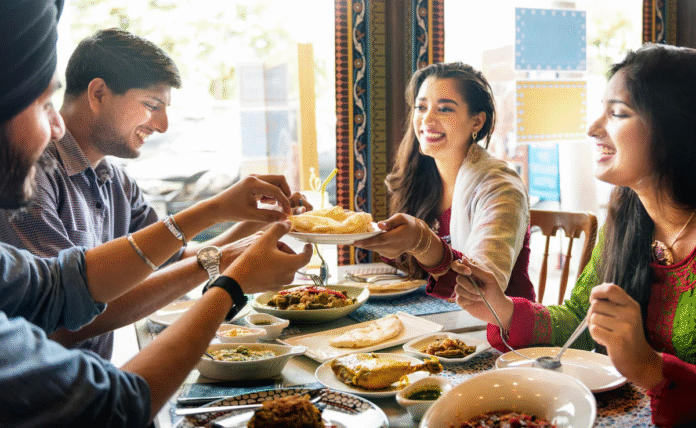
India’s street food is not just about hunger it’s about obsession. Some cities are so deeply associated with flavour that people plan trips purely around what they’ll eat. From chaotic lanes to legendary carts that have survived decades, these destinations offer street food experiences that are trusted, iconic and loved across generations. Here are seven Indian cities every street food lover dreams of visiting, along with verified, must-try spots that define their food culture.

Delhi: The capital of chaat and comfort

Delhi’s street food reflects its layered history and unapologetic love for indulgence. Chandni Chowk remains the epicentre, where Paranthe Wali Gali serves stuffed parathas fried in ghee, a tradition running since the 19th century. Jung Bahadur Kachori Wala is famous for spicy kachoris with sabzi, while Karim’s near Jama Masjid is known for kebabs and nihari that date back to Mughal kitchens. Natraj Dahi Bhalle is a must-stop for chaat lovers.

Mumbai: Street Food That Never Sleeps

Mumbai’s street food thrives on speed and simplicity. Ashok Vada Pav in Dadar is among the city’s most famous stops for this iconic snack. At Chowpatty, stalls serving bhel puri and sev puri have fed generations. Cannon Pav Bhaji near CST is a trusted name for buttery pav bhaji, while Badshah Cold Drink House remains a classic for falooda and shakes.

Kolkata: Where street food has soul

Kolkata’s street food is subtle yet powerful. Kusum Rolls on Park Street popularised the iconic kathi roll and remains a favourite. Outside New Market, Dacre Lane is known for telebhaja and fish fry. Puchka stalls near Vivekananda Park are considered among the city’s best, with sharper flavours unique to Kolkata.

Amritsar: Butter, bread and bold flavours

Street food in Amritsar is rich and generous. Kesar Da Dhaba is legendary for its dal makhani and desi ghee-laden meals. Ahuja Milk Bhandar near the Golden Temple is famous for lassi topped with thick malai. Kulcha Land and Bharawan Da Dhaba are trusted names for Amritsari kulchas.

Indore: India’s street food benchmark

Indore is often called India’s street food capital. Sarafa Bazaar comes alive at night with stalls serving bhutte ka kees, garadu and malpua. Chappan Dukan is known for poha-jalebi, with Young Tarang and Vijay Chaat House being popular stops. Johnny Hot Dog is a cult favourite.

Hyderabad: Street food beyond biryani

Hyderabad’s street food blends Nizami and local flavours. Nimrah Café near Charminar is iconic for Irani chai and Osmania biscuits. Street stalls around Charminar serve haleem and kebabs during festive seasons, while Gokul Chat in Koti is famous for North Indian chaat.

Jaipur: Royal Flavours on the Streets

Jaipur’s street food balances spice and tradition. Masala Chowk hosts multiple trusted vendors under one roof. Rawat Mishthan Bhandar is known nationwide for its pyaaz kachori, while Lassiwala on MI Road remains a landmark.

Why these cities matter

These destinations aren’t trending because of social media they’re loved because of consistency, history and trust. For food lovers, these cities aren’t just travel plans. They’re cravings waiting to be fulfilled.

Six Minutes to Christmas: How Delivery Apps Are Rewriting Our Festive Memories

0

There was a time when Christmas preparations began with excitement and ended with tired legs. A casual mention of “Santa cap chahiye” would instantly turn into a family mission. Parents would rush out in the evening traffic, hopping from one crowded shop to another, only to hear the same sentence repeatedly “out of stock”. We’d return home disappointed, frown-faced, sometimes settling for something close enough, sometimes with nothing at all. And yet, years later, those failed hunts are the stories we laugh about the most.

Fast forward to today, and Christmas arrives in under ten minutes

This year, festive needs don’t require planning, bargaining, or running around markets. A Santa cap, a Christmas tree, plum cake, winter decor, Secret Santa gifts everything appears on the phone screen, neatly categorised and beautifully packaged. Before you even finish explaining what you need, the delivery is already on its way. As my father jokingly said during a family discussion, “Itna toh samjhane ya gaadi nikalne mein lag jata hai, jitni der mein delivery ho jaati hai.”

And he’s not wrong.

Fast delivery apps have quietly become the new Santa of urban India. Christmas trees for desks and living rooms, fairy lights, ornaments, baking kits, plum cakes, cake batters, mugs, books, bouquets, winter caps, cute Santa hats even barbecue essentials for year-end parties all delivered in six to ten minutes. What once took hours of effort now takes a few taps.

Food, especially, has turned into a visual and sensory celebration. Bakeries and restaurants have gone all out with Christmas-themed desserts gingerbread doughnuts, snowman treats, tree-shaped cakes, plum cakes packed in festive tins, hot chocolate bombs, cinnamon-spiced goodies. They don’t just look Instagram-worthy; they taste like proper indulgence. Christmas, today, is not just celebrated it’s curated.

Secret Santa gifting, once a stressful last-minute scramble, is now effortlessly sorted. These apps offer curated gift hampers, books at heavy discounts, chocolates, cookies, quirky mugs, scented candles, and festive packaging that makes even a small gift feel thoughtful. The joy of giving hasn’t disappeared it has simply become faster and more convenient.

And yet, somewhere between the efficiency and excitement, something softer feels like it’s slipping away.

The chaos of crowded markets, the shared frustration, the laughter after a failed shopping trip, the long conversations during drives those moments created memories without us realising it. Today, convenience has replaced chaos, and speed has replaced stories. We have everything we need, but fewer reasons to step out together.

Maybe that’s the paradox of modern festivals. They are easier, prettier, and perfectly timed but also quieter in their own way.

Christmas still arrives with joy. It just comes riding on a delivery bike now, instead of tired parents returning home with shopping bags and stories that lasted a lifetime.

And perhaps, this year, the real magic lies in balancing both – enjoying the six-minute miracles, while still holding on to the memories that took hours to create.

2025: The Year of Firsts That Redefined India’s Sporting, Cultural and National Story

0

Some years pass quietly, while others mark a turning point. 2025 belongs firmly to the latter. Across sports, cinema, technology, finance and global representation, India witnessed a rare collection of first-ever moments that felt long overdue. Together, they shaped a year that will be remembered for rewriting narratives.

RCB ends years of heartbreak

For Royal Challengers Bengaluru fans, 2025 finally delivered what years of loyalty could not. RCB lifted their first major trophy, ending one of the longest waits in Indian franchise sport. The win was more than a title it was closure for a fan base that had turned hope into habit. Bengaluru celebrated not just victory, but vindication.

Virat Kohli creates a franchise first

Amid RCB’s historic triumph, Virat Kohli etched another personal milestone. He became the first player in IPL history to score over 300 sixes for a single franchise. In a league built on power-hitters, the achievement reinforced Kohli’s longevity, consistency and unmatched bond with one team.

Indian women’s cricket claims global glory

Indian women’s cricket reached a defining high in 2025 by winning the ICC Champions title for the first time. The victory marked a watershed moment for the sport in the country, reflecting years of steady progress, stronger domestic structures and rising global confidence. For many fans, it felt like the beginning of a new era rather than a single win.

Shah Rukh Khan’s long-awaited national recognition

In cinema, one of India’s most emotional firsts came when Shah Rukh Khan received his first National Film Award. Despite decades of superstardom, the honour had remained elusive. The award bridged the gap between mass love and institutional recognition, making it one of the most talked-about cultural moments of the year.

India takes a leap in technology and manufacturing

2025 also saw India unveil its first indigenous high-speed microprocessor, marking a major step toward semiconductor self-reliance. In aviation, the country inaugurated its first global aircraft engine maintenance facility, strengthening India’s position in high-value manufacturing and aerospace services.

Breaking new ground in sports beyond cricket

India made first-time breakthroughs in lesser-followed sports too. The country hosted and won the inaugural Kho Kho World Cup, giving a traditional Indian game global visibility. Indian athletes also secured maiden medals in speed skating at the senior world level, expanding India’s sporting footprint beyond conventional arenas.

Finance, exports and energy milestones

In banking, India witnessed its first payment bank transition into a small finance bank, signalling maturity in financial inclusion. On the sustainability front, India reached the milestone of generating 50 percent of its electricity from non-fossil fuel sources ahead of schedule a significant first in its climate journey.

Why 2025 will bremembered

What makes 2025 special is not one headline, but the pattern it reveals. Across fields, India didn’t just participate, it arrived. From overdue victories to quiet structural breakthroughs, this was the year many “almosts” finally turned into “at lasts”. And that collective shift is what makes 2025 truly 

China Turns Seawater Into Clean Fuel for Just Rs 24, Shakes Global Energy Powers

0

China has stunned the global energy community with a breakthrough claim that could reshape the future of clean fuel. According to recent reports, Chinese researchers have developed a technology that converts seawater directly into clean hydrogen fuel at a cost as low as Rs 24. The announcement has drawn immediate attention from major energy players including Saudi Arabia, the UAE and the United States, as it challenges existing assumptions about hydrogen production costs.

What the breakthrough iabout

Hydrogen is widely regarded as a key fuel for a low-carbon future because it emits only water when burned. However, producing green hydrogen has remained expensive and resource-intensive. China’s innovation reportedly allows hydrogen to be extracted directly from seawater, eliminating the need for costly desalination a major barrier in conventional hydrogen production.

Why seawater changes the game

Freshwater is increasingly scarce, and traditional electrolysis depends heavily on purified water. Seawater, which makes up nearly 97 percent of Earth’s water, has always been difficult to use due to salt corrosion and electrode damage. Chinese scientists claim they have developed corrosion-resistant electrodes and a stable catalytic process that enables direct hydrogen extraction from seawater, a problem researchers worldwide have struggled to solve.

How significant is the Rs 24 claim

The reported Rs 24 figure refers to an estimated production cost under controlled research conditions. While commercial-scale pricing may vary, experts note that even approaching this cost would dramatically reduce current green hydrogen prices. Today, hydrogen production remains several times more expensive, limiting its widespread use in transport, steel manufacturing and power generation.

Why global powers are watching closely

Oil-rich nations like Saudi Arabia and the UAE are investing heavily in hydrogen to prepare for a post-oil future. Meanwhile, the US and Europe see hydrogen as essential to meeting climate targets. China’s potential ability to produce ultra-low-cost hydrogen from seawater could shift global energy leadership, alter fuel trade dynamics and strengthen China’s strategic position in clean energy technology.

Is the technology ready yet

Despite the excitement, experts urge caution. The technology is still in experimental or pilot stages, and large-scale deployment will require extensive testing, infrastructure and investment. Questions remain about long-term durability, efficiency in real marine environments and environmental impact.

Why this matters 

If China’s seawater-to-hydrogen technology proves scalable, it could transform coastlines into clean energy hubs, reduce dependence on fossil fuels and accelerate the global transition to sustainable energy. What once seemed impossible may soon become a defining chapter in the future of clean fuel

.

Delhi-Patna Vande Bharat Sleeper Train: 1,000 km in Just 8 Hours, A New Era of Overnight Rail Travel

0

Game Changer for One of India’s Busiest Routes

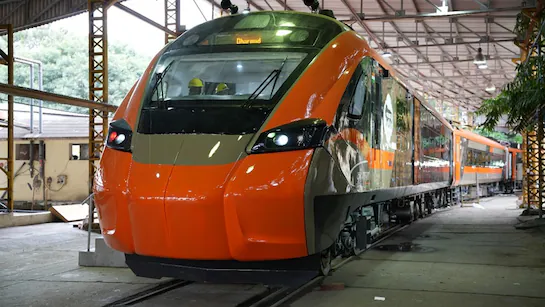
Indian Railways is preparing to transform long-distance overnight travel with the upcoming Delhi-Patna Vande Bharat Sleeper Train, which is expected to cover nearly 1,000 kilometres in just about eight hours. One of the most crowded rail corridors in the country, the Delhi-Patna route has long faced heavy demand, long waiting lists and exhausting travel times. This new service promises to combine speed with comfort, redefining how overnight journeys are experienced.

Designed specially for night travel

Unlike existing Vande Bharat trains that operate mostly as chair-car services during the day, this sleeper version is built specifically for overnight journeys. The train is expected to feature 16 fully air-conditioned sleeper coaches, allowing passengers to board late at night, rest comfortably and arrive at their destination by morning. This format is expected to appeal especially to working professionals, families and festival-season travellers.

Inside the Vande Bharat sleeper

The interiors are expected to offer a premium experience closer to a hotel-on-wheels than a conventional train. Ergonomically designed berths with improved cushioning, soft ambient lighting suitable for night travel, automatic sliding doors and modern bio-toilets with touch-free fittings are likely features. 

Improved sound insulation and better coach layouts aim to ensure quieter, more private rest during the journey.

Speed, safety and advanced technology

Speed remains the biggest highlight of this train. Reports suggest it can operate at speeds of up to 160kmph and has already undergone high-speed trials successfully. During testing, the train reportedly maintained exceptional stability. 

Advanced safety features such as CCTV surveillance, fire detection systems and anti-collision technology are expected to be standard, reinforcing passenger confidence.

Route, halts and expected ticket prices

While Indian Railways has not yet released the final route map, the train is expected to stop at key stations across Uttar Pradesh and Bihar, easing pressure on Rajdhani and other premium services. 

Ticket prices are likely to be higher than regular sleeper services but comparable to Rajdhani Express fares, reflecting the faster travel time and upgraded amenities.

What this means for passengers

For travellers, the biggest advantage is time. Boarding a train at night in Delhi, sleeping through the journey and arriving in Patna by morning eliminates the fatigue of long travel and the need for overnight accommodation. As Indian Railways expands its Vande Bharat fleet, the Delhi-Patna Sleeper Express is being seen as a potential benchmark for future premium overnight train services in India.

54th Vijay Diwas: India Unitedly Commemorates The Big Day As BJP, Congress Leaders Share Celebration Posts on Social Media…

0

India on Monday marked the 54th anniversary of its decisive victory in 13-day 1971 war, a historic triumph that led to the birth of Bangladesh as an independent nation. The conflict followed India’s intervention to assist millions of refugees who had fled Pakistan’s brutal crackdown on Bengali nationalists.

Leaders across India, from Prime Minister Narendra Modi to Defence Minister Rajnath Singh, paid tribute to the Indian Army, Navy and Air Force, as well as the Mukti Bahini guerrillas, lauding their courage, flawless coordination and the swift capture of Dhaka.

In Bangladesh, Victory Day was also observed with solemn ceremonies, including wreath-laying events, reflecting the shared sacrifices of 1971 and underscoring the enduring bond and military resolve between the two nations.

Vijay Diwas 2025: History, Significance, Images and Powerful Quotes

0

Vijay Diwas, observed on December 16, marks India’s historic victory in the 1971 Indo-Pak war. The day honours the courage, sacrifice and unwavering resolve of Indian soldiers whose bravery changed the course of history.

Vijay Diwas is more than a date on the calendar—it is a solemn reminder of courage, sacrifice and one of the most defining moments in India’s military history. Observed every year on December 16, the day invites the nation to pause, reflect and honour the armed forces who secured India’s decisive victory in the 1971 Indo-Pakistan War, leading to the creation of Bangladesh.

Beyond parades and official ceremonies, Vijay Diwas carries deep emotional significance. It celebrates not just victory, but the spirit of selfless service and the countless soldiers who stood firm so future generations could live in peace and freedom.

What Is Vijay Diwas?

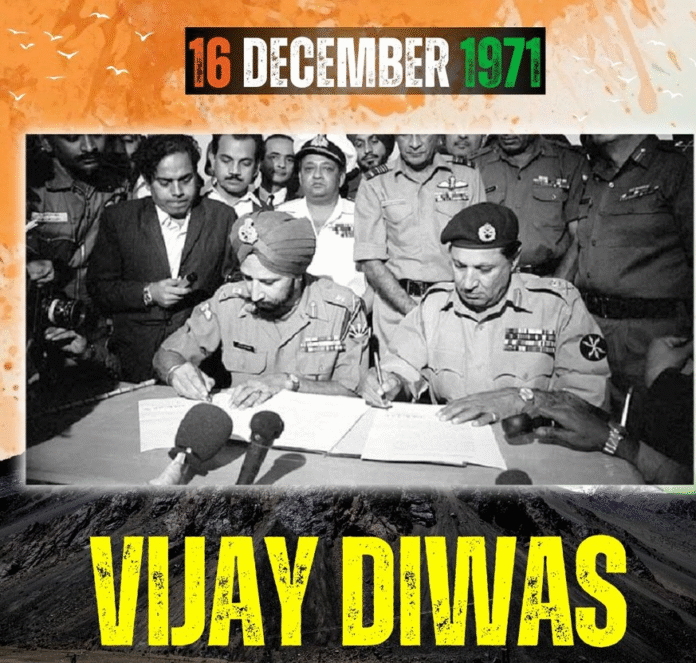
Vijay Diwas commemorates India’s historic triumph in the 1971 war against Pakistan. After 13 days of intense fighting, the Pakistani armed forces surrendered on December 16, 1971, resulting in the capture of over 90,000 prisoners of war—one of the largest military surrenders since the Second World War. The victory reshaped South Asian history and marked the birth of Bangladesh as an independent nation.

When Is Vijay Diwas Celebrated?

Vijay Diwas is observed annually on December 16 across India. The day is marked by wreath-laying ceremonies at war memorials, especially at the National War Memorial in New Delhi. Senior defence officials, veterans, serving personnel and citizens come together to honour fallen heroes and reaffirm the values of duty, unity and service to the nation.

Vijay Diwas Images

Vijay Diwas 2025: History, Significance, Images and Powerful Quotes

(Images symbolising bravery, sacrifice, the 1971 war, and tributes at war memorials)


Powerful Vijay Diwas Quotes

  • Vijay Diwas reminds us that freedom is never free.
  • Saluting the courage that changed the course of history.
  • Their sacrifice is our strength.
  • A nation remembers, a nation honours.
  • Victory earned through courage and unity.
  • The bravest stories are written on the battlefield.
  • We stand tall because they stood firm.
  • 1971 was not just a victory, it was a promise.
  • Heroes live on through remembrance.
  • Service before self defines true patriotism.
  • Their courage echoes through generations.
  • Peace was won through sacrifice.
  • A day to honour grit, not glory.
  • Vijay Diwas celebrates the spirit of India.
  • They fought so we could live freely.
  • Strength lies in unity and resolve.
  • The nation bows in gratitude.
  • History remembers those who dared.
  • Victory belongs to the brave.
  • Forever indebted to our soldiers.

Vijay Diwas is not only about remembering the past—it is about carrying forward its lessons. It reminds us to cherish peace, uphold unity and remain grateful for the sacrifices that safeguard the nation’s freedom.