

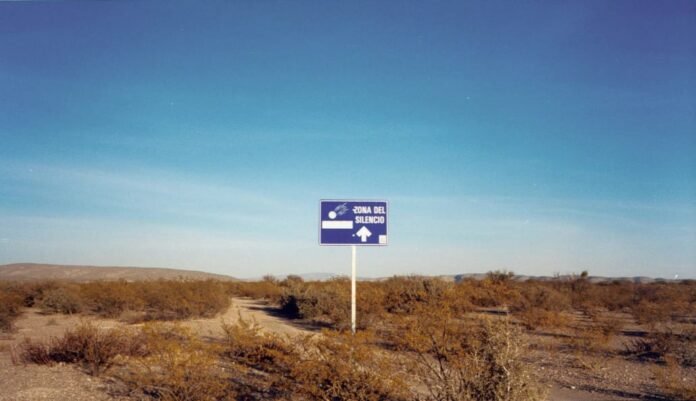
(PC: http://Www.Servercreativo.com)
Deep in Mexico’s Chihuahua Desert lies the mysterious “Zone of Silence,” a barren region near the Bolsón de Mapimí where radio signals and electronic devices inexplicably fail. Just 25 miles away, phones, radios, and GPS function normally, but within this desolate expanse, visitors are cut off from the outside world. Despite decades of research, scientists have yet to fully unravel why signals disappear here. Shrouded in urban legends and fascination, this area gained global attention in 1970 after a U.S. missile crashed, sparking a mystery that continues to captivate. Let’s delve into the story, myths, and scientific reality of the Zone of Silence.
The Legend’s Origin: The 1970 Missile Incident
The Zone of Silence first gained notoriety on July 11, 1970, when a U.S. Nike-Ajax missile, launched from White Sands Missile Range, inexplicably crashed in this desert near the Bolsón de Mapimí. The U.S. Air Force recovery team sent to investigate encountered severe communication issues, with GPS systems and all electronic devices malfunctioning. Radio waves, television signals, and even satellite transmissions failed to penetrate the area, earning it the name “Zone of Silence” or “La Zona del Silencio” in Spanish. Since then, it has been classified as a “dark zone,” where no signals can pass through.
Legend vs. Reality The Legend
The Zone of Silence is rumored to be a “dark zone” where all forms of signals—radio, television, GPS, and other electronic transmissions—cease entirely. Tales of time-warping phenomena and encounters with mysterious strangers add to its mystique, with some even linking it to extraterrestrial activity or secret experiments.
The Reality
While signal disruptions occur, they are not a complete blackout. Scientists attribute these anomalies to the region’s unique geological and biological features. The area is rich in magnetic minerals like magnetite and possibly uranium, and it is a frequent landing site for meteorites. Combined with the unique topography of the surrounding mountains, these factors likely cause radio wave interference and compass anomalies. Additionally, the region boasts exceptional biodiversity, with species found nowhere else in the world.
The Name’s Origin
The term “Zone of Silence” emerged in 1966 when the oil company Pemex explored the area and noted the unusual signal disruptions. The 1970 missile incident further cemented its reputation, turning it into a global phenomenon.
Mapimi Biosphere Reserve
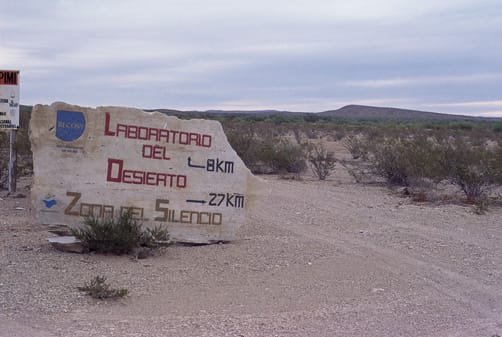
The Mexican government established a research laboratory in the Zone, now part of the Mapimí Biosphere Reserve, to study its unique environment. This facility analyzes the region’s distinctive flora, fauna, soil, and insect life, which have drawn significant scientific interest due to their rarity.
Ongoing Research
Scientists continue to investigate the precise causes of the signal disruptions, focusing on the area’s high magnetic activity, unusual soil composition, and geological makeup. Research also reveals that millions of years ago, this region was part of the ancient Tethys Sea, and its remnants may contribute to the Zone’s peculiar characteristics. Despite these efforts, the exact source of the anomalies remains elusive.
Myths and Rumors
While the laboratory’s official purpose is scientific, rumors persist that secret experiments exploit the Zone’s unique properties. Stories of extraterrestrial activity and time distortions further fuel its enigmatic reputation, making it a hotspot for speculation.
A Timeless Mystery
The Zone of Silence continues to captivate scientists, adventurers, and curious travelers alike. Its blend of scientific intrigue and enduring myths makes it a unique phenomenon, where fact and legend intertwine. Beneath the desert sands, the secrets of this mysterious region remain largely unveiled, ensuring its place as one of the world’s most intriguing enigmas.