

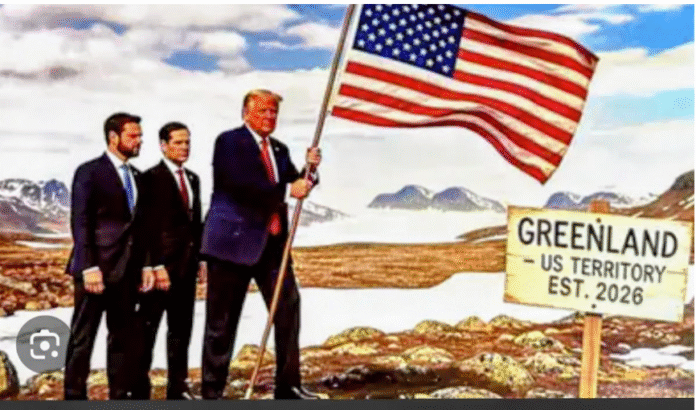
In 2026, former U.S. President Donald Trump once again thrust Greenland into the global spotlight, reigniting international debate on Arctic geopolitics, sovereignty, and U.S. strategic influence. Speaking at the World Economic Forum (WEF) in Davos, Trump’s remarks triggered strong reactions from Europe, NATO allies, Arctic nations, and global powers, highlighting the growing strategic importance of the Arctic region.
Trump’s Remarks on Greenland’s Strategic Importance
During his Davos address, Trump emphasised Greenland’s strategic location, citing its proximity to North America and its importance for U.S. defense, Arctic security, and global stability. He argued that the island plays a critical role in monitoring emerging threats in the Arctic and suggested that the United States should have a greater strategic role in Greenland’s future.
Reviving earlier discussions about a possible U.S. acquisition of Greenland, Trump clarified that military force would not be used. He also referred to a tentative “framework for future cooperation” allegedly discussed with NATO officials. However, both Denmark and Greenland denied confirming or endorsing any such agreement, reinforcing their stance on sovereignty.
Denmark, Greenland, and the European Union Push Back
Denmark responded firmly, reiterating that Greenland is not for sale and remains a sovereign territory within the Danish Kingdom. Greenland’s government and citizens organized protests under slogans such as “Hands Off Greenland”, stressing the island’s autonomy, democratic rights, and self-determination.
The European Union backed Denmark, criticizing what it described as U.S. pressure tactics and earlier tariff threats, and underscoring that territorial sovereignty cannot be compromised through economic or political coercion.
Arctic Nations and Global Powers React
The controversy drew responses from key Arctic and global stakeholders:
- Norway warned that aggressive geopolitical posturing could destabilize the fragile Arctic region.
- Canada cautioned that heightened U.S. assertiveness could increase tensions with Russia, already a major Arctic power.
- Russia accused the United States of attempting to expand its influence in a region marked by intensifying military competition.
- China called for the Arctic to remain a zone of cooperation, warning against unilateral claims or dominance.
Meanwhile, NATO leaders welcomed Trump’s assurance that force would not be used, while reaffirming that Greenland falls under Danish authority, requiring consultation and consensus for any strategic decisions.
India’s Neutral and Strategic Silence
Notably, India maintained a neutral stance, issuing no official statement on the Trump-Greenland controversy. This silence aligns with India’s long-standing foreign policy principle of avoiding involvement in territorial disputes unrelated to its national interests.
Since Greenland remains primarily a U.S.–Denmark–NATO issue, and the Arctic region does not directly intersect with India’s strategic priorities, New Delhi’s decision to stay neutral reflects a measured and pragmatic diplomatic approach.
Conclusion: Greenland and the Future of Arctic Geopolitics
The Trump–Greenland 2026 controversy demonstrates how statements by influential global leaders can trigger far-reaching geopolitical consequences. While no immediate territorial change is likely, the episode exposed underlying tensions within Europe, highlighted strategic vulnerabilities in the Arctic, and underscored the complex balance of power among global and regional actors.
For countries like India, strategic silence itself becomes a diplomatic signal, reinforcing how restraint can be as significant as action in contemporary international relations.

(These are individual views of writer of this article. She is Soniya Yadav, Student, Kanoria Mahila Mahavidyalaya, BA Pass Course, Semester 1)