

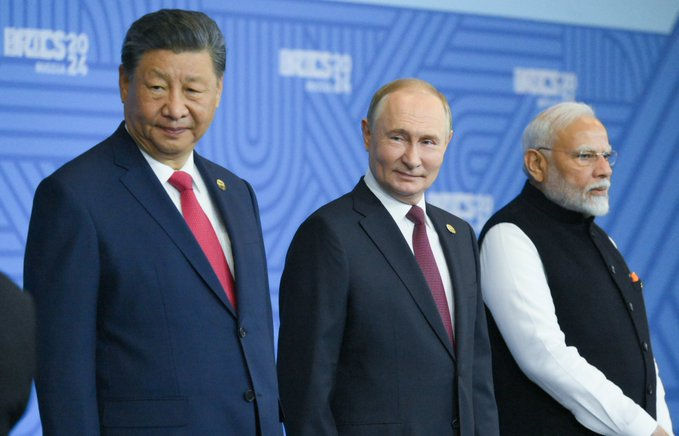
Monday’s meeting between Russia’s Vladimir Putin, China’s Xi Jinping, and India’s Narendra Modi at the Shanghai Cooperation Organisation (SCO) summit marked a rare display of unity among the three powers — with oil at the heart of their growing alignment.
Oil: The Glue Binding Moscow, Delhi and Beijing
Russia’s invasion of Ukraine in 2022 and subsequent Western sanctions turned India and China into Moscow’s most vital energy customers. Both nations have capitalised on discounted Russian crude, even as Washington responded with punitive tariffs.
- China imported over 100 million tonnes of Russian crude last year, nearly 20% of its total energy needs.
- India’s imports from Russia, negligible before 2022, have surged to around $140bn since the war.
Together, they now account for the majority of Russia’s oil exports, keeping Moscow’s economy afloat.
Public policy expert Mandar Oak notes that Moscow may offer “further discounts to ensure India doesn’t back away under US pressure.”
Modi’s Defiance and Washington’s Wrath
For Prime Minister Modi, doubling down on Russian oil brings political dividends. “It is almost beneficial for Modi to snub the US,” says Prof Oak. “It signals India will not bow to Trump’s tariffs.”
India, once dependent on the Middle East for energy, now saves billions by tapping Russia’s cheaper supplies. But this shift has strained relations with Washington, which slapped an additional 25% duty on Indian imports. New Delhi condemned the move as “unjustified.”
“We will buy energy from where we get the best deal,” Indian officials have insisted.
Trade expert Peter Draper said China is eager to secure energy supplies, but noted that Moscow might favour India with deeper discounts if Delhi commits to higher volumes.
A Strategic Triad
Despite long-standing geopolitical frictions, analysts say the trio now share a common antagonist in Washington. Trump’s tariffs and sanctions have provided fresh incentives for Moscow, Delhi and Beijing to close ranks.
As Prof Oak summed up: “In the face of US economic pressure, their strong interests in energy and trade make cooperation almost inevitable.”