

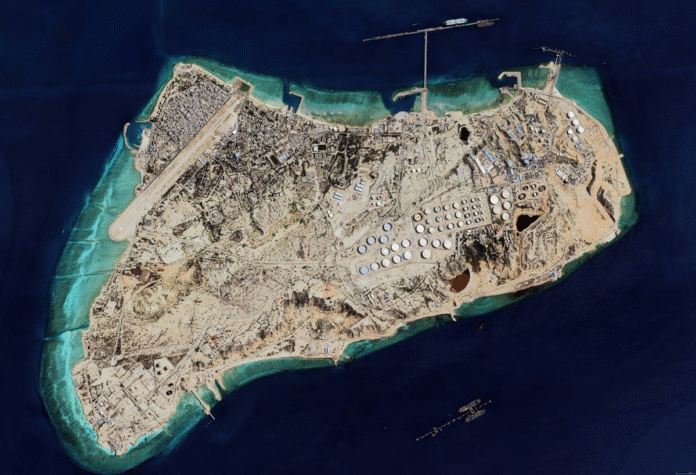
Tensions between the United States and Iran have intensified after Donald Trump signaled that Washington may consider further action against Kharg Island—a small but strategically vital island in the Persian Gulf. Despite its size, Kharg Island plays a central role in Iran’s economy, oil exports, and regional geopolitics, making it a high-value target in any escalation.
What Did Trump Say About Kharg Island?
In a recent interview, Donald Trump stated that the US is considering multiple options, including potentially seizing Kharg Island to increase pressure on Iran. He indicated that while military strikes have already targeted key installations, the US has so far avoided hitting oil infrastructure to prevent long-term economic fallout.
At the same time, American officials have not ruled out further escalation, and reports suggest that military planning and troop deployments in the region are underway.
Why Kharg Island Is Strategically Critical
Kharg Island is located about 24 km off Iran’s coast, yet it handles around 90% of Iran’s crude oil exports. This makes it the backbone of the country’s economy.
Key reasons for its importance include:
- It serves as Iran’s largest oil export terminal
- Connected to mainland oil fields through pipelines
- Equipped to handle massive oil tankers due to deep surrounding waters
- A major revenue source for the Islamic Revolutionary Guard Corps (IRGC)
Targeting Kharg Island is often described as striking Iran’s economic lifeline.
Could the US Attempt to Seize the Island?
Speculation is growing that the US may attempt to occupy or blockade Kharg Island as leverage against Iran. Such a move could:
- Disrupt Iran’s oil exports entirely
- Pressure Tehran to keep the Strait of Hormuz open
- Provide a strategic military base near Iran’s mainland
However, experts warn that even a limited operation would be logistically complex and militarily risky, requiring naval or airborne deployments over long distances.
Iran’s Response and Military Preparations
Iran has responded strongly to the threat, warning of severe retaliation. Officials have stated that any US attempt to enter Iranian territory would be met with force.
Recent intelligence reports suggest that Iran has:
- Reinforced air defence systems on the island
- Deployed surface-to-air missiles
- Planted naval mines and defensive traps in surrounding waters
The Islamic Revolutionary Guard Corps has also warned that regional energy infrastructure could be targeted if Iran’s facilities are attacked.
What Happened in the March 13 US Strikes?
On March 13, US forces carried out a major strike on Kharg Island, targeting over 90 military sites, according to US Central Command.
The operation reportedly:
- Destroyed missile storage and naval facilities
- Avoided oil infrastructure
- Aimed to weaken Iran’s military presence without escalating into economic warfare
Iran, however, claimed that oil exports continued uninterrupted, signaling resilience despite the attacks.
Why the US Avoided Oil Infrastructure
While destroying oil facilities could cripple Iran economically, it carries global consequences. Avoiding such targets helps prevent:
- A sharp spike in global oil prices
- Wider conflict across the Middle East
- Disruptions to international shipping via the Strait of Hormuz
Iran still retains the ability to retaliate through drones and attacks on regional infrastructure, including oil facilities and critical utilities.
Conclusion: A High-Stakes Strategic Flashpoint
Kharg Island has emerged as a focal point in US-Iran tensions due to its unmatched economic and strategic value. Any move to seize or disable the island could reshape regional dynamics, disrupt global energy markets, and escalate into a broader conflict.
As the situation evolves, Kharg Island remains not just a geographic location, but a symbol of economic power, military strategy, and geopolitical risk in the Middle East.