

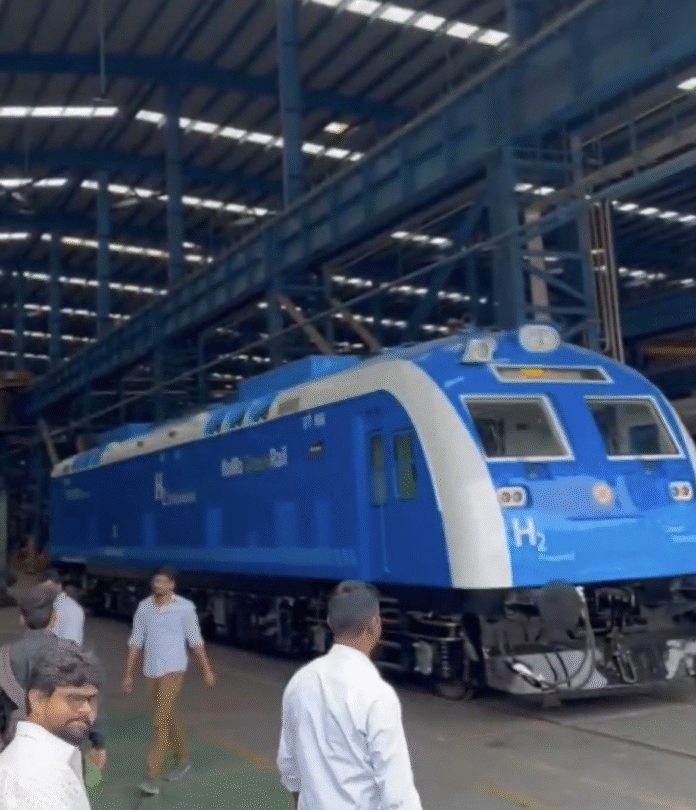
India has successfully tested its first hydrogen-powered train, developed at the Integral Coach Factory (ICF) in Chennai. The train will soon operate on the Jind–Sonipat route in Haryana, making India the fifth country after Germany, France, Sweden, and China to deploy this clean-energy transport system. This landmark achievement is part of the National Green Hydrogen Mission, which aims to produce 5 million metric tonnes of green hydrogen annually by 2030 to support India’s target of net zero emissions by 2070.
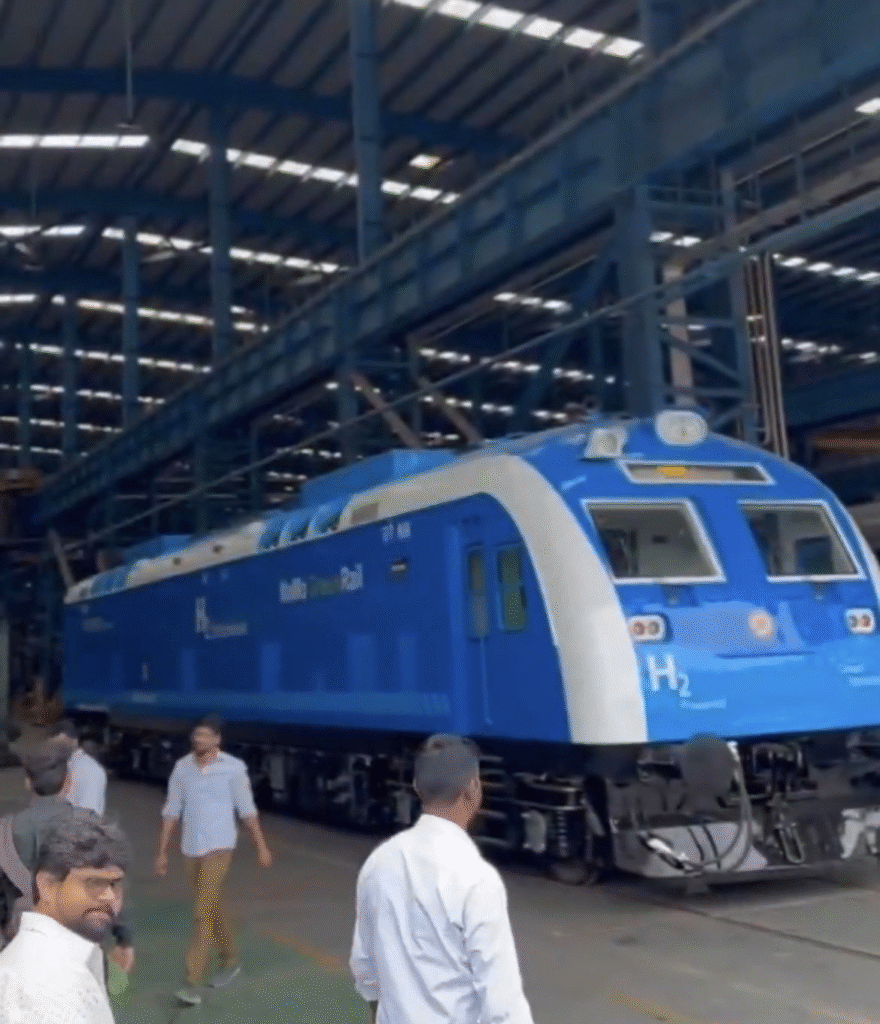
Hydrogen Train Technology
The train runs on hydrogen fuel cells, which generate electricity by combining hydrogen and oxygen, emitting only water as a byproduct. Hydrogen for the train will be produced at Jind using a 1-MW polymer electrolyte membrane electrolyser powered by renewable energy sources like solar and wind.
Electrolyser and Fuel Cell Mechanism
- Electrolyser: Splits water into hydrogen and oxygen using renewable electricity.
- Fuel Cell: Reverses the process, using hydrogen and oxygen to produce electricity for the train’s motors, with zero carbon dioxide emissions.
Green Hydrogen Production
To ensure sustainability, hydrogen is produced exclusively with renewable energy. India is also exploring innovative technologies such as microbial electrolytic cells, which use microbes to generate hydrogen from organic waste.
Cost and Material Challenges
Hydrogen technology currently depends on costly metals like platinum and iridium as catalysts. Indian scientists are developing alternatives such as nickel-based electrodes, which could reduce costs and make large-scale adoption feasible.
Significance and Future Prospects
- First hydrogen train to run on Jind–Sonipat route.
- Capacity: 2,638 passengers.
- Speed: Up to 110 km/h with a 1,200 HP engine.
- Government allocation: ₹2,800 crore to develop 35 hydrogen trains by 2024-25.
This initiative marks a major step in India’s journey towards sustainable rail transport and achieving its zero-carbon emissions target by 2070.