

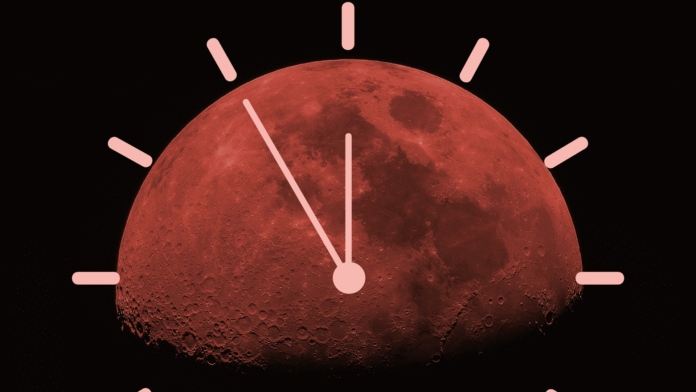
A spectacular total lunar eclipse will light up the night sky on March 3, turning the moon a dramatic red for billions of people across North America, Australia and East Asia.
During this celestial event, the moon will pass completely into Earth’s dark umbral shadow, creating what is popularly known as a “blood moon.”
When does totality begin?
Totality — when the moon appears fully blood-red — will begin at 6:04 a.m. EST (1104 GMT) on March 3, 2026. The eclipse will reach its peak at 6:33 a.m. EST (1133 GMT), with totality lasting approximately 58 minutes before the moon gradually exits Earth’s shadow.
According to Time and Date, more than 40% of the world’s population — over three billion people — will be able to see at least part of the total phase. Notably, this will be the last total lunar eclipse visible anywhere on Earth until New Year’s Eve 2028–2029.
Key viewing times by region
Here are the major viewing windows across different time zones (all March 3, 2026, unless otherwise noted):
United States
- Eastern Time: 6:04–7:02 a.m. EST (the moon sets during totality in this zone)
- Central Time: 5:04–6:02 a.m. CST
- Mountain Time: 4:04–5:02 a.m. MST
- Pacific Time: 3:04–4:02 a.m. PST
- Alaska: 2:04–3:02 a.m. AKST
- Hawaii: 1:04–2:02 a.m. HST
Australia & New Zealand
- New Zealand: 12:04–1:02 a.m. NZDT (March 4)
- Sydney: 10:04–11:02 p.m. AEDT
- Brisbane: 9:04–10:02 p.m. AEST
- Adelaide: 9:34–10:32 p.m. ACDT
- Darwin: 8:34–9:32 p.m.
- Perth: 7:04–8:02 p.m.
Asia
- Tokyo: 8:04–9:02 p.m. JST
- Seoul: 8:04–9:02 p.m. KST
- Beijing: 7:04–8:02 p.m. CST
- Hong Kong: 7:04–8:02 p.m. HKT
What happens during the eclipse?
The eclipse begins at 3:44 a.m. EST (0844 GMT) when the moon enters Earth’s penumbral shadow, producing a subtle dimming. As it moves deeper into the umbra, a dark shadow gradually spreads across the lunar surface.
At maximum eclipse, sunlight filtering through Earth’s atmosphere casts a reddish-orange glow on the moon — the signature “blood moon” effect.
The entire eclipse event will last 5 hours and 39 minutes, from the first penumbral shading to the final exit from Earth’s shadow.
Skywatchers unable to view the event in person can follow online livestream coverage from major astronomy platforms.