

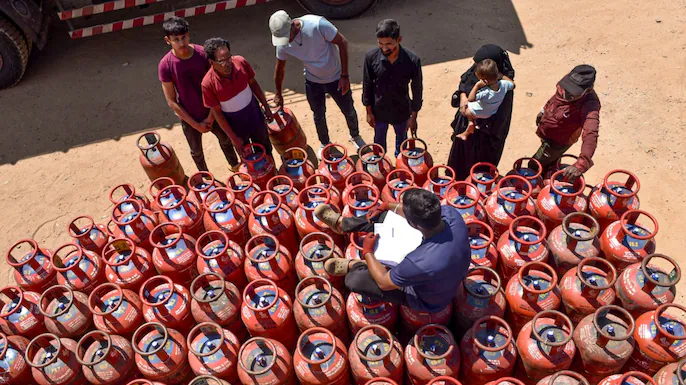
LPG (Liquefied Petroleum Gas) is mainly a mixture of two gases—propane and butane. It is not something that comes directly out of the ground. Instead, LPG is produced as a by-product during the refining of petroleum products.
A simple way to understand a by-product is through an example: when butter is extracted from curd, buttermilk is also produced. In a similar way, LPG is generated during the process of refining petroleum products.
Two Main Ways LPG Is Produced
1. From Oil and Gas Wells
When natural gas or crude oil is extracted from underground, gases like propane and butane also come out along with them. These gases are separated and refined to produce LPG. More than half of the world’s LPG is produced through this method.
2. In Oil Refineries
When crude oil is heated in refineries to produce fuels such as petrol, diesel, and kerosene, certain gases rise to the top during the process. These gases are collected and processed to produce LPG.
In India, this process takes place in refineries operated by companies such as Reliance Industries (Jamnagar refinery), Indian Oil Corporation, Bharat Petroleum, and Hindustan Petroleum.
Once the gas is produced, it is filled into cylinders under high pressure. The pressure forces the gas molecules close together, turning the gas into a liquid form. This allows a larger amount of LPG to be stored in a small space.
Key Characteristics of LPG
When LPG burns, it does not produce smoke like wood or coal, although it does release carbon dioxide. LPG is heavier than air, so if it leaks, it settles near the ground instead of rising upward.
For safety reasons, LPG cylinders contain a chemical called ethyl mercaptan in addition to propane and butane. These gases naturally have no color or smell, so ethyl mercaptan is added to give LPG a strong odor. This helps people detect leaks quickly and prevent accidents.
How Did the Iran Conflict Disrupt LPG Supply to India?
Gas and petroleum products from Gulf countries such as United Arab Emirates, Qatar, Saudi Arabia, and Kuwait must pass through the Strait of Hormuz to reach India. This waterway connects the Persian Gulf to the open sea and is one of the world’s most important energy shipping routes.
However, tensions between Iran, the United States, and Israel have disrupted shipping in the region. Before the conflict, about 153 ships passed through the Strait of Hormuz every day, but this number has dropped to around 13 ships.
On March 11, Rajesh Kumar Sinha, Special Secretary in India’s Shipping Ministry, said that 28 Indian-flagged ships are currently in the Persian Gulf. Out of these, 24 ships are located west of the Strait of Hormuz, carrying 677 crew members, while four ships are near the strait with 101 Indian sailors on board.
Iran has targeted several Gulf countries in response to American attacks, including the UAE, Qatar, Kuwait, and Saudi Arabia. Gas production in some facilities has either stopped or been affected. Iran claims that US military bases in these countries are being used to launch attacks against it.
Iran’s Islamic Revolutionary Guard Corps (IRGC) has warned that if US and Israeli attacks continue, not a single litre of oil will be allowed to leave through the Strait of Hormuz.
On March 11, a Thai cargo ship heading toward India was attacked in the Strait of Hormuz. The attack caused a fire in the ship’s engine room. The Oman navy rescued 20 out of the 23 crew members, although it remains unclear who carried out the attack.