

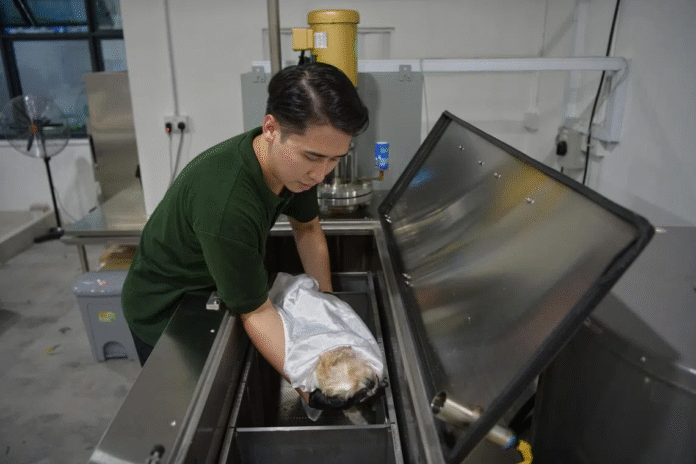
Scotland has become the first nation in the United Kingdom to legalise water cremation, formally known as alkaline hydrolysis. The move represents the most significant reform in Scottish funeral legislation since cremation was first introduced in 1902. The new regulations were approved by the Scottish Parliament in response to growing public demand for environmentally sustainable end-of-life options.
Water cremation is widely regarded as a greener alternative to traditional burial and flame-based cremation. The decision reflects changing public attitudes towards sustainability, including within the funeral sector.
How Alkaline Hydrolysis Works
Alkaline hydrolysis involves placing a body in a sealed, pressurised chamber filled with water and potassium hydroxide, an alkaline solution. The chamber is heated to approximately 150°C for about 90 minutes. The combination of heat, water and alkali accelerates the natural decomposition process.
During the procedure, soft tissues dissolve, leaving only the bones. These are then rinsed, dried, and processed in a cremulator to produce ashes similar in appearance to those from conventional cremation. The remaining liquid by-product is treated and disposed of safely in accordance with environmental regulations.
Environmental Advantages
Supporters argue that alkaline hydrolysis has a lower carbon footprint compared to flame cremation. It generally consumes less energy and does not produce direct emissions such as carbon dioxide or mercury released from dental fillings during traditional cremation. Burial, meanwhile, requires land use and can pose risks of soil and groundwater contamination.
Scotland’s Public Health Minister, Jenni Minto, described the reform as a response to strong public support for greater funeral choice. A 2023 public consultation found that 84 per cent of respondents supported the introduction of alkaline hydrolysis as a legal option.
Global Adoption and Industry Perspective
Although new to the UK, alkaline hydrolysis is already legal in 28 states in the United States and is available in countries such as Canada, Ireland, South Africa, Australia and New Zealand. Industry providers maintain that the technology broadens consumer choice rather than replacing burial or flame cremation.
Key Facts
- Alkaline hydrolysis is also known as water cremation or aquamation.
- Scotland is the first UK nation to legalise the practice.
- Cremation was first introduced in Scotland in 1902.
- The process uses potassium hydroxide, heat and water to accelerate decomposition.
Broader Implications
The legalisation signals a broader shift towards sustainable funeral practices in the United Kingdom. As environmental considerations increasingly influence personal and policy decisions, Scotland’s move may trigger similar legislative discussions in England, Wales and Northern Ireland.