

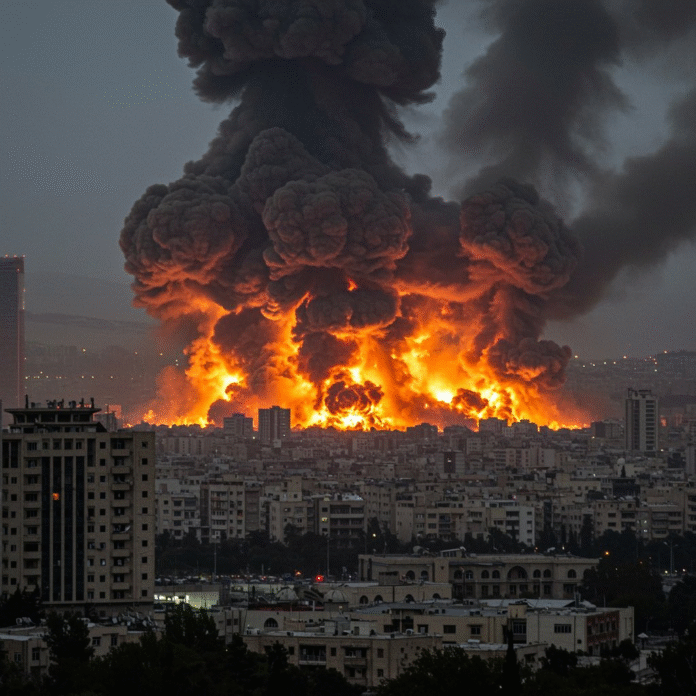
US–Iran–Israel Conflict: As tensions escalate between the United States, Israel, and Iran, a new report has raised concerns about America’s military preparedness if the conflict continues at its current intensity.
Pentagon Warning
According to a report by Al Jazeera, the Pentagon has warned US President Donald Trump that if the military campaign against Iran continues at a rapid pace for another 10 days or more, the US could begin to face shortages of key munitions and interceptor missiles.
However, Trump dismissed concerns on his social media platform Truth Social, claiming that the United States has an “almost unlimited” stockpile of medium- and high-grade weapons capable of sustaining a prolonged conflict.
Secretary of State’s Remarks
US Secretary of State Marco Rubio said that Iran is producing more than 100 missiles per month, while the US is reportedly able to manufacture only 6 to 7 interceptor missiles in the same period. Defense analysts say this imbalance could create long-term pressure if hostilities persist.
Rising Costs Of War
The financial toll is also mounting. Reports suggest that in the first 24 hours of operations alone, the US spent approximately $779 million (around ₹6,900 crore).
According to the Center for a New American Security, operating an aircraft carrier strike group such as the USS Gerald R. Ford costs roughly $6.5 million per day. Before the conflict escalated, two carrier strike groups were deployed, with total preparation costs estimated at around $630 million.
Pressure On Interceptor Missiles
Analysts say interceptor missiles are likely to face the greatest strain. During previous tensions with Iran last year, the US reportedly used nearly 25% of its THAAD interceptor missile stockpile. Additionally, Joint Direct Attack Munitions (JDAMs) — GPS-guided “smart bombs” — are being consumed rapidly.
The report also warned that advanced anti-ballistic systems such as the Standard Missile-3 (SM-3) have limited inventories, raising concerns about sustainability in a prolonged conflict.
Escalation And Retaliation
Earlier, President Trump expressed dissatisfaction with the progress of nuclear negotiations with Iran. Hours later, he approved a military operation targeting senior Iranian leadership, including Supreme Leader Ali Khamenei and top military officials.
In retaliation, Iran launched missile and drone attacks on US bases located in Bahrain, Saudi Arabia, Qatar, the UAE, and Iraq.
What Lies Ahead?
Defense experts caution that if the conflict drags on, the United States could face mounting military and economic pressure. Beyond battlefield logistics, prolonged hostilities may strain defense manufacturing capacity, federal budgets, and global energy markets.
The coming days are likely to determine whether this confrontation remains contained — or evolves into a more prolonged and costly war.