

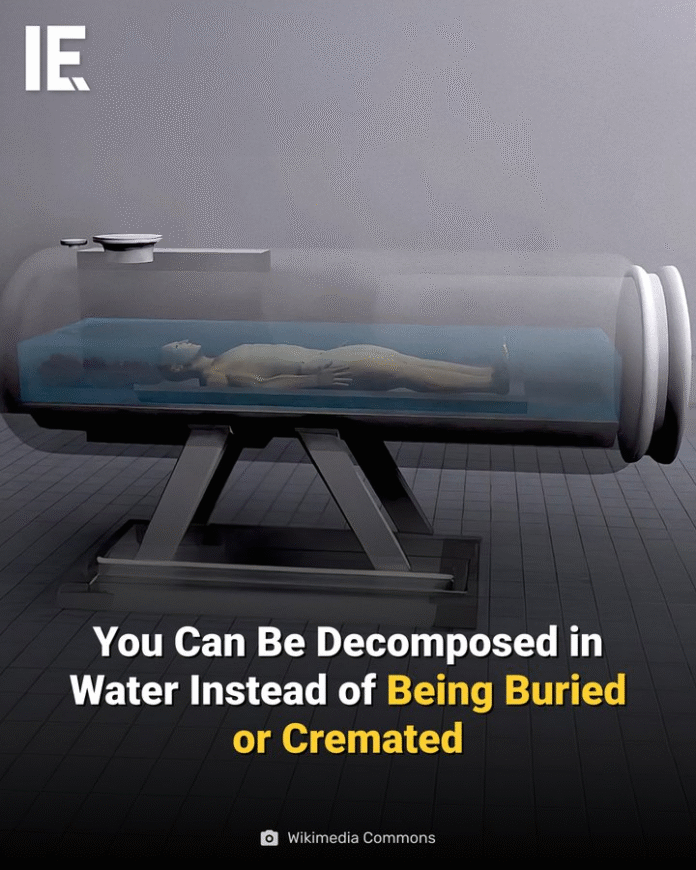
A centuries-old ritual is quietly getting a modern, eco-conscious twist. It’s called Aquamation or as some call it, “water cremation.” The idea might sound futuristic, but it’s actually a gentle, science-backed process that’s starting to change how the world says goodbye.
So, what really happens? Instead of fire, aquamation uses a mix of 95% water and 5% potassium hydroxide. The body is placed in a stainless-steel vessel, warmed to around 150°C, and gently broken down over a few hours under pressure. What remains are soft ashes and a sterile liquid that can be safely returned to the earth with no smoke, no flame, no pollution.
Compared to traditional cremation, which releases about 1.5 tons of CO₂ and consumes hundreds of litres of fuel, aquamation cuts emissions by nearly 35% and uses 90% less energy. It’s faster than burial, completely chemical-free, and leaves no harmful residue.
Even Desmond Tutu, the South African Archbishop and Nobel laureate, chose aquamation for its environmental kindness and that decision turned global attention toward this “green goodbye.”
While countries like the US, Canada, and Australia are embracing it, India still hasn’t legalised the practice. Centuries of belief tie Hindu cremation to fire seen as the pathway to liberation and that makes water-based rituals a cultural challenge.
Yet, small sparks of change are visible: Kerala and Maharashtra have shown early interest in pilot projects for greener farewells.
Maybe the future of funerals isn’t about burning or burying but about returning gently to the elements, one drop at a time.