

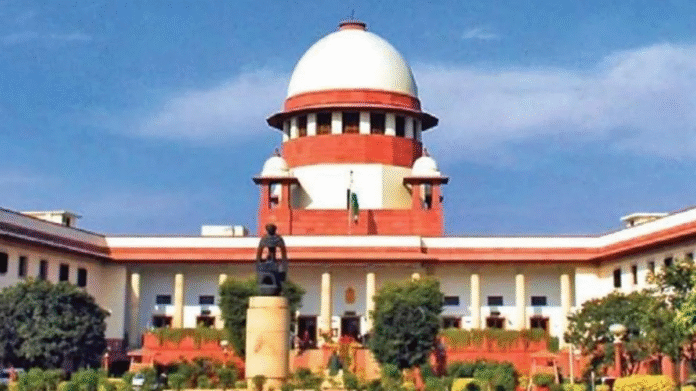
In a landmark decision, the Supreme Court of India recently permitted passive euthanasia for a man who had remained in a persistent vegetative state for over 13 years, marking one of the first practical applications of India’s euthanasia framework. The patient, Harish Rana, had suffered severe brain injuries after a fall in 2013 and had since been dependent on life-support systems with little hope of recovery. After medical evaluation and a legal review, the court allowed the withdrawal of life-sustaining treatment, emphasising the constitutional principle of the “right to die with dignity.”
The ruling is significant because it operationalises legal principles laid down earlier by the Supreme Court on passive euthanasia. It also brings renewed attention to the ethical, legal and medical debates surrounding end-of-life decisions in India.
What is Passive Euthanasia?
Euthanasia broadly refers to intentionally ending a person’s life to relieve suffering. In legal and medical discussions, a distinction is made between active and passive euthanasia.
Active euthanasia involves deliberately administering a substance or action that causes death, such as a lethal injection. This remains illegal in India.
Passive euthanasia, on the other hand, involves withholding or withdrawing life-support treatment, allowing the patient to die naturally when recovery is medically impossible.
Passive euthanasia is allowed under strict conditions, particularly in cases where patients are terminally ill or in a permanent vegetative state.
The Legal Journey of Euthanasia in India
The debate over euthanasia in India entered the legal arena prominently with the case of Aruna Shanbaug case in 2011. Shanbaug, a nurse who had been in a vegetative state for decades after a brutal assault in 1973, became the face of the national debate. Although the Supreme Court rejected the plea to end her life, it issued guidelines that legalised passive euthanasia under certain circumstances, requiring medical board review and judicial oversight.
The issue evolved further with the 2018 judgement in Common Cause v. Union of India. In this case, the Supreme Court recognised that the right to die with dignity is part of the fundamental right to life under Article 21 of the Constitution. The court also introduced the concept of a “living will” or advance medical directive, allowing individuals to specify that they do not wish to receive life-prolonging treatment if they become terminally ill or incapacitated.
Later, in 2023, the court simplified procedures for implementing such directives to make end-of-life decisions more practical for families and doctors.
Ethical and Social Debates
Despite legal clarity, euthanasia continues to raise complex ethical questions. Supporters argue that it respects personal autonomy and prevents prolonged suffering when medical recovery is impossible. Critics, however, warn about potential misuse, pressure on vulnerable patients, and the moral implications of allowing death through medical decisions.
Religious beliefs, cultural attitudes toward life and death, and concerns about healthcare infrastructure also shape the debate in India.
A Continuing Conversation
The latest Supreme Court order is likely to reignite discussions on whether India should enact a comprehensive law governing euthanasia rather than relying primarily on judicial guidelines. As medical technology advances and life can be prolonged artificially for years, society is increasingly confronted with difficult questions: Should life always be preserved at any cost, or does dignity sometimes lie in allowing a natural death?
For now, the judiciary continues to navigate this delicate balance between the sanctity of life and the right to die with dignity.