

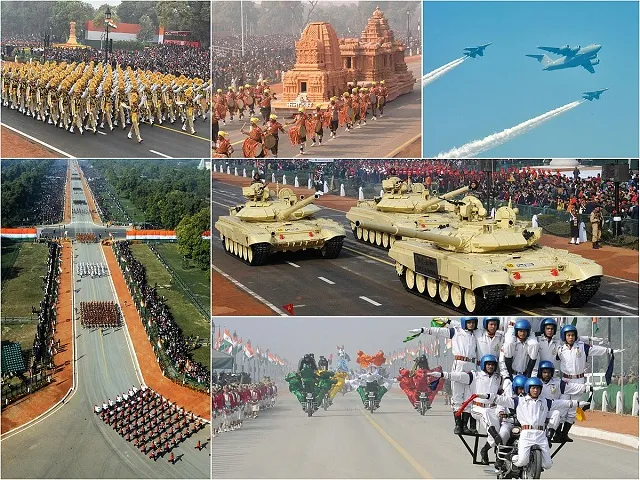
Chief Guests at Delhi Republic Day Parade 2026: Delhi, the capital of India is all set for the grand parade on Kartavya Path (formerly Rajpath) on the occasion of Republic Day. Now, let’s have a look at the list of all Chief Guests on Delhi Republic Day Parades (1950–2026).
Chief Guests at Delhi Republic Day Parade 2026: This was the fourth occasion where an Indonesian leader was invited after Sukarno (1950), Susilo Bambang Yudhoyono (2011), and other leaders. This has enhanced the relationship between India and Indonesia due to the common interests in the area of defense, trade, and Indo-Pacific.
When Prabowo took office in October 2024, he came on a state visit (January 25-26) meeting the Prime Minister, Narendra Modi, and attending the parade at Kartavya Path.
Another historic moment was the 352 member Indonesian military contingent in the parade-the first time they have attended a Republic Day ceremony outside their own country.
The festivals underlined Swarnim bharat (Golden India): Virasat aur Vikas (the theme) with Prabowo as the guest of honor of the events organised by President Droupadi Murmu.
India as an independent, sovereign, and democratic country implemented its constitution on 26 January 1950. Since then, India being the Democratic Republic celebrates a grand ceremony every year to commemorate Republic Day, and a Foreign Leader is invited every year by the Indian Government.
The initial four Republic day parades were held at different places (Red Fort, Ramlila Grounds, Irwin Stadium, Kingsway) between 1950 to 1954. However, in 1955, Rajpath was chosen as the permanent venue for Republic Day celebrations.
On 26 January 1950, Indonesian President Sukarno was the first Chief guest on the very first Republic Day parade of India. Representatives from the United Kingdom and France have been invited 5 times each.
List of all the Chief Guests at the Republic Day Parade (1950-2026)
| Year | Chief Guest Name(s) | Country(ies) |
|---|---|---|
| 1950 | President Sukarno | Indonesia |
| 1951 | King Tribhuvan Bir Bikram Shah | Nepal |
| 1952 | No invitation | — |
| 1953 | No invitation | — |
| 1954 | King Jigme Dorji Wangchuck | Bhutan |
| 1955 | Governor-General Malik Ghulam Muhammad | Pakistan |
| 1956 | R. A. Butler; Kotaro Tanaka | United Kingdom; Japan |
| 1957 | Marshal Georgy Zhukov | Soviet Union |
| 1958 | Marshal Ye Jianying | China |
| 1959 | Duke of Edinburgh (Prince Philip) | United Kingdom |
| 1960 | President Kliment Voroshilov | USSR |
| 1961 | Queen Elizabeth II | United Kingdom |
| 1962 | Prime Minister Viggo Kampmann | Denmark |
| 1963 | King Norodom Sihanouk | Cambodia |
| 1964 | Chief of Defence Staff Lord Louis Mountbatten | United Kingdom |
| 1965 | Food and Agriculture Minister Rana Abdul Hamid | Pakistan |
| 1966 | No invitation | — |
| 1967 | King Mohammed Zahir Shah | Afghanistan |
| 1968 | Prime Minister Alexei Kosygin; President Josip Broz Tito | USSR; SFR Yugoslavia |
| 1969 | Prime Minister Todor Zhivkov | Bulgaria |
| 1970 | King Baudouin | Belgium |
| 1971 | President Julius Nyerere | Tanzania |
| 1972 | Prime Minister Seewoosagur Ramgoolam | Mauritius |
| 1973 | President Mobutu Sese Seko | Zaire |
| 1974 | President Josip Broz Tito; Prime Minister Sirimavo Bandaranaike | SFR Yugoslavia; Sri Lanka |
| 1975 | President Kenneth Kaunda | Zambia |
| 1976 | Prime Minister Jacques Chirac | France |
| 1977 | First Secretary Edward Gierek | Poland |
| 1978 | President Patrick Hillery | Ireland |
| 1979 | Prime Minister Malcolm Fraser | Australia |
| 1980 | President Valéry Giscard d’Estaing | France |
| 1981 | President José López Portillo | Mexico |
| 1982 | King Juan Carlos I | Spain |
| 1983 | President Shehu Shagari | Nigeria |
| 1984 | King Jigme Singye Wangchuck | Bhutan |
| 1985 | President Raúl Alfonsín | Argentina |
| 1986 | Prime Minister Andreas Papandreou | Greece |
| 1987 | President Alan García | Peru |
| 1988 | President Junius Jayewardene | Sri Lanka |
| 1989 | General Secretary Nguyen Van Linh | Vietnam |
| 1990 | Prime Minister Anerood Jugnauth | Mauritius |
| 1991 | President Maumoon Abdul Gayoom | Maldives |
| 1992 | President Mário Soares | Portugal |
| 1993 | Prime Minister John Major | United Kingdom |
| 1994 | Prime Minister Goh Chok Tong | Singapore |
| 1995 | President Nelson Mandela | South Africa |
| 1996 | President Fernando Henrique Cardoso | Brazil |
| 1997 | Prime Minister Basdeo Panday | Trinidad and Tobago |
| 1998 | President Jacques Chirac | France |
| 1999 | King Birendra Bir Bikram Shah Dev | Nepal |
| 2000 | President Olusegun Obasanjo | Nigeria |
| 2001 | President Abdelaziz Bouteflika | Algeria |
| 2002 | President Cassam Uteem | Mauritius |
| 2003 | President Mohammed Khatami | Iran |
| 2004 | President Luiz Inácio Lula da Silva | Brazil |
| 2005 | King Jigme Singye Wangchuck | Bhutan |
| 2006 | King Abdullah bin Abdulaziz | Saudi Arabia |
| 2007 | President Vladimir Putin | Russia |
| 2008 | President Nicolas Sarkozy | France |
| 2009 | President Nursultan Nazarbayev | Kazakhstan |
| 2010 | President Lee Myung‑bak | South Korea |
| 2011 | President Susilo Bambang Yudhoyono | Indonesia |
| 2012 | Prime Minister Yingluck Shinawatra | Thailand |
| 2013 | King Jigme Khesar Namgyel Wangchuck | Bhutan |
| 2014 | Prime Minister Shinzo Abe | Japan |
| 2015 | President Barack Obama | United States |
| 2016 | President François Hollande | France |
| 2017 | Crown Prince Sheikh Mohammed bin Zayed | United Arab Emirates |
| 2018 | Leaders from 10 ASEAN countries (e.g., Sultan Hassanal Bolkiah, President Joko Widodo) | ASEAN nations |
| 2019 | President Cyril Ramaphosa | South Africa |
| 2020 | President Jair Bolsonaro | Brazil |
| 2021 | Prime Minister Boris Johnson (visit cancelled due to COVID) | United Kingdom |
| 2022 | No chief guest (COVID restrictions) | — |
| 2023 | President Abdel Fattah el‑Sisi | Egypt |
| 2024 | President Emmanuel Macron | France |
| 2025 | President Prabowo Subianto | Indonesia |
| 2026 | Ursula von der Leyen; António Costa | European Union |
The main purpose of inviting a Foreign Leader is to boost bilateral relations and to show the diversity and prosperity of the Indian culture.
How is the Chief Guest chosen for India’s Republic Day?
The Chief Guest at India’s Republic Day parade is accorded the country’s highest honour in protocol terms but do you know how the Republic Day Chief Guest is chosen?
Six months before Republic Day, the Indian Government sends the invitation to either the Head of State or the Government subject to the kind of relationship India has with the concerned country.
Before sending the invitation, the approval of the Indian Prime Minister is sought in addition to clearance from the President of India.