

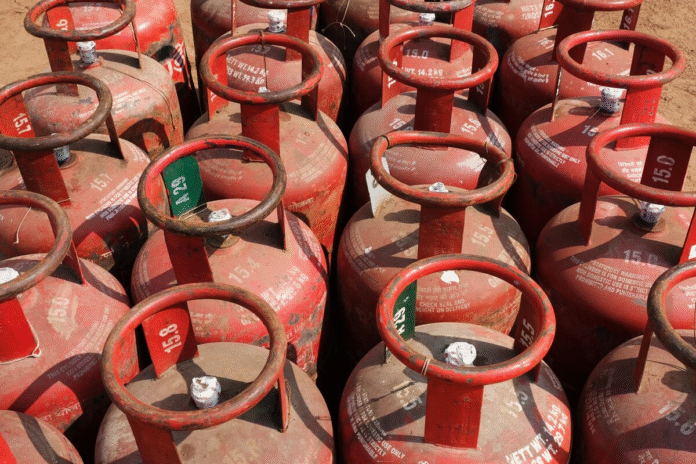
India is facing growing concerns over a possible liquefied petroleum gas (LPG) supply and price crisis, affecting millions of households and small businesses. LPG is widely used for cooking across urban and rural India, especially under the Pradhan Mantri Ujjwala Yojana launched by Government of India.
The crisis is being driven by a combination of rising global energy prices, supply disruptions, and geopolitical tensions. India imports nearly 60% of its LPG requirements, making domestic prices sensitive to global market fluctuations.
When global crude oil prices rise, the cost of LPG imports also increases, which ultimately impacts consumers.
2. Why Is India Facing an LPG Supply Challenge?
India’s LPG supply chain depends heavily on imports from major energy-producing regions, including the Persian Gulf. Any disruption in shipping routes, refinery output, or geopolitical tensions can affect supplies.
Another factor is the growing domestic demand. With the expansion of LPG connections under government welfare schemes, millions of new households now rely on LPG for cooking.
This rising demand, combined with fluctuating global supply, has created pressure on India’s LPG distribution system.
3. How Global Conflicts and Oil Prices Affect LPG in India
Global tensions in oil-producing regions can significantly impact LPG availability and pricing in India.
For example, instability in the Strait of Hormuz, a critical shipping route for oil and gas exports from the Persian Gulf, can disrupt supply chains. A large share of global energy shipments passes through this narrow waterway.
Any increase in shipping risks, insurance costs, or oil prices due to geopolitical tensions can directly push up LPG prices in India.
4. How Rising LPG Prices Are Affecting Indian Households
Rising LPG prices have a direct impact on household budgets, especially among low- and middle-income families.
For rural households, the cost of LPG cylinders often determines whether they continue using LPG or switch back to traditional fuels such as firewood or coal.
Despite subsidies and welfare programmes like Pradhan Mantri Ujjwala Yojana, affordability remains a key concern for many families.
5. What Is the Government Doing to Address the LPG Crisis?
The Government of India has taken several steps to manage LPG price volatility and ensure supply stability.
These measures include:
- Subsidies for eligible households
- Strategic fuel reserves
- Diversifying LPG import sources
- Strengthening domestic production and refining capacity
State-run oil companies such as Indian Oil Corporation, Bharat Petroleum, and Hindustan Petroleum play a key role in distribution and price management.
6. Can India Reduce Its Dependence on LPG Imports?
Energy experts believe India can reduce its dependence on imported LPG by expanding alternative clean energy options.
Potential solutions include:
- Biogas and compressed biogas production
- Electric cooking technologies
- Expansion of renewable energy infrastructure
- Increased domestic gas production
Diversifying energy sources could improve energy security and reduce the impact of global price shocks.
7. What Does the Future Hold for LPG Prices in India?
The future of LPG prices in India will largely depend on global oil markets, geopolitical stability, and domestic energy policies.
If international crude oil prices remain volatile, LPG prices may continue to fluctuate. However, government interventions, subsidies, and diversification of energy sources could help stabilise the market.
Ensuring affordable and reliable cooking fuel will remain a key policy priority as India works toward long-term energy security and sustainable development.