

From Alchemy to Atom Smashers: How CERN is Turning Lead into Gold (Literally)
Once, in candle-lit laboratories lined with dusty flasks and arcane symbols, medieval alchemists toiled with an impossible dream — to turn humble lead into glittering gold. This pursuit, called chrysopoeia, was equal parts chemistry, mysticism, and ambition. For centuries, it symbolised humanity’s longing to master nature, to create wealth from nothing, and perhaps to live forever.
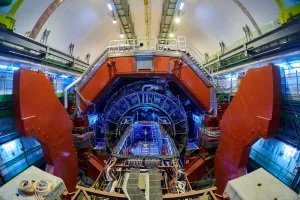
Fast forward to 2025, and in a sprawling underground laboratory on the Franco-Swiss border, modern-day alchemists in lab coats — not robes — have done the unthinkable. At CERN’s Large Hadron Collider (LHC), the ALICE collaboration has actually observed the transformation of lead into gold. Yes, the ancient fantasy is real… with a catch.
A Scientific Transmutation, Not a Philosopher’s Stone
Unlike the transmutations dreamed up by the alchemists of old, today’s version is rooted in nuclear physics, not sorcery. It’s not performed in bubbling cauldrons, but in the belly of the world’s most powerful particle accelerator.
Since the early 20th century, scientists have known that changing one element into another is possible — not chemically, but nuclearly. Atoms, made of protons and neutrons, can be reshuffled through nuclear reactions. Theoretically, strip away three protons from a lead nucleus (which has 82), and what do you get? Gold — which has 79.
That theory just became experimental fact.
The Gold-Making Machine Beneath the Earth
At the heart of this modern transmutation lies a phenomenon called ultra-peripheral collisions. These are near-misses — moments when two lead nuclei at nearly the speed of light zip past each other without touching, like two Formula 1 cars narrowly avoiding a crash. But even without impact, their electromagnetic fields collide, and that’s where the magic happens.
When these fields interact, they spark the release of high-energy photons, which can excite the nuclei enough to shake off protons and neutrons — a process known as electromagnetic dissociation.
Using specially designed detectors called zero-degree calorimeters, the ALICE team tracked these emissions with astonishing precision. The real breakthrough? They confirmed that, under these extreme conditions, lead nuclei do occasionally shed the right number of protons to become gold.
Not All That Glitters Is Viable
The numbers are breathtaking — during Run 2 of the LHC, the experiment produced an estimated 86 billion gold nuclei. That sounds like a lot until you weigh it. All that alchemical action adds up to just 29 picograms of gold — a speck invisible to the naked eye. You’d need trillions more just to afford a basic ring.
So, no, the world’s gold markets aren’t in danger. You can’t (yet) replace gold mining with physics labs. But the implications are far more profound than financial gain.
Why This Discovery Actually Matters
Beyond the sparkle of gold lies the shine of knowledge. These findings provide crucial insights into how particles behave in high-energy environments, validating long-standing theoretical models. They also help physicists understand a challenge unique to accelerators like the LHC: beam loss. When particles stray or decay unpredictably, they can interfere with the delicate machinery. Knowing how and when these losses occur — such as through electromagnetic dissociation — allows engineers to build better, safer, more powerful colliders.
In essence, this experiment isn’t about making treasure — it’s about mapping reality itself.
A Glimpse Into the Future
As CERN prepares for higher-luminosity runs in the coming years, the number of collisions (and by extension, gold nuclei) will increase. But don’t expect a sudden shift to nuclear goldsmithing. The energy cost and infrastructure required to produce even microscopic quantities of gold make it a scientific marvel, not a commercial prospect.
Still, in a poetic sense, we’ve come full circle. What was once the stuff of dreams, written in ancient scrolls, now plays out in a futuristic arena of superconducting magnets and quantum calculations.
The alchemists were wrong about the method, but right about the possibility.
And as we probe deeper into the fabric of matter, who’s to say what other “impossibilities” await?