

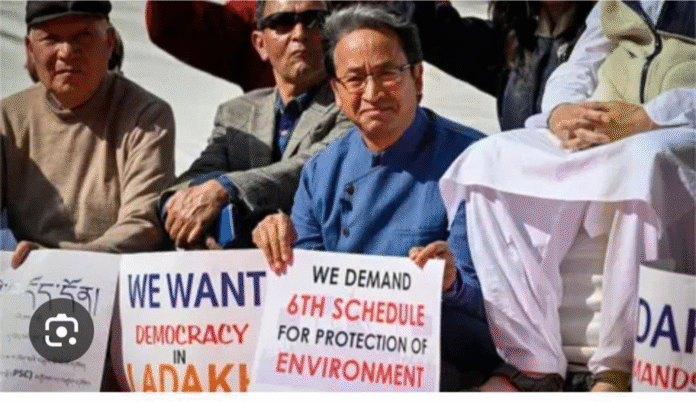
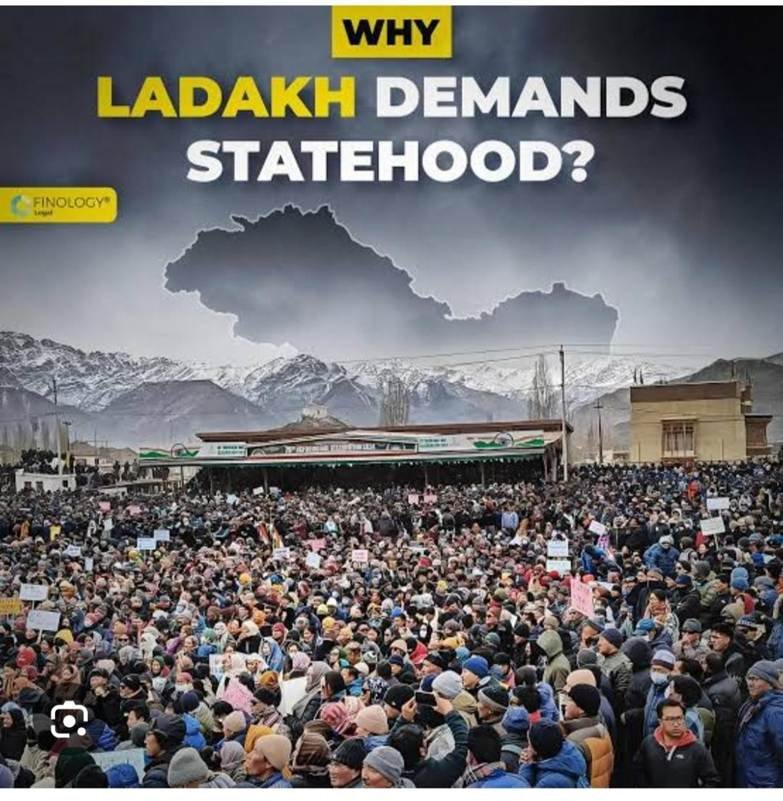
In recent weeks, Ladakh has witnessed a series of protests involving residents of Leh and Kargil districts. The demonstrations are primarily focused on local demands for statehood, constitutional protections under the Sixth Schedule, job reservations, and safeguard for the region’s fragile ecology. These developments have drawn national attention due to both the social issues involved and the government’s response.
—
Key Demands from Ladakh
The protests highlight several long-standing concerns of the local population:
Statehood: Residents seek a legislature for Ladakh, arguing that this would provide greater local representation in governance.
Constitutional Safeguards: There is a demand for inclusion under the Sixth Schedule to protect tribal culture, land rights, and ecological balance.
Employment Opportunities: Many young residents face limited job prospects, increasing demand for local employment guarantees.
Environmental Protection: The region’s high-altitude ecosystems face challenges from tourism, infrastructure development, and land-use changes.
—
Events Leading to Escalation
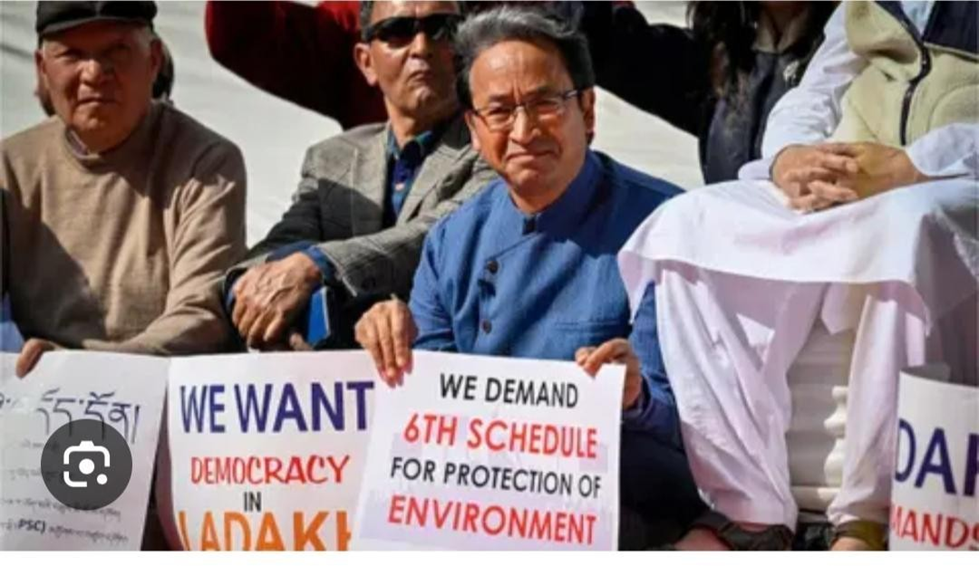
Activist and educator Sonam Wangchuk has emerged as a prominent figure, organizing and advocating for these demands. Frustration over perceived delays in addressing local concerns has contributed to the escalation of protests. In some instances, demonstrations turned confrontational, leading to detentions and security restrictions.
Government Response
The central and local administrations have taken multiple steps to maintain order:
Security Measures: Curfews, restrictions on public gatherings, and detentions of certain protest leaders.
Statements on Instigation: Officials have attributed part of the unrest to specific individuals and political groups, emphasizing the need for law and order.
Committees and Dialogue: The government has held discussions with representatives from local bodies such as the Leh Apex Body and the Kargil Democratic Alliance, with meetings of High-Powered Committees scheduled to address demands.
Political Perspectives
Political parties and leaders have expressed a range of positions:
Congress: Highlighted the importance of addressing citizens’ demands and expressed concern over the use of force during protests.
National Conference: Stressed the need for constructive dialogue and questioned narratives focusing solely on instigation rather than underlying issues.
Aam Aadmi Party (AAP): Emphasized democratic engagement and the need to consider local voices in decision-making.
BJP: Focused on law-and-order aspects, while highlighting concerns regarding alleged provocation and involvement of specific individuals.
—
Analysis
Observers note that the Ladakh protests reflect both local socio-economic and governance issues and broader questions about political communication. While the government has maintained law-and-order measures and engaged in committee-level discussions, some localdemands remain under negotiation. The situation illustrates the complexity of balancing administrative authority, local aspirations, and national political narratives.
Conclusion
The Ladakh protests underscore the importance of dialogue, representation, and sustainable development in remote regions. Moving forward, a combination of continued engagement with local stakeholders and careful attention to socio-economic and ecological concerns may contribute to addressing the issues raised by residents.

The article has been written by Soniya Yadav, first year student of first year in Kanoriya PG Mahila Mahavidhyala