

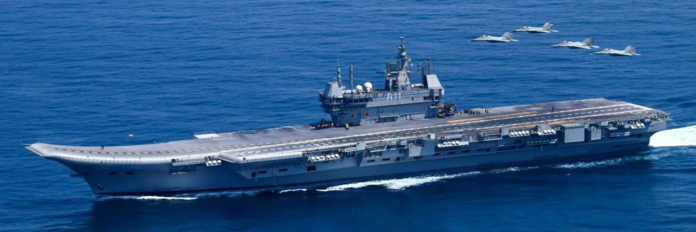
INS Vikrant, India’s most powerful and first indigenously built aircraft carrier, has been deployed in the Arabian Sea—just a day after the deadly terror attack in Pahalgam. This strategic naval move comes alongside a successful anti-ship missile test by the Indian Navy, signaling combat readiness and regional deterrence.
This article dives deep into why INS Vikrant matters, how it strengthens India’s defense, and why Pakistan is on high alert due to its deployment.
🚢 What Is INS Vikrant?
Commissioned in 2022, INS Vikrant (IAC-1) is India’s first indigenous aircraft carrier and a landmark achievement in naval engineering. It is more than just a warship—it functions as a floating airbase and mobile strike platform capable of launching air attacks, blockades, and rapid-response missions.
The new Vikrant pays homage to its legendary predecessor, which played a decisive role in the 1971 India-Pakistan war, helping India achieve naval superiority.
🔥 Why INS Vikrant Is a Game Changer
As tensions rise between India and Pakistan, INS Vikrant has the potential to become a decisive factor in any maritime conflict. Unlike Pakistan, which has no aircraft carriers, India’s Vikrant enhances maritime dominance in the Arabian Sea, one of the most critical strategic theaters in South Asia.
Key Features of INS Vikrant:
- Displacement: 43,000 tons
- Top Speed: 28 knots
- Aircraft Capacity: 30+ aircraft, including MiG-29K fighter jets and helicopters
- Missile Arsenal: 64 Barak air-defense missiles, 16 BrahMos cruise missiles
⚔️ Strike Capabilities of INS Vikrant
INS Vikrant operates as part of a powerful Carrier Strike Group, which includes:
- Destroyers
- Frigates
- Anti-submarine warfare (ASW) ships
Its MiG-29K fighter jets can launch precision strikes up to 850 km. With advanced missile systems like BrahMos, Vikrant can obliterate enemy airfields, naval bases, and key installations within minutes.
This makes it a first-strike weapon in case of escalating hostilities.
🛑 How INS Vikrant Can Block Pakistan’s Trade Routes
INS Vikrant poses a major threat to Pakistan’s economy. Here’s why:
- 70% of Pakistan’s trade and 80% of its oil imports flow through Karachi Port.
- A naval blockade near Karachi could choke Pakistan’s supply of oil, medicines, food, and essential goods.
Expert Insight:
“In the event of war, Pakistan’s biggest challenge will be fuel and lubricants,” says Lt. Gen. (Retd) Mohan Bhandari.
“If India blocks access to the Arabian Sea, Pakistan’s tanks and military logistics could come to a standstill.”
🛰️ Pakistan’s Weak Naval Defense
According to satellite reports, Pakistan currently has only two operational submarines, with others under maintenance. Its naval defense is outdated and ill-equipped to counter a carrier like Vikrant, making the situation more precarious in a potential conflict.
🌍 INS Vikrant and India’s Maritime Doctrine
In India’s evolving three-domain (land, air, sea) defense strategy, the maritime front has gained new significance. INS Vikrant is a cornerstone of this doctrine, ensuring India maintains sea control, secures trade routes, and deters regional adversaries.
✅ Conclusion: Why Pakistan Is Wary of INS Vikrant
With superior firepower, aerial reach, and blockade capability, INS Vikrant is not just a naval asset—it is a strategic weapon of influence and deterrence. Its presence near Pakistan’s waters is a clear signal that India is ready to protect its interests at sea and beyond.