

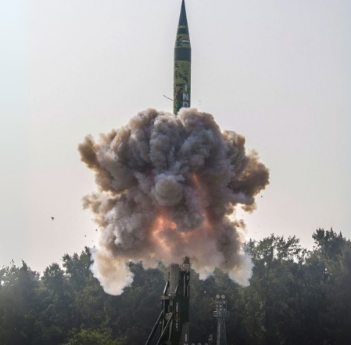
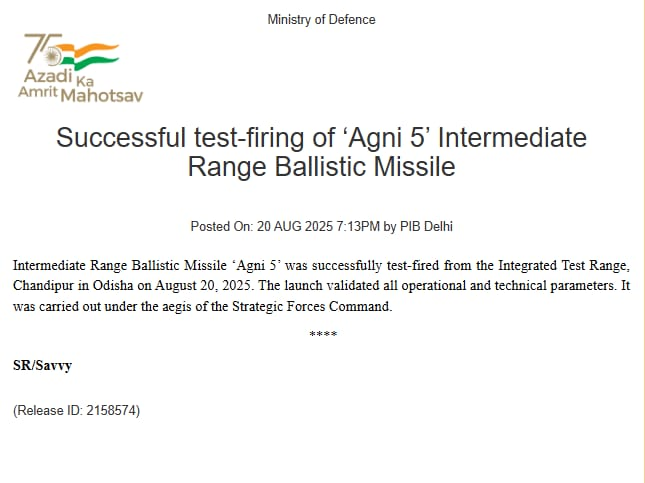
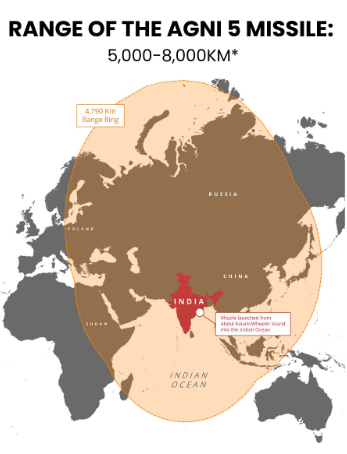
In a thunderous display of technological prowess and strategic resolve, India successfully test-fired its most formidable ballistic missile, Agni-5, from the Integrated Test Range (ITR) in Chandipur, Odisha. The launch, conducted under the aegis of the Strategic Forces Command, validated all operational and technical parameters, marking a defining moment in India’s defense narrative. The Agni-5, an intercontinental ballistic missile (ICBM) with a strike range of over 5,000 kilometers, is capable of reaching the northernmost stretches of China and parts of Europe. Designed by the Defence Research and Development Organisation (DRDO), this three-stage, solid-fuelled missile is a cornerstone of India’s nuclear deterrence strategy.
Mission Divyastra: A Leap into Multi-Warhead Capability
This test follows the landmark Mission Divyastra in 2024, where Agni-5 was trialed with MIRV (Multiple Independently Targetable Re-entry Vehicle) technology—allowing a single missile to strike multiple targets across vast distances. Though still in developmental stages, MIRV integration signals India’s intent to evolve its strategic capabilities in a rapidly shifting global defense landscape.
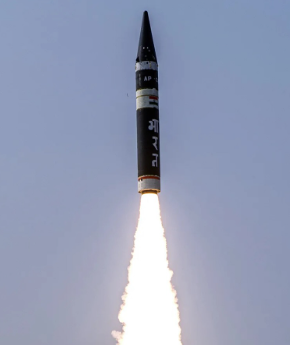
(PC:thetatvaindia)
Canister-Launched, Combat-Ready
Agni-5’s canister-launch system ensures rapid deployment and mobility, allowing it to be fired from road or rail platforms. This feature enhances India’s second-strike capability, reinforcing its commitment to a “No First Use” nuclear doctrine while maintaining credible deterrence.
A Message to the World
Coming just months after regional tensions and a series of tactical missile tests—including Pralay, Prithvi-II, and Agni-I—this launch sends a clear message: India is prepared, precise, and progressing. Defense analysts view this as a strategic signal to adversaries and allies alike: India’s shield is strong, and its spear is sharper than ever