

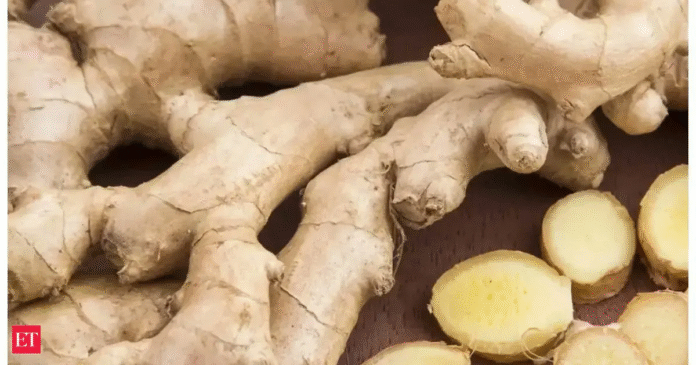
Mizoram has just added another feather to its cap: the state has been officially declared the “Ginger Capital of India” by NITI Aayog, recognising its rising quality and volume in ginger production. This move has triggered a full-scale push to ramp up cultivation, processing, and marketing with far-reaching implications for farmers, investors and India’s spice supply chain.
From hillside farms to national spotlight
Once a modest horticultural crop in the northeastern hills, ginger in Mizoram has now transformed into a major agricultural success story. The state government, under its “Bana Kaih” hand-holding initiative, has systematically supported farmers with assured procurement prices and a structured marketing network. As of 2025, the state has already procured over 3.38 crore kg of ginger, disbursing more than ₹137 crore in support payments to growers a massive boost to rural incomes and agrarian stability.
The transformation gained momentum after a high-profile stakeholders’ consultation in New Delhi in November 2025, co-hosted by NITI Aayog and the Mizoram government. More than 60 investors domestic and international participated, signalling serious interest in expanding ginger cultivation, processing, and export from the region.
What’s changing, processing, market access & farmer welfare
With the national recognition, the state has finalised plans to strengthen its supply chain. A dedicated ginger-processing unit at Sairang is scheduled to start operations in early 2026, aimed at converting raw ginger into value-added products like dried or sliced-ginger making produce more export-ready and shelf-stable.
Moreover, the agricultural board has organised a “Ginger Buyer-Seller Meet” to facilitate direct linkages between farmers and buyers across India reducing middlemen, ensuring fair prices, and giving Mizo farmers a better cut of the profits. This shift towards value-chain integration is expected to strengthen rural livelihoods, stabilize crop prices, and attract long-term investment in the state’s agribusiness.
What “Ginger Capital” means for India (and for you)
For the country at large, Mizoram’s rise as the ginger hub could diversify and secure India’s spice supply, reducing dependency on a few traditional growing regions. The state’s ginger already praised for its quality and organic cultivation may soon dominate national markets and even reach export shelves.
For farmers and youth in Mizoram, the transformation offers a model of sustainable agriculture backed by government support, assured markets, and growing investor interest.
As procurement scales up and processing infrastructure improves, many could find stable income reducing migration and strengthening rural economies.
Ginger isn’t just a spice, it’s a lifeline
Mizoram’s elevation to “Ginger Capital of India” is more than a title it’s a promise. A promise of opportunity for small farmers, of growth for agribusiness, and of supply-chain resilience for the nation. With smart policies, investor interest, and hard work from its people, Mizoram might well rewrite India’s spice map one ginger rhizome at a time.