

We recently celebrated World Water Day on 22 March 2026, let’s look at how we fare in Rajasthan and how potentially water will impact lives, governance,electorates and voting patterns in the near future.
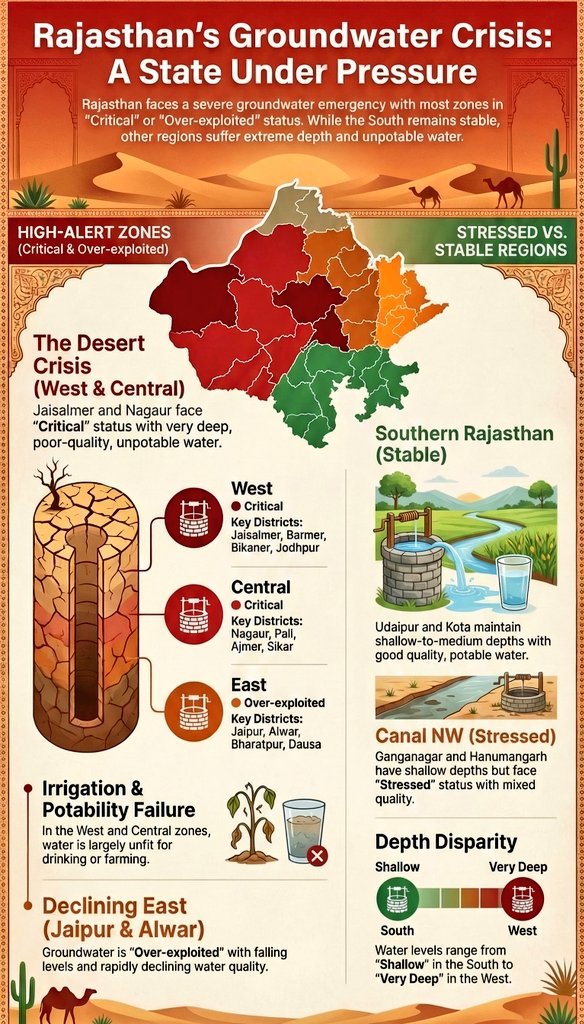
Rajasthan’s groundwater story is sharply divided zone-wise. In Western Rajasthan (Jaisalmer, Barmer, Bikaner,Jodhpur), water availability is extremely low, stored deep and often fossil innature; quality is poor due to salinity and fluoride, making it largely unfit for drinking or irrigation. In contrast, the canal-fed North-West(Ganganagar, Hanumangarh) has relatively better availability due to Indira Gandhi Canal recharge, but faces water logging and salinity from over-irrigation. Here, the issue is not scarcity but inefficient use.
Eastern Rajasthan (Jaipur, Alwar, Karauli, Bharatpur, Dausa) has moderate groundwater availability but is heavily over-exploited due to intensive agriculture and urban demand. Water quality is deteriorating with fluoride and nitrate contamination (making bones extremely brittle). South Rajasthan (Udaipur, Banswara, Dungarpur, Kota) remains relatively better with moderate recharge and good quality water,though aquifers are shallow and fragile. Meanwhile, Central Rajasthan(Nagaur, Pali, Ajmer, Sikar) faces severe depletion and poor quality due to fluorideand industrial pollution, making both drinking and irrigation increasingly difficult.
Across the state, nearly 70% of blocks are over-exploited,with agriculture consuming about 85% of groundwater. The core issues areexcessive extraction driven by free power and borewell expansion, cropmismatch (water-intensive crops in arid zones), weak recharge systems, andrising contamination (fluoride, salinity, nitrate, evenuranium in some pockets). Rajasthan is not just water-scarce – it isstructurally mismanaging a limited resource.
The solution lies in a combined strategy:reduce demand by shifting to low-water crops and reforming power subsidies;massively scale recharge through traditional and modern structures; improve irrigation efficiency via drip and sprinkler systems; shift drinking water dependence toward surface sources like canals and dams; address quality through treatment and blending;and enforce governance reforms such as restricting bore-wells in dark zones andadopting aquifer-based planning. Without these steps, Rajasthan risks a full-scale water and agricultural crisis withinthe next decade.
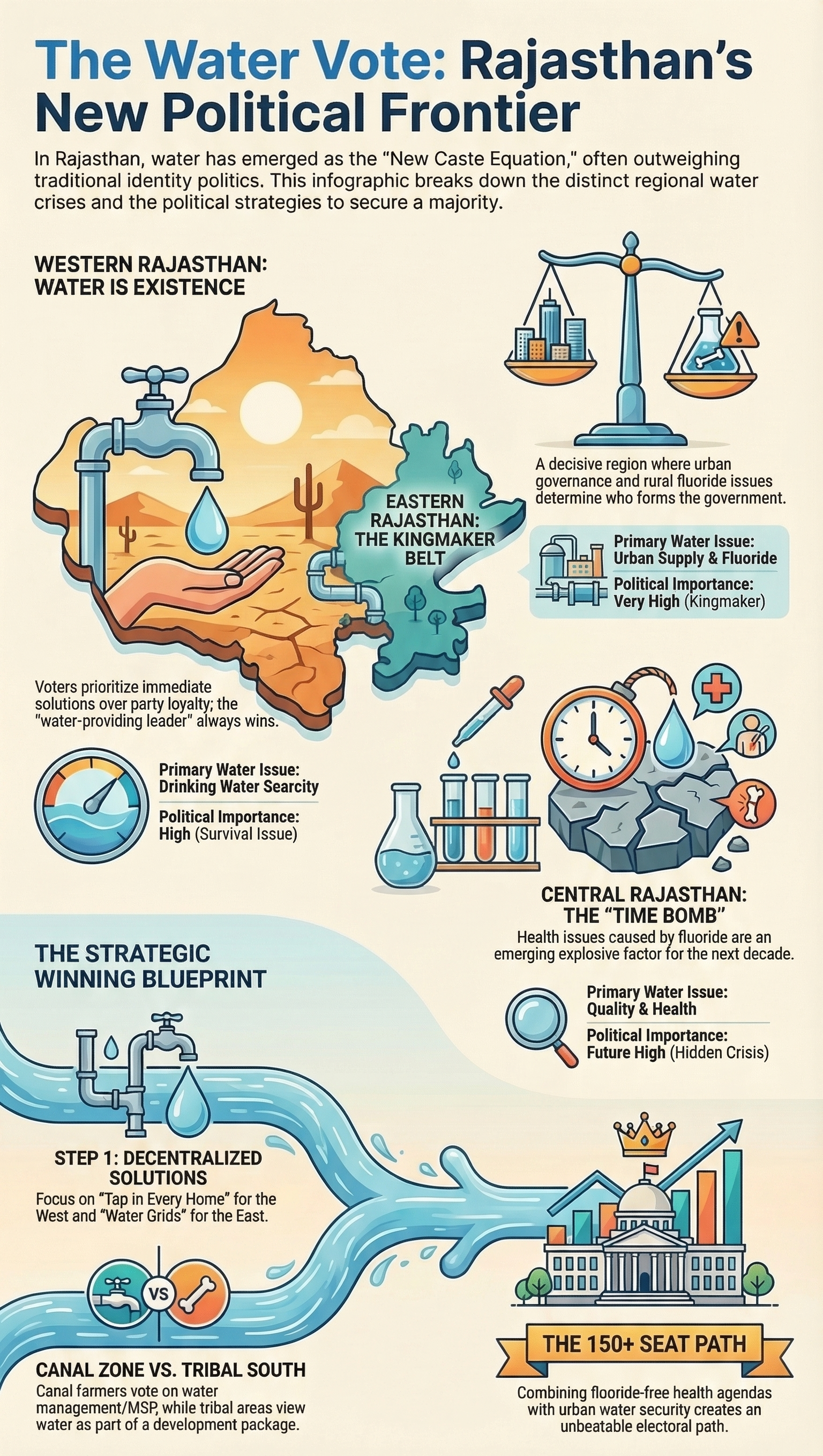
Rising water crisis is emerging as a decisivepolitical issue in Rajasthan, increasingly shaping voting behaviour beyond casteand party lines. In water-stressed regions, voters are prioritizing reliabledrinking water and irrigation, rewarding leaders who deliver visiblesolutions and punishing those who fail.
As groundwater declines andshortages intensify, water security is directly influencing farmer_sentiment,Urban_ satisfaction,and overall electoral outcomes, making it a key factor in government formation, hence would it not be a prudent decision to task the locals MLA’s / MP’s with groundwater recharge targets for their individual constituencies to be monitored with exemplary efficiency witha quarterly performance report for the world to see and judge efficiency on deliverables – Doable Yes, AchievableYes, Actionable Yes – if only the gumption to do the right thing persists.
It seems Water Wars are here for good, and those who know how to cure politically parched throats may eventually end upquenching their thirst for votes and governance, after all even a 7th standard child knows 70% of all body is water.
My final take – Water is evolving into a“universal issue” in Rajasthan that can override identity politics, intensifyanti-incumbency, and reward governance-driven campaigns and at the end of itall determine how our progeny will live – parched or satiated !

(The writer is Vijay Gurjar, President – Gurjar Aarakshan Sangharsh Samiti, BJP MLA Candidate, Corporate CXO, Driving ‘SocioPolitical’ Change)