

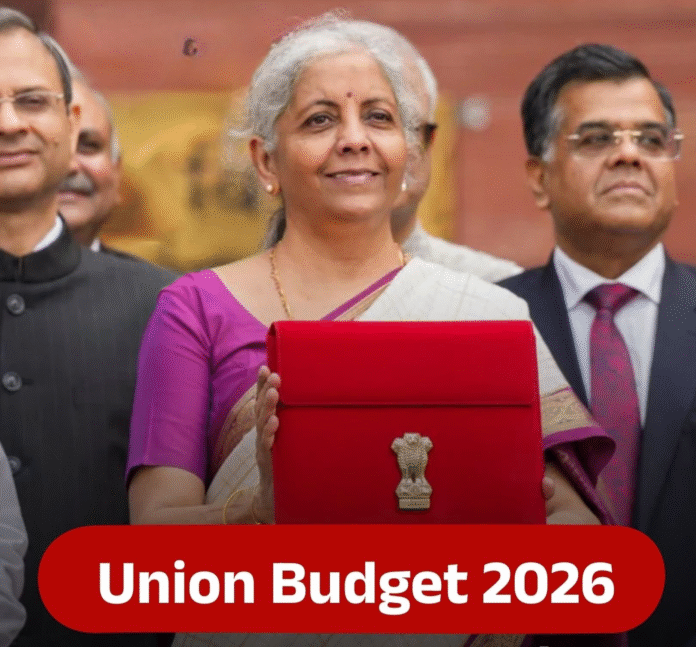
Union Budget 2026: Traveling abroad will be cheaper, the government has reduced taxes: 17 cancer medicines cheaper; alcohol may become more expensive, tax also increased on trading.
In the budget, the prices of goods now fluctuate only slightly due to increases and decreases in import duties. The prices of most items are decided by the GST Council.
Let’s understand what became cheaper and what became more expensive in this budget…
Cheaper
- Cancer medicines cheaper: Customs duty removed on 17 life-saving drugs
The government has removed the basic customs duty on 17 medicines used in the treatment of cancer. In addition, there will now be no tax on medicines and special foods imported from abroad for the treatment of 7 rare diseases. This will provide significant financial relief to families who depend on expensive foreign medicines for treatment.
- Microwave ovens cheaper: Duty reduced on parts, domestic manufacturing will increase
To promote domestic manufacturing, the government has made some important changes in the electronics sector. Customs duty has now been reduced on specific parts used in the manufacture of microwave ovens. This may lead to a reduction in the prices of microwaves in the coming days. The government aims for India to become a global hub for consumer electronics.
- EV batteries and solar panels cheaper: Raw materials for their manufacture are now tax-free
Considering the energy transition, the government has expanded the scope of tax exemptions available on machinery used to manufacture lithium-ion batteries. Now, there will be no duty on goods used for battery energy storage systems. Similarly, the duty has been removed on ‘sodium antimonate’ used in the manufacture of solar glass, which will make it cheaper to manufacture solar panels in the country.
- Shoes and clothes may become cheaper: Exemptions on raw materials to increase exports
Announcements have been made for the marine products, leather, and textile sectors to increase exports.
The duty-free import limit for seafood exports has been increased from 1% to 3%. Tax exemptions will now be available on the export of leather and synthetic shoes, including ‘shoe uppers’.
Why will it be cheaper: When companies get raw materials cheaper for manufacturing goods, the production cost will decrease. If companies pass on this benefit to customers, the prices of leather shoes, sports shoes, and seafood may decrease or at least remain stable.
- Foreign travel will be cheaper: Government reduces tax to 2%
Booking ‘tour packages’ for foreign travel will now be cheaper. Earlier, a 5% tax (TCS) was levied on expenses up to Rs 10 lakh and 20% on amounts exceeding that. This has now been reduced to a flat 2%. There is no longer any limit on the amount.
- Aircraft maintenance cheaper: Customs duty removed on parts
To promote civil aviation, customs duty has been removed on parts and components used in aircraft manufacturing. In the defense sector as well, there will be no tax on raw materials imported for aircraft maintenance and repair (MRO). This will reduce the cost of manufacturing and repairing aircraft in the country.
- Importing foreign goods cheaper: Tax reduced on items for personal use
Importing goods from abroad for personal use will become cheaper. The government has reduced the tax on such goods from 20% to 10%.
More expensive
TCS on liquor has been increased from 1% to 2%. This may increase the prices of liquor, as it will affect the retailer’s profit margin.
The Securities Transaction Tax (STT) on future trading has been increased from 0.02% to 0.05% and on options to 0.15%.
TCS stands for ‘Tax Collected at Source’. It is a type of advance income tax. The retailer who pays the 2% tax to the government now can adjust it while filing their Income Tax Return (ITR) at the end of the year. STT (Securities Transaction Tax) is a tax levied on every transaction (buying and selling). Due to the increase in tax rates, you will now have to pay more for the same transaction than before.
Knowledge Corner: The GST Council determines the prices of most goods.
From September 22, 2025, the four GST slabs were reduced to two. Now, GST is levied only in the 5% and 18% slabs. This decision was taken at the 56th meeting of the GST Council. This has made everything from buying ghee and paneer to cars and ACs cheaper.
Now, answers to two important questions…
Question 1: If duties are changed in the budget today, will goods become cheaper in stores from tomorrow?
Answer: No. This is the biggest misconception. The effect of tax changes in the budget applies to ‘new stock’. The goods already on the store shelves will be sold at the old prices. It takes time for the effects of the budget to be seen. Also, a price decrease or increase is not guaranteed. It depends entirely on the companies.
Sometimes, the government reduces duties, but companies do not lower prices to increase their profit margins. Similarly, if raw materials become expensive in the international market, prices may remain stable or even increase despite a reduction in taxes. In short, nothing is certain.
Question 2: Can the budget change the GST changes that came into effect on September 22, 2025?
Answer: No. The Finance Minister does not have the authority to change GST slabs in the budget. A separate meeting of the GST Council is required for this. The budget can only increase or decrease import duties.