

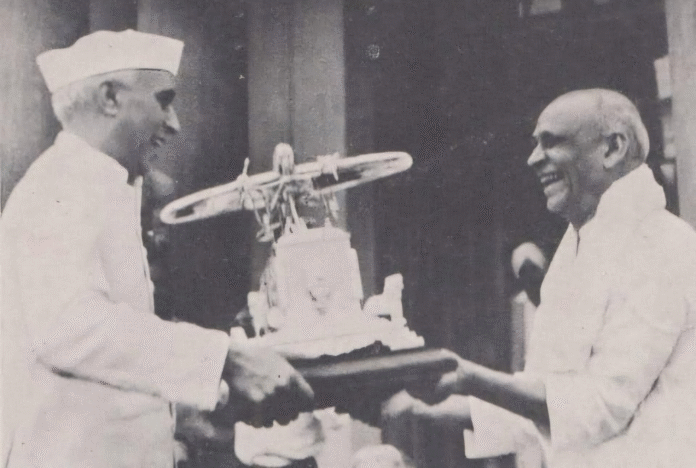
Every year on December 15, India remembers Sardar Vallabhbhai Patel — the man who welded a fragmented nation into one unified Republic. Known as the Iron Man of India, Patel was not just a freedom fighter and statesman, but also a master strategist, a patient negotiator, and a leader with unwavering resolve.
As India marks his death anniversary, Patel’s life offers lessons far beyond politics and nation-building. Surprisingly, many of his principles resonate deeply with the modern stock market — a space driven by volatility, discipline, long-term vision and emotional control.
Here are five lessons one can learn from Sardar Vallabhbhai Patel’s extraordinary life.
1. Determination: Ironclad Focus Amid Uncertainty
Patel’s commitment to India’s freedom and unity never wavered — even when the odds were stacked against him. Colonial resistance, political pressure and post-Independence chaos did not deter his focus.
2. Tactical Vision: Strategy Over Impulse
From leading the Bardoli Satyagraha to negotiating with hundreds of princely states, Patel combined courage with calculation. His actions were strategic, not reactive, and always aligned with a long-term vision of national unity.
3. Learning Is Key: Knowledge Builds Confidence
Patel was a trained lawyer who believed deeply in preparation and understanding before action. His sharp legal mind and ability to read people and situations came from continuous learning.
Diversification: Unity in Diversity
Patel’s greatest achievement was integrating over 550 princely states — each with its own culture, politics and challenges — into one nation. This diversity strengthened India rather than weakening it.
Patience: The Power of Perseverance
Nation-building was not an overnight success. Patel’s patience, negotiation skills and consistency played a decisive role in shaping modern India.
A Legacy That Still Guides Us
Sardar Vallabhbhai Patel served as India’s first Deputy Prime Minister and Home Minister from 1947 to 1950. Born in Nadiad, Gujarat, and raised in rural surroundings, he rose to become one of the most influential architects of modern India.
On his death anniversary, remembering Patel is not just about history — it’s about applying his principles to life, leadership and even financial decision-making.
Because whether it’s building a nation or a portfolio, the fundamentals remain the same:
vision, discipline, patience and unity.