

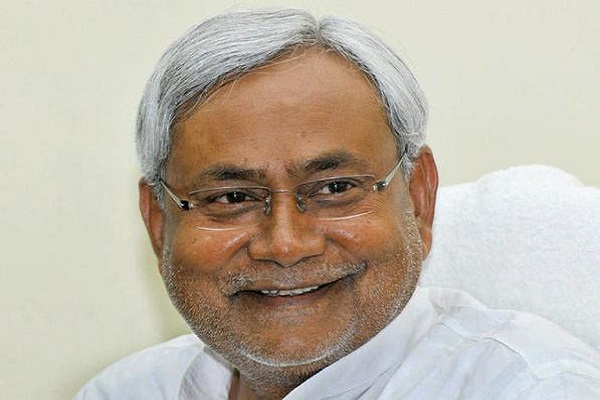
Nitish Kumar: “In Bihar’s politics, seasons change but Nitish Kumar remains.”
With his 10th swearing-in ceremony scheduled for November 20, Nitish Kumar has once again proved why he is called Siyasat ka Sutradhar the master weaver of Bihar’s political landscape. Few leaders in independent India have displayed such extraordinary longevity, agility, and political instinct.
From Bakhtiarpur to Bihar’s Top Seat: A Journey of Grit
Born on 1 March 1951 in Bakhtiarpur, Patna district, Nitish Kumar grew up in modest surroundings. An electrical engineering graduate from NIT Patna, he briefly worked in the railways before entering active politics.
His political rise began with the JP Movement, where he worked alongside Lalu Prasad Yadav and other socialist leaders. While many faded, Nitish evolved. His USP became clear early:
He does not chase power, he negotiates it.
From MP to Union Minister to Bihar CM, he built his legacy on governance, roads, law and order, women empowerment, and rural development.
A Record 10th Oath: The Architect of Alliances
The 2025 Bihar election proved one thing Nitish Kumar’s relevance remains untouched.
The NDA delivered an 85% strike rate, with BJP winning 89 seats and JD(U) 85, nearly double their previous tally.
On November 20, in the presence of PM Modi and top national leaders, Nitish will take oath once again at Gandhi Maidan, sealed from the public from Nov 17-20 for massive preparations.
The new cabinet formula:
- JD(U): 14 ministers + CM
- BJP: up to 16 ministers
- LJP (RV): 3 berths
- HAM-S: 1 berth
- RLM: 1 berth
Why Nitish Still Wins
Because he evolves. Because he listens.
Because in Bihar, he has become synonymous with one simple belief:
“Leadership is not loud. Leadership is lasting.”
Nitish Kumar’s 10th term is not just history, it is the return of India’s most enduring political craftsman.
About Nitish
Kumar was born on 1 March 1951 in Bakhtiarpur, Bihar, to Parmeshwari Devi and Kaviraj Ram Lakhan Singh, an Ayurvedic practitioner. He belongs to the Kurmi agricultural community, and his childhood nickname was Munna. His native village is Kalyan Bigha in Nalanda district.
He completed his Electrical Engineering degree from Bihar College of Engineering (now NIT Patna) in 1972. After graduating, he briefly worked with the Bihar State Electricity Board before shifting his focus to politics.
Kumar married Manju Kumari Sinha (1955–2007) on 22 February 1973. The couple has one son. Manju Sinha passed away in New Delhi on 14 May 2007 due to pneumonia.