

Marking the beginning of a new year in the Kashmiri Hindu calendar, Navreh is a deeply symbolic and culturally rich festival celebrated by the Kashmiri Pandit community. Observed on the first day of the Chaitra month, Navreh coincides with the onset of spring, reflecting nature’s renewal and the promise of new beginnings.
When is Navreh in 2026?
In 2026, Navreh will be celebrated on 19 March, aligning with Chaitra Shukla Pratipada, the first day of the Hindu lunisolar calendar. The day also coincides with other regional New Year festivals like Ugadi and GudiPadwa, highlighting the shared cultural rhythm across India.
What is Navreh?
The word “Navreh” is derived from Sanskrit—Nav meaning “new” and Reh from Rekha meaning “line” or “era”—symbolising the beginning of a new year or time cycle. It is primarily celebrated in Kashmir and among Kashmiri Pandit communities across India.
More than just a calendar event, Navreh is a day of introspection, gratitude, and spiritual alignment, setting the tone for the year ahead.
Significance and Historical Roots
Navreh has deep historical and spiritual significance. It is closely associated with the ancient Saptarishi calendar, believed to have been in use in Kashmir for thousands of years. The festival symbolises the creation of time and cosmic order, linking it with broader Hindu beliefs that the universe began during this sacred period.
The festival also reflects the intimate connection between nature and human life, as it marks the arrival of spring in the Kashmir Valley—a time when snow begins to melt and life slowly re-emerges.
Rituals and Traditions
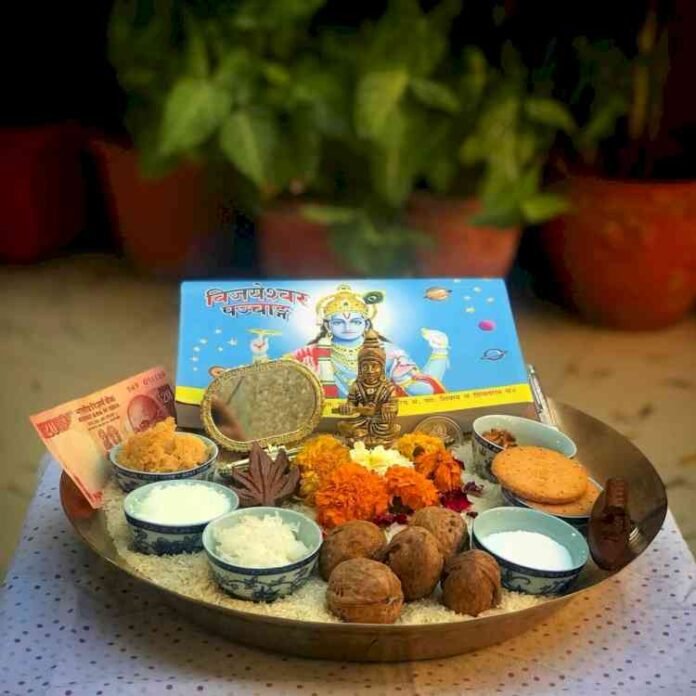
One of the most unique aspects of Navreh is the preparation of the “Navreh Thali”, a sacred platter arranged on the eve of the festival. It typically includes:
●Rice (symbol of sustenance)
●Coins or currency (prosperity)
●A pen or book (knowledge)
●A mirror (self-reflection)
●Fresh flowers (beauty and growth)
●Walnuts (purity and health)
●A religious text or almanac
The thali is placed in the prayer room overnight, and the first thing devotees do in the morning is look at it, symbolising a mindful and prosperous start to the year.
Families also visit temples, offer prayers, and listen to the Panchang (Hindu almanac), which outlines predictions and guidance for the coming year.
Food and Festive Delicacies
Food plays an important role in Navreh celebrations. Traditional Kashmiri dishes are prepared, often including:
●Rice-based meals
●Yogurt dishes
●Seasonal vegetables
A unique ritual involves soaking walnuts in water overnight and distributing them among family members, symbolising unity, health, and prosperity.
Where and How Navreh is Celebrated
Navreh is primarily celebrated in Kashmir and by the Kashmiri Pandit diaspora across India, especially in cities like Jammu and Delhi.
The celebrations are generally simple, spiritual, and family-oriented, focusing on prayers, rituals, and reflection rather than large public festivities. The emphasis is on beginning the year with clarity, discipline, and positivity.
A Festival of Reflection and Renewal
At its heart, Navreh is a festival of inner awakening and new beginnings. It encourages individuals to reflect on their lives, set intentions, and move forward with wisdom and balance.
In a fast-changing world, Navreh continues to preserve the cultural identity and spiritual heritage of the Kashmiri people—reminding us that every new year is not just about time passing, but about growing, learning, and beginning anew.