

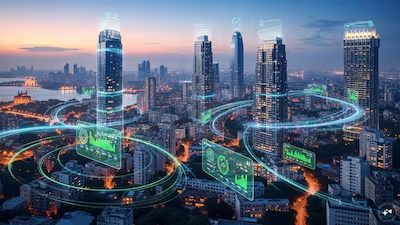
Mumbai’s real estate sector is entering a transformative phase with the introduction of AI-powered “breathable buildings,” signalling a shift from conventional smart home features to health-centric infrastructure. A major pilot project aims to integrate advanced air purification systems into large-scale developments, placing indoor air quality at the forefront of urban living.
This initiative reflects rising awareness of pollution risks and evolving buyer expectations in densely populated cities.
AI Integration in Building Infrastructure
The new system combines real-time environmental sensing with artificial intelligence to dynamically optimise indoor air quality. It continuously monitors both indoor and outdoor conditions, automatically adjusting filtration and airflow to maintain safe air standards.
Unlike conventional systems, this technology effectively targets ultrafine particulate matter (PM2.5), harmful gases, and microbial pollutants—offering a proactive approach rather than reactive filtration.
From Smart Homes to Healthy Buildings
For years, developers have marketed properties using smart technologies such as automation and connected devices. The current shift introduces “healthy buildings” as a new benchmark, where air quality becomes a core design element.
This evolution reflects a broader trend in urban planning that prioritises occupant well-being alongside convenience and luxury.
Air Quality as a Real Estate Differentiator
Air pollution is increasingly influencing property values, particularly in major metropolitan areas. Studies indicate that people spend nearly 90% of their time indoors, where air quality can often be worse than outdoors due to enclosed pollutants.
As awareness grows, clean indoor air is emerging as a key factor—alongside location, connectivity, and amenities—in shaping property demand and pricing.
Key Facts
- Indoor air can often be more polluted than outdoor air due to confined contaminants.
- Air pollution is a major global environmental health risk.
- Ultrafine particulate matter (PM2.5) poses serious respiratory and cardiovascular threats.
- AI-based environmental systems are increasingly being integrated into urban infrastructure.
Scalability and Future Adoption
The pilot in Mumbai is designed as a scalable model, with potential expansion across both residential and commercial developments. If successful, such systems could be incorporated at the design stage rather than as add-ons.
Other pollution-affected cities such as Delhi and Bengaluru may follow suit, potentially redefining urban living standards and positioning clean air as a tangible and marketable feature in future real estate.