

Amaravati, the upcoming capital of Andhra Pradesh, is poised to become India’s next deep-tech powerhouse with the launch of the country’s first Quantum Valley, a futuristic technology hub anchored by a proposed IBM quantum computing facility. The ambitious initiative aligns with India’s National Quantum Mission (NQM) and marks a historic step toward building indigenous next-generation computing capabilities.
If finalised, the project could place India among a select group of nations with advanced quantum infrastructure, transforming Amaravati into a global hub for quantum research, innovation, and high-tech jobs.
IBM Quantum System Two in India: A Technological Leap
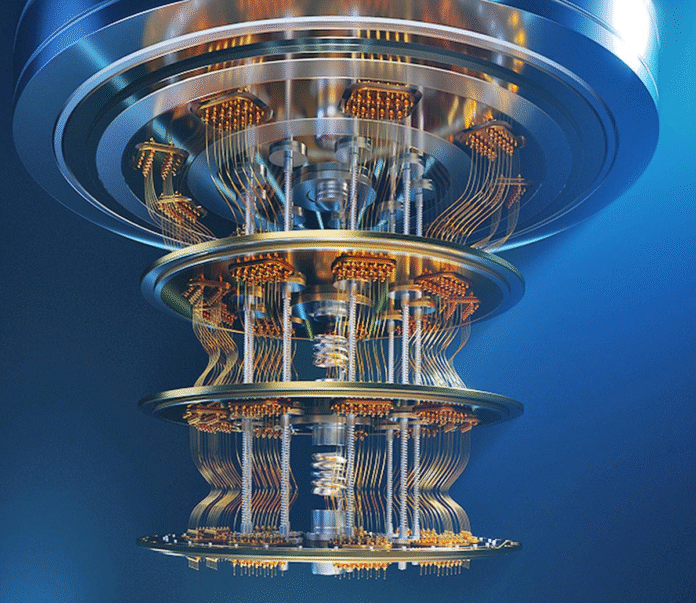
At the heart of the Quantum Valley Tech Park will be the IBM Quantum System Two, expected to be powered by IBM’s most advanced superconducting quantum processor. Discussions between IBM and the Andhra Pradesh government are at an advanced stage, and the facility could become the most powerful quantum computer ever deployed in India.
Tech giant Tata Consultancy Services (TCS) has joined the initiative to develop quantum algorithms, real-world applications, and workforce training programmes. The goal is to create a full-scale quantum ecosystem connecting industry, academia, startups, and government research labs, positioning Amaravati as the nucleus of India’s quantum revolution.
What Makes Quantum Computers Revolutionary?
Unlike classical computers that process information using binary bits (0s and 1s), quantum computers use qubits, which can exist in multiple states at once due to superposition and entanglement. This allows quantum machines to solve complex problems that would take traditional supercomputers thousands of years.
Potential applications include drug discovery, battery chemistry, materials science, climate modelling, financial simulations, and logistics optimisation. These quantum processors operate inside dilution refrigerators at temperatures near absolute zero, ensuring superconductivity and minimal noise interference—making them some of the most advanced machines ever built.
National Quantum Mission: India’s Big Science Push
India’s quantum push is driven by the National Quantum Mission, approved in April 2023 with an allocation of ₹6,003 crore for 2023–24 to 2030–31. The mission aims to accelerate research in quantum computing, quantum communication, sensing technologies, and advanced materials.
The government plans to develop intermediate-scale quantum computers with 50 to 1,000 qubits, while the Amaravati Quantum Valley is expected to translate research breakthroughs into industrial products, startups, and skilled employment.
Strategic and Security Implications of Quantum Tech
Quantum computing is not just about speed—it has major national security implications. Today’s encryption systems like RSA could eventually be cracked by powerful quantum machines, prompting global research into post-quantum cryptography. By building domestic quantum capability, India aims to protect its digital infrastructure, retain intellectual property, and strengthen strategic autonomy.
Amaravati’s Vision: India’s Quantum Capital
With IBM’s cutting-edge hardware, TCS’s software expertise, and government backing, Amaravati’s Quantum Valley could become India’s Silicon Valley of quantum technology. The project is expected to boost innovation, attract global investment, and create a new generation of quantum scientists and engineers.
As the world enters the quantum era, Amaravati’s rise signals India’s ambition to be among the leaders shaping the future of computing, security, and science.