

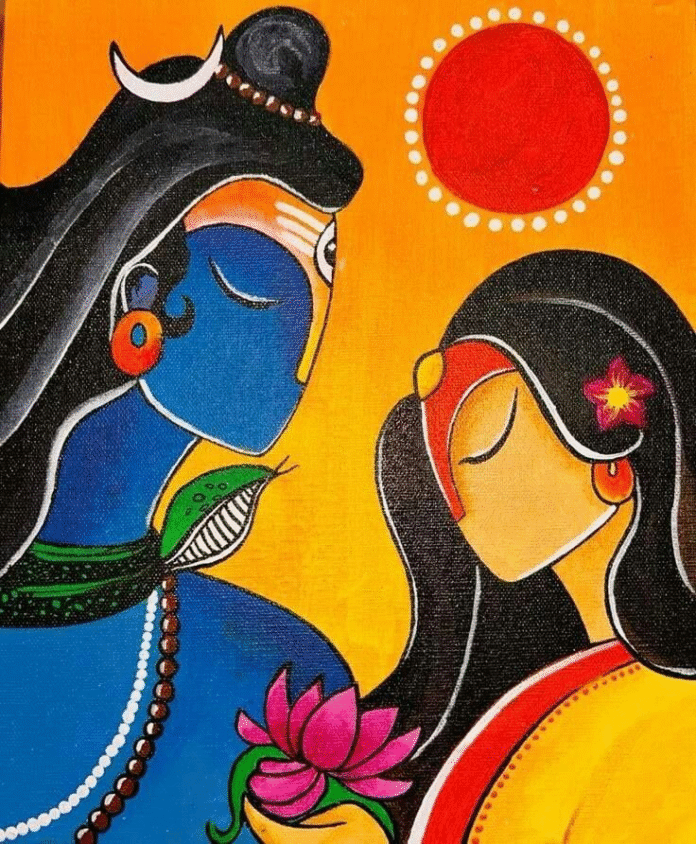
To some, Shiva is a meditating yogi; to others, a divine lover; and to many, the cosmic dancer of the universe. But on Mahashivratri, these identities merge — Adi Yogi, Shiv–Shakti, and Nataraj become symbols of stillness, unity, and motion. This sacred night is not just about rituals; it is a reminder that life itself is a dance between silence and energy, between consciousness and creation.
Every year, as the sacred night of Krishna Paksha Chaturdashi in the month of Phalgun arrives, millions of devotees across India prepare to observe Mahashivratri — the Great Night of Shiva. This tithi is not chosen merely by tradition; it carries profound spiritual significance.
According to yogic sciences, the planetary alignment on this lunar phase creates a natural surge of subtle energy that supports the upward movement of prana in the human system. This makes spiritual practices such as meditation, mantra chanting, and silent awareness especially powerful on this night. That is why Mahashivratri is observed through the night. Darkness here is not considered negative; rather, it becomes fertile ground for heightened awareness and inner awakening.
Across ancient scriptures and oral traditions, Mahashivratri is described through multiple sacred narratives, each revealing a deeper spiritual truth.
One widely revered belief is that on this night, Lord Shiva entered into absolute stillness on Mount Kailash, transcending identity, action, and desire. In that profound state of meditation, he became pure consciousness — the Adi Yogi, the first yogi.
Another cherished belief celebrates the divine marriage of Lord Shiva and Goddess Parvati. Their union is not merely a mythological event, but a powerful symbol of cosmic balance — the coming together of Shiva, the infinite consciousness, and Shakti, the dynamic energy. Parvati’s journey to win Shiva’s heart was marked by intense tapasya. She renounced royal comforts and undertook years of discipline, meditation, and unwavering devotion. Her penance was not only to attain Shiva as her husband, but to understand his ascetic path and become his equal in spirit. Their sacred union is often regarded as one of the earliest and most divine examples of love rooted in patience, sacrifice, and spiritual strength — a love that transcends ego and desire.
Mahashivratri is also associated with Shiva’s cosmic Tandav, the powerful dance symbolizing creation, preservation, and dissolution. The Tandav reminds us that the universe itself moves in rhythmic cycles, and that destruction is not an end, but a doorway to renewal.
Devotees celebrate this night through fasting, Rudrabhishek, chanting “Om Namah Shivaya”, and maintaining vigil until dawn. Temples resonate with prayers, bells, and bhajans, but at its core, the festival calls for inner silence.
In rapidly changing times, Mahashivratri continues to remain deeply relevant — not merely as a religious observance, but as a cultural and spiritual pause. In an age dominated by constant motion and distraction, this sacred night reminds us of balance, restraint, and inward reflection. For the youth, the festival’s message resonates not as an old ritual, but as timeless guidance — to balance action with stillness, passion with peace, and self-discipline with devotion.
As dawn breaks after the long vigil, Mahashivratri leaves behind a timeless message: true transformation begins within. In silence, in devotion, and in the sacred stillness of the night, we rediscover the eternal rhythm that connects us to ourselves and to the divine.

(The writer of this article is Kanan Rathore, a student of Haridev Joshi University, Jaipur)