

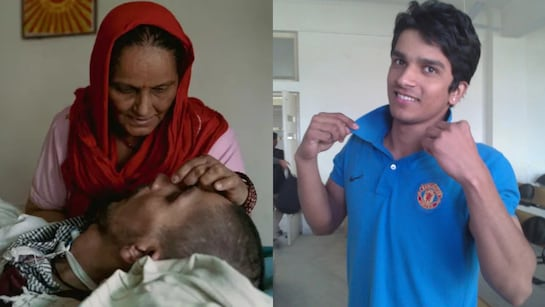
The case of Harish Rana has become a landmark moment in India’s medical and legal history. In March 2026, the Supreme Court of India permitted passive euthanasia for the 32-year-old man who has remained in a permanent vegetative state since a severe accident in 2013. The court directed All India Institute of Medical Sciences (AIIMS), New Delhi, to supervise the withdrawal of life-sustaining treatment according to strict medical and legal protocols.
Background of the Case
Harish Rana suffered a traumatic brain injury after falling from a building in 2013 while studying engineering. Since then, he has remained in an irreversible vegetative state with almost no possibility of recovery. His parents approached the courts seeking permission to withdraw life support, arguing that continuing treatment only prolonged biological life without consciousness.
After medical evaluations confirmed the irreversible condition, the Supreme Court allowed passive euthanasia, recognising the principle of “right to die with dignity” under Article 21 of the Constitution.
Medical Procedure for Passive Euthanasia
Passive euthanasia does not involve administering substances to cause death. Instead, it involves withdrawing life-sustaining treatment, such as ventilators, artificial nutrition or hydration, allowing the patient to die naturally. The process must follow strict safeguards.
Doctors typically review the patient’s condition through multiple medical boards, ensuring there is no chance of recovery and that the decision is medically justified. Continuous monitoring and documentation are required throughout the process.
Preparations at AIIMS
AIIMS Delhi has been tasked with managing the entire procedure under medical supervision. According to experts, preparations include assembling a specialised medical team, arranging palliative care facilities and ensuring that the withdrawal of treatment is done gradually and ethically.
Doctors will focus on comfort care, meaning medications and support will be provided to prevent pain, distress or breathing discomfort once life-support measures are withdrawn.
A Landmark Moment in Medical Ethics
The Harish Rana case marks the first major implementation of India’s passive euthanasia framework, developed through earlier Supreme Court rulings. It has reopened debates about end-of-life care, patient autonomy and medical ethics in India.
Beyond the legal significance, the case highlights a sensitive question facing modern medicine: how to balance the preservation of life with the dignity of death when recovery is no longer possible.