

India’s Fertility Crisis: UNFPA 2025 Report Highlights Reproductive Challenges, Not Population Size
The 2025 State of World Population Report by the United Nations Population Fund (UNFPA) reveals a pressing but overlooked crisis in India—not one of overpopulation, but of unmet reproductive needs. Titled “The Real Fertility Crisis,” the report highlights how millions of Indians are unable to achieve their desired family size due to financial constraints, healthcare access issues, and social pressures. This global fertility report emphasizes the urgent need to focus on reproductive rights and autonomy instead of just fertility rates.
Financial Instability Reason for Not Planning Family
According to the report, 36% of adult Indians face unintended pregnancies, highlighting a widespread lack of reproductive control. Nearly 40% of respondents cited financial instability as the primary reason they could not have the family they envisioned. Other key barriers include job insecurity (21%), inadequate housing, limited childcare, and poor health conditions such as infertility. Additionally, 19% of people reported societal pressure as a reason for having fewer children than they desired, pointing to a lack of true reproductive freedom in both rural and urban India.
Delhi maintains low Replacement Fertility Levels
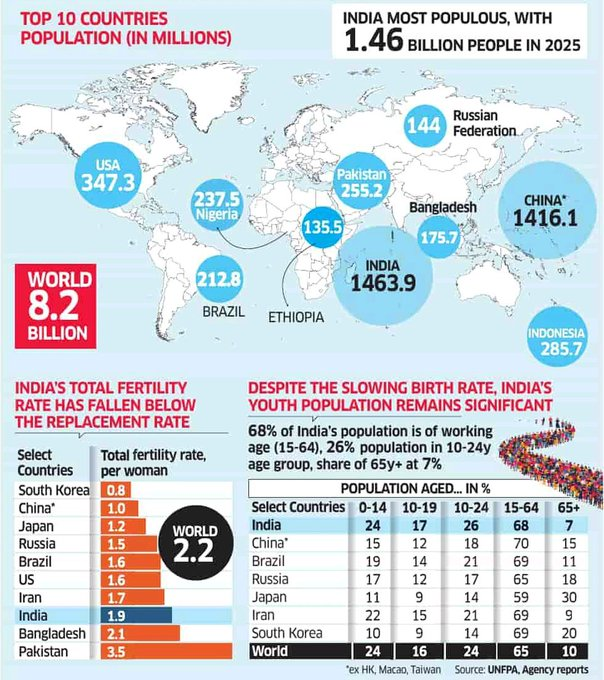
Despite India’s Total Fertility Rate (TFR) dropping to 2.0, which is at the replacement level, regional disparities remain stark. States like Kerala and Delhi have maintained below-replacement fertility levels, while Bihar, Uttar Pradesh, and Meghalaya continue to report higher birth rates. These variations are closely tied to economic inequality, healthcare access, and social norms, which affect reproductive decisions across different regions.
Maternal and Child Health Risks
The report also highlights a concerning trend in adolescent fertility. India’s teenage pregnancy rate is 14.1 births per 1,000 girls aged 15–19, higher than in China or Sri Lanka. This not only increases maternal and child health risks but also disrupts education and employment prospects for young women, creating a cycle of poverty and dependence.
Modern challenges further complicate family planning in India. Rising loneliness, evolving relationship patterns, and increasing social stigma around parenting and infertility contribute to reproductive hesitation. High expectations placed on women for child-rearing often deter them from expanding their families, reinforcing gender inequality in caregiving roles.
UNFPA Report
To address these growing challenges, the UNFPA report calls for a rights-based, inclusive approach to reproductive health. Recommendations include ensuring universal access to contraception, safe abortion services, maternal health care, and investments in affordable childcare and education. The report also stresses the importance of supporting marginalised groups, including LGBTQ+ communities, disabled individuals, and low-income families, to achieve reproductive autonomy.
Importantly, the report advocates for improved data collection and expanded reproductive health metrics. Current measurements focus narrowly on fertility rates and overlook key indicators like bodily autonomy, access to services, and individual choice. A more holistic data strategy is essential to guide inclusive, evidence-based policymaking in India.
Conclusion
In conclusion, the 2025 UNFPA Report reframes the national conversation from population control to reproductive empowerment. The real fertility crisis in India lies in the lack of resources, freedom, and support systems that enable individuals to make informed and autonomous family planning decisions. Addressing this will not only promote gender equality and health outcomes but also strengthen India’s overall social and economic development.