

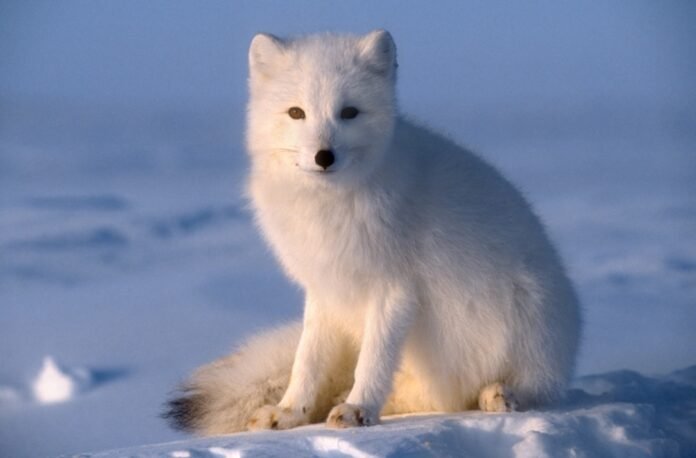
The Arctic fox is one of the most resilient animals on Earth, perfectly adapted to life in the extreme conditions of the Arctic. Found across the tundra regions of North America, Europe, and Asia, this small mammal thrives in an environment where temperatures can drop below –50°C and food is often scarce.
One of the Arctic fox’s most remarkable features is its ability to withstand intense cold. Its compact body, short ears, and thick fur minimise heat loss, while even the soles of its feet are covered in fur for insulation. The fox’s bushy tail serves as a blanket, wrapping around its body during freezing winds. Another fascinating adaptation is its seasonal coat change—white in winter for camouflage in snow, and brown or grey in summer to blend with the tundra landscape.
Despite harsh conditions, the Arctic fox is an opportunistic omnivore. Its diet mainly consists of small mammals such as lemmings, along with birds, eggs, fish, and carrion. During winter, it often follows larger predators like the polar bear, feeding on leftover scraps. Its keen hearing allows it to detect prey beneath thick snow, after which it pounces with precision.
Arctic foxes remain active throughout the year and do not hibernate. They live in complex burrow systems that provide shelter from the cold and predators, some of which are used for generations. These dens become especially important during the breeding season.
Reproduction takes place once a year, typically in spring. After a gestation period of about 50–52 days, the female gives birth to a large litter—sometimes up to 20 pups, one of the largest among mammals. The young grow quickly and are usually independent by autumn.
Currently, the Arctic fox is classified as a species of “Least Concern” globally. However, it faces growing challenges from climate change, which alters its habitat and allows competitors like the red fox to expand northward.
The Arctic fox stands as a powerful example of adaptation and endurance. In one of the planet’s most unforgiving environments, it not only survives but thrives—reminding us of nature’s extraordinary resilience.