

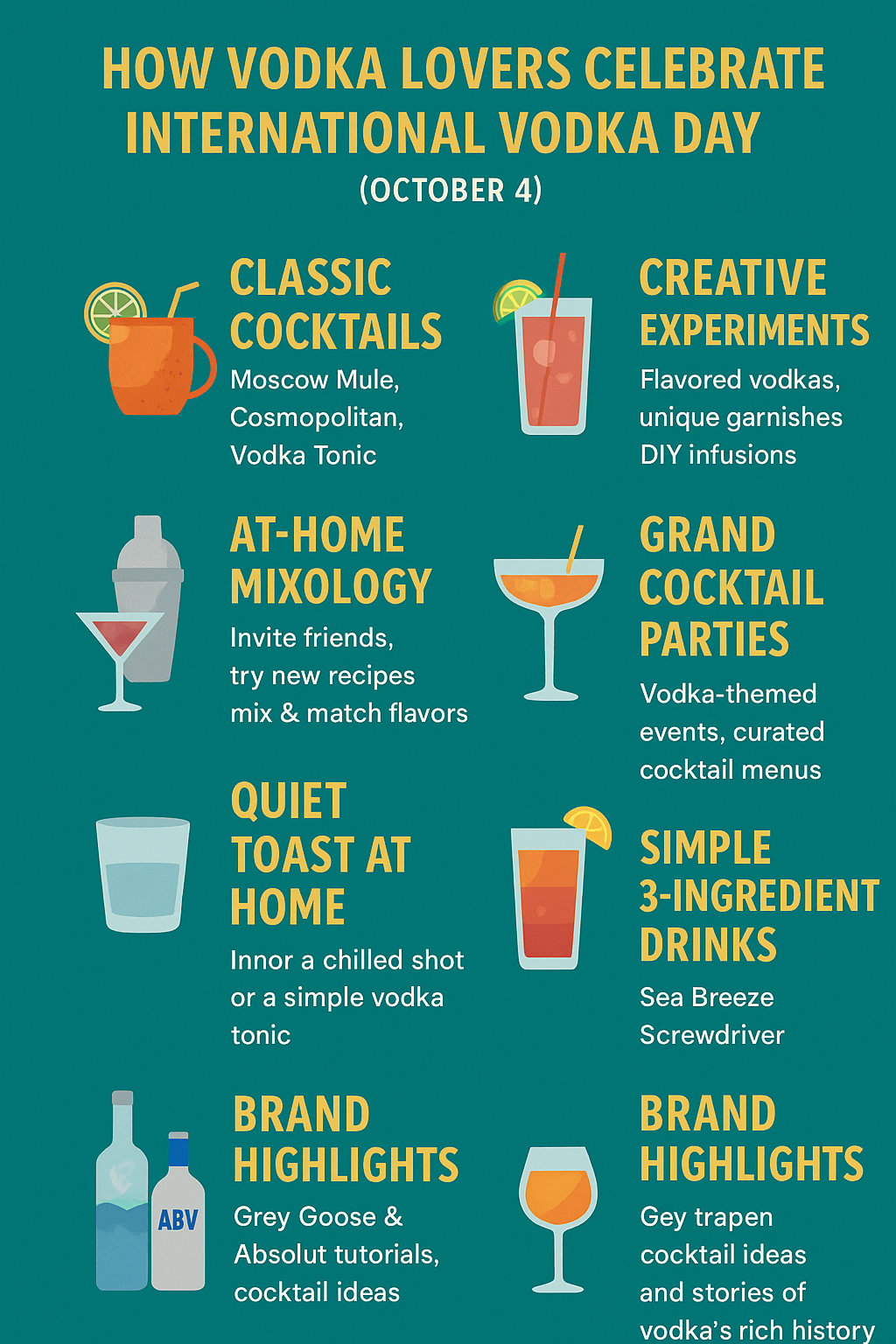
Vodka, whose name comes from the Russian word voda meaning water, has a long and fascinating journey. Before the Second World War, vodka was rarely consumed outside Europe, but its flavorless and versatile nature eventually won over hard liquor fans worldwide. Today, vodka is produced from a wide range of ingredients—beets, potatoes, wheat, even grapes—but its final taste depends more on production methods than raw materials. By law, vodka cannot have a distinctive flavor, unless infused after distillation, which makes it unique among spirits.
Despite its reputation as one of the least harmful alcoholic drinks—thanks to filtration that removes many impurities—vodka remains potent, with alcohol content ranging from 35 to 60 percent. Ironically, while many link it to Russia, vodka’s origins remain unclear, with roots also claimed by Poland, Ukraine, Belarus, and even Scandinavian regions. Still, Russia consumes more vodka than any other country, and taxes on the spirit contribute significantly to its economy.
Vodka is believed to date back to the 12th century, originally used for medicinal purposes before gaining popularity for its intoxicating effects in the 1350s. In Russia, it was long tied to rituals and customs, often used in religious ceremonies where refusal to drink was considered sinful. By the 1600s, vodka had become a staple at imperial banquets, with traditions like foreign ambassadors being made to down the infamous “Cup of the White Eagle”—a massive litre-and-a-half serving.
The Martini Debate
Vodka has also sparked one of mixology’s great debates: the martini. Was it meant for gin or vodka, shaken or stirred? The original martini featured gin, carefully stirred to avoid “bruising” it, but James Bond’s iconic “shaken, not stirred” vodka martini reshaped cocktail culture forever. Today, flavored vodka martinis are a trendy choice for younger drinkers, while purists still cling to the Russian classic.
With its neutral flavor, vodka easily adapts, blending seamlessly with fruits, herbs, and spices to create a wide variety of martinis. Whether shaken or stirred, it remains a timeless favorite that bridges centuries of history with modern creativity in every glass.