

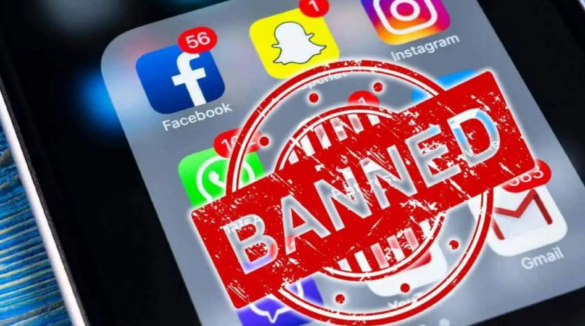
With rising concerns about the impact of social media on children’s mental health and safety, several governments around the world are reevaluating how young users interact online. Australia has already put into force a world-first ban preventing children under the age of 16 from accessing major social media platforms, prompting debates and policy proposals in other nations. Now, the United Kingdom is seriously considering similar restrictions, and in India, the southern state of Andhra Pradesh has taken the first steps toward exploring a comparable policy. These parallel moves signal a growing global focus on protecting minors in the digital age, even as experts differ on the best way forward.
Australia’s pioneering under-16 ban
Australia’s Parliament passed landmark legislation that bans children under 16 from holding social media accounts on platforms such as TikTok, Instagram, Facebook, Snapchat, X, and YouTube. Under the Online Safety Amendment, platforms are required to take “reasonable steps” to verify that users are at least 16 years old, and failure to comply can result in fines of up to 49.5 million Australian dollars. This law came into effect on December 10, 2025, making Australia the first country in the world to enforce such a sweeping age-based restriction.
The UK’s growing interest in age limits for social media
Following Australia’s move, the United Kingdom has begun serious discussions about adopting a similar approach. British Prime Minister Keir Starmer has said that “no option is off the table” as the government reviews its online safety framework, which already includes stricter age verification and content regulation proposals. A recent House of Lords vote in the UK showed cross-party support for a ban on social media use by under-16s, adding political momentum to the idea. Proponents argue that such measures could protect young people from online harms, though critics caution about enforceability and unintended consequences.
Andhra Pradesh explores a similar path
Beyond Europe, India’s Andhra Pradesh is also studying the feasibility of restricting social media access for children under 16, explicitly taking inspiration from Australia’s model. The state government has formed a Group of Ministers led by IT Minister Nara Lokesh to examine global examples, including Australia’s law, and develop recommendations on age verification and implementation. The panel is expected to report soon, with the possibility of state-level legal action to limit access for minors. Officials cited concerns that children may not fully grasp the content they encounter online and that a structured legal framework is necessary to safeguard their well-being.
Debate over effectiveness and rights
These proposed bans reflect widespread anxiety about social media’s influence on youth mental health, exposure to harmful content, and addictive usage patterns. However, critics argue that simply banning access may drive children to find workarounds, push them toward unregulated corners of the internet, or raise questions about free speech and digital rights. The UK and Andhra Pradesh’s deliberations are likely to consider these complexities as they weigh the Australian experience against local legal, cultural, and technological realities.
As this global conversation unfolds, policymakers are grappling with how to balance online safety and young people’s freedom, and whether regulatory approaches pioneered abroad can be effectively adapted to other contexts.