

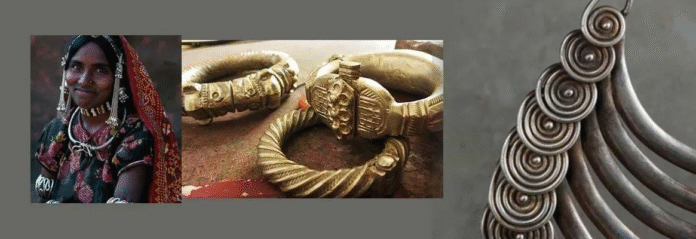
(PC:fiber2fashion)
In the hilly heartland of western Madhya Pradesh, where the Bhils and Bhilalas have lived for centuries, silver isn’t just a metal. It’s a legacy. A language. A lifelong companion. From the moment a girl is born, her body is adorned with solid silver locks—on her neck, wrists, ankles. Not for fashion. Not for wealth. But as a ritual, a mark of dignity, and a silent symbol of gendered endurance.
These ornaments, often weighing kilograms, are never removed. Not until death. And even then, they’re preserved by the family—passed down like sacred relics, reminders of a woman’s journey through a male-dominated world.
The Land That Breathes Tradition
Jhabua, surrounded by Gujarat and Rajasthan’s borders, is a tribal district rich in minerals—limestone, dolomite, calside—but poor in rain and resources. The terrain is rugged, the economy agrarian, and the people resilient. Despite droughts and degraded wastelands, the tribes celebrate life with color and pride. Festivals like Bhagoriya erupt in dance, storytelling, and the exchange of silver jewelry as tokens of love and union. In this land, boys don’t offer roses—they offer heavy silver ornaments to the girl they wish to marry. If she accepts it publicly, the wedding happens the same day. No dowry. No cash. Just silver. And a lifetime of wearing it.
From Spirals to Chains: The Evolution of Craft
Earlier designs were simple—round tubular locks, spiral ends, cast in pure silver. But poverty and rising silver prices have changed the game. Today, artisans use copper alloys, lighter chains, dome-shaped pieces. The tradition survives, but it’s adapting. In some villages, it’s fading. In others, it’s fiercely alive.
Even families below the poverty line refuse to part with ancestral ornaments. “We may die of hunger,” they say, “but the silver stays.”
A Tradition Under Threat
But this legacy is under siege. Robbery cases have surged. Women are attacked for the silver they wear. The ornaments that once symbolized pride now attract danger. Slowly, the community is shifting to lighter, occasional-wear designs—still beautiful, still meaningful, but safer. And yet, in the remote corners of Jhabua, the old customs persist. Silver bricks are exchanged during festivals. Street plays echo ancestral tales. Elders narrate stories of chivalry and resilience. The bow and arrow—Teer-Kamthi—still hangs proudly in homes