

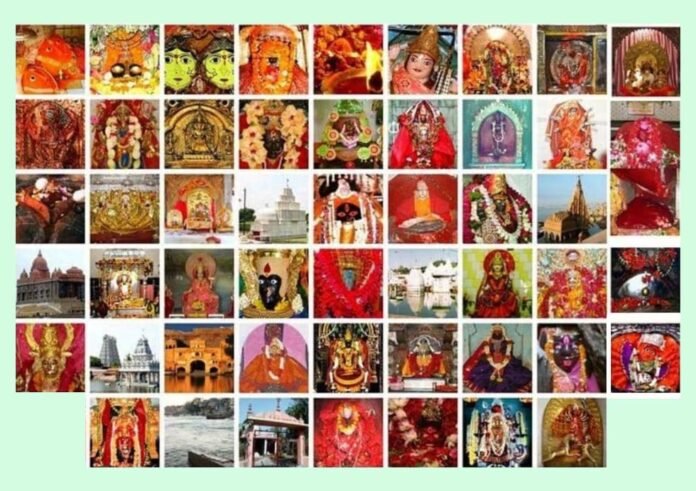
Across the Indian subcontinent, the worship of the Divine Mother occupies a central place in Hindu spirituality. Among the most sacred sites dedicated to the Goddess are the Shaktipeeths, revered temples believed to embody the eternal power of Shakti. These shrines hold immense spiritual significance, and during Navratri, thousands of devotees undertake pilgrimages to these holy places to seek blessings, offer prayers, and celebrate the power of the divine feminine.
What Are Shaktipeeths?
The term Shaktipeeth literally means “seat of divine power.” These sacred temples are believed to mark the places where parts of the body of Sati, the first consort of Shiva, fell on earth. Each Shaktipeeth is therefore associated with a specific body part or ornament of the Goddess and is considered a powerful centre of spiritual energy.
Spread across India as well as neighbouring regions such as Nepal, Bangladesh and Pakistan, these shrines represent the widespread devotion to the Mother Goddess in different cultural and regional traditions.
The Story Behind the Shaktipeeths
The origin of the Shaktipeeths is rooted in a well-known legend described in several Hindu scriptures. According to the story, Sati was the daughter of King Daksha. Daksha once organised a grand yajna but deliberately did not invite Shiva, whom he disliked. Unable to bear the insult directed at her husband, Sati immolated herself in the sacrificial fire.
Grief-stricken and furious, Shiva carried Sati’s body across the universe and performed the cosmic Tandava, the dance of destruction. To restore balance to the universe, Vishnu used his Sudarshan Chakra to cut Sati’s body into pieces. These body parts fell at different locations across the subcontinent, and each site became a sacred Shaktipeeth.
Over centuries, these places evolved into important pilgrimage centres where devotees worship the Goddess in various forms.
A Note on the Number of Shaktipeeths
Different Hindu texts mention different numbers of Shaktipeeths. Some traditions refer to four Adi Shaktipeeths, while others mention 18 Maha Shaktipeeths, 51 Shaktipeeths, or even 108 sacred sites.
The list of 51 Shaktipeeths is commonly associated with the Tantra Chudamani and later Shakta traditions. However, historians and scholars note that the names of some temples and the body parts associated with them may vary across scriptures and regional traditions. Therefore, the following list reflects one of the most widely referenced traditional compilations.
The 51 Shaktipeeths and the Body Parts of Goddess Sati
Amarnath – Jammu & Kashmir – Throat
Katyayani – Mathura, Uttar Pradesh – Hair
Vishalakshi – Varanasi, Uttar Pradesh – Earrings
Lalita Devi – Prayagraj, Uttar Pradesh – Fingers
Jwala Devi – Kangra, Himachal Pradesh – Tongue
Tripurmalini – Jalandhar, Punjab – Left breast
Savitri – Kurukshetra, Haryana – Right ankle
Magadha (Patan Devi) – Patna, Bihar – Right side of body
Dakshayani – Burang, Tibet – Right palm
Mahishasuramardini – Kolhapur, Maharashtra – Third eye
Bhramari – Nashik, Maharashtra – Chin
Ambaji – Banaskantha, Gujarat – Heart
Gayatri (Manibandh) – Pushkar, Rajasthan – Wrist
Ambika – Bharatpur, Rajasthan – Left foot
Sarvashail – Rajahmundry, Andhra Pradesh – Left cheek
Sravani – Kanyakumari, Tamil Nadu – Back and spine
Kamakhya – Guwahati, Assam – Yoni (genital organ)
Kalighat – Kolkata, West Bengal – Toes
Taratarini – Odisha – Breasts
Vimala – Puri, Odisha – Feet
Kankalitala – Birbhum, West Bengal – Pelvis
Bahula – Ketugram, West Bengal – Left arm
Vibhash – Tamluk, West Bengal – Left ankle
Yogadya – Khirgram, West Bengal – Toe
Ratnavali – Bangladesh – Right shoulder
Jessoreswari – Bangladesh – Palms
Sugandha – Bangladesh – Nose
Chandranath – Bangladesh – Right arm
Hinglaj Mata – Balochistan, Pakistan – Brahmarandhra (top of head)
Guhyeshwari – Kathmandu, Nepal – Hips
Tripura Sundari – Tripura – Right foot
Ramgiri – Chitrakoot, Madhya Pradesh – Right breast
Kalmadhava – Amarkantak, Madhya Pradesh – Right arm
Mahakali (Harsiddhi) – Ujjain, Madhya Pradesh – Upper lip
Jalandhar Peeth – Punjab – Breast
Kangra (Bajreshwari) – Himachal Pradesh – Chin
Naina Devi – Himachal Pradesh – Eyes
Chintpurni – Himachal Pradesh – Feet
Mansa Devi – Haridwar, Uttarakhand – Hair
Purnagiri – Uttarakhand – Navel
Vindhyavasini – Mirzapur, Uttar Pradesh – Back
Maihar – Madhya Pradesh – Necklace
Chamundeshwari – Mysuru, Karnataka – Hair
Srisailam (Bhramaramba) – Andhra Pradesh – Neck
Jogulamba – Telangana – Upper teeth
Kanchi Kamakshi – Tamil Nadu – Skeleton energy
Kanyakumari – Tamil Nadu – Spine
Shrinkala – West Bengal – Abdomen
Jayanti – Meghalaya – Left thigh
Kurukshetra Bhadrakali – Haryana – Anklet
Viraja – Odisha – Navel
A Living Tradition of Faith
The Shaktipeeths form a sacred spiritual network that stretches across South Asia, symbolising the eternal presence of the divine feminine. Each shrine reflects centuries of mythology, faith, and cultural heritage.
For devotees, visiting these temples—especially during Navratri—is not merely a pilgrimage but a profound spiritual journey, honouring the eternal power and grace of the Mother Goddess.