

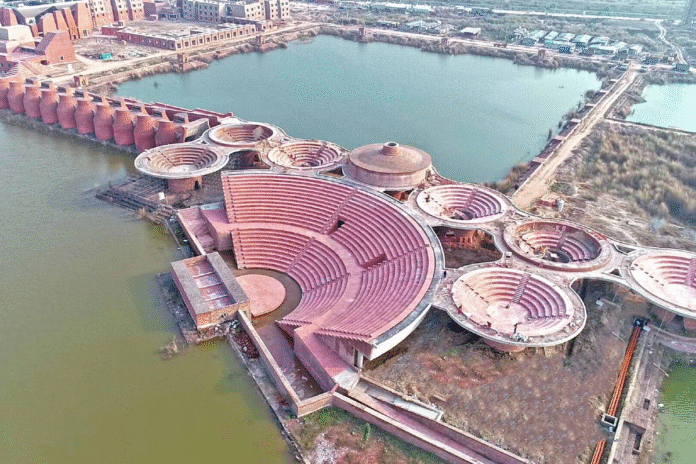
After 1600 years, the silent ruins stir once more. Nalanda—once reduced to ashes by tyranny—now rises as a phoenix of intellect and innovation. No longer just a citadel of ancient wisdom, it emerges as a beacon of sustainable living, zero-carbon ambitions, and global harmony. This isn’t history repeating—it’s history reinventing the future.
It’s a place where ancient wisdom meets modern sustainability, where tradition fuels innovation, and where the future is shaped by harmony—with nature, with knowledge, and with humanity Legacy of Nalanda The World’s First Residential University. Founded in 427 CE by Kumargupta I of the Gupta dynasty, Nalanda was more than a university—it was a beacon of intellectual brilliance.
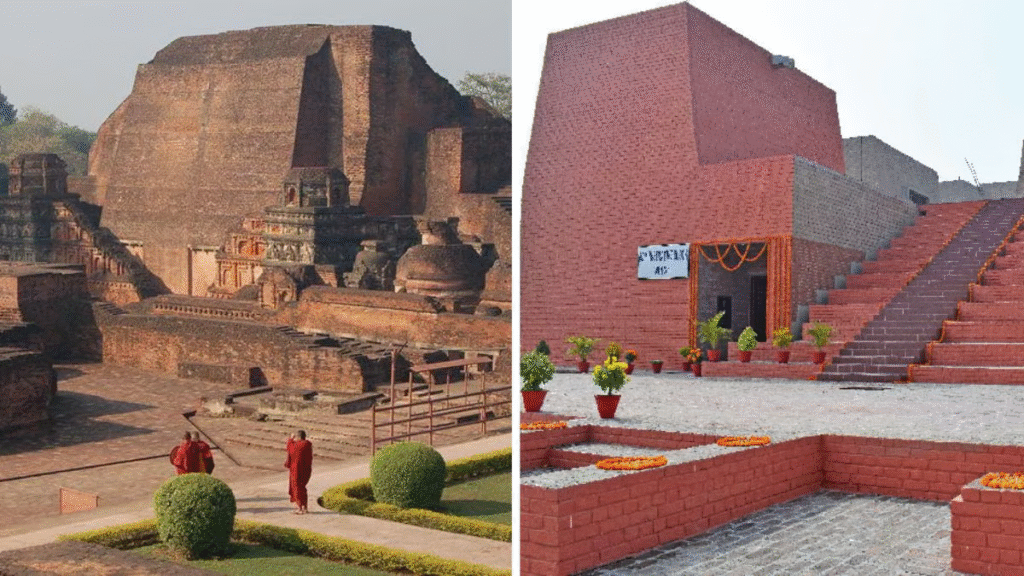
- Hosted 10,000 students and 2,000 teachers from across Asia.
- Specialized in Buddhist philosophy, mathematics, astronomy, medicine, and logic.
- Scholars like Xuanzang and Yijing documented its grandeur and carried hundreds of manuscripts to China.
- Destroyed in 1193 CE by Bakhtiyar Khilji, leading to the loss of priceless knowledge and cultural heritage.
Revival of Nalanda: A Global Vision
The idea to resurrect Nalanda was proposed by Dr. A.P.J. Abdul Kalam in 2006 and endorsed by 16 East Asia Summit nations in 2007. Nalanda University Act, 2010 passed by Indian Parliament. First academic session began in September 2014. Supported by countries like Japan, China, Singapore, Australia, and more. Nobel Laureate Amartya Sen served as the first Chancellor.
Zero Carbon Campus: A Model for Sustainable Education
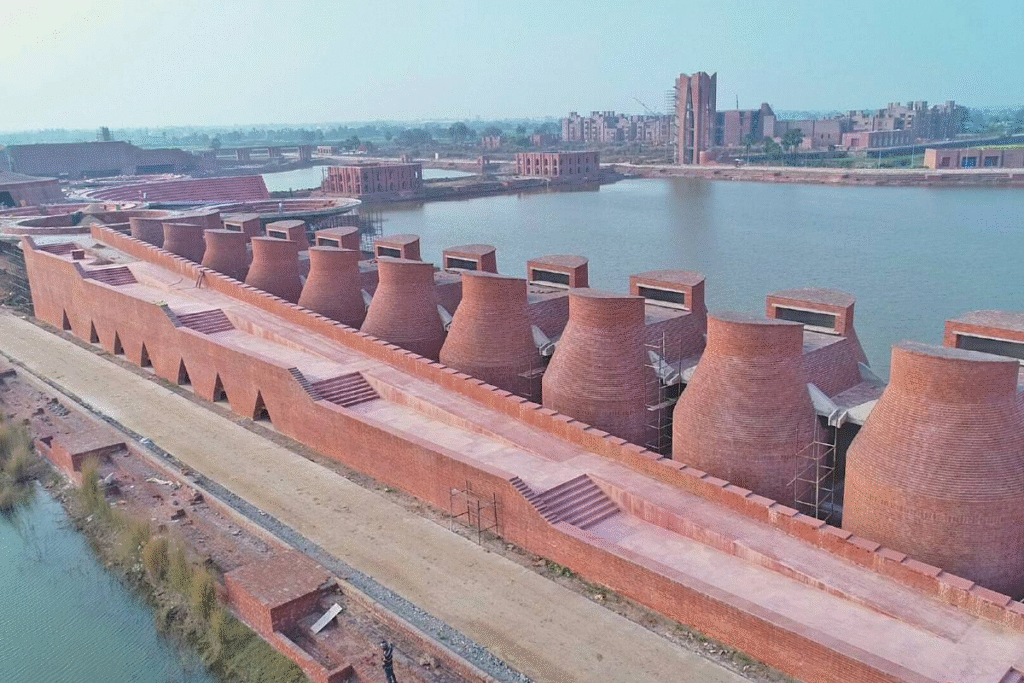
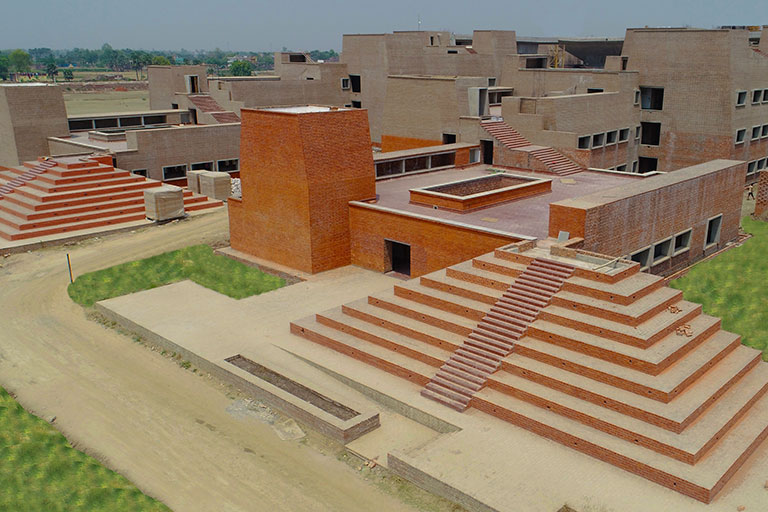
Located in Rajgir, Bihar, the new Nalanda campus spans 455 acres and is India’s first Net-Zero Energy, Water, and Waste university. 6.5 MW Solar Farm and 1.5 MW Biogas Plant power the campus sustainably.
No Air Conditioning– Uses Desiccant Evaporative (DEVAP) cooling technology.
Water Management- Indigenous Ahar-Pyne system and DeWAT waste treatment.
Eco-friendly Materials– Compressed Stabilized Earth Blocks (CSEB) instead of burnt bricks.
Recognized with GRIHA 5-Star Rating and multiple international awards.
Academic Excellence: Bridging Tradition and Innovation
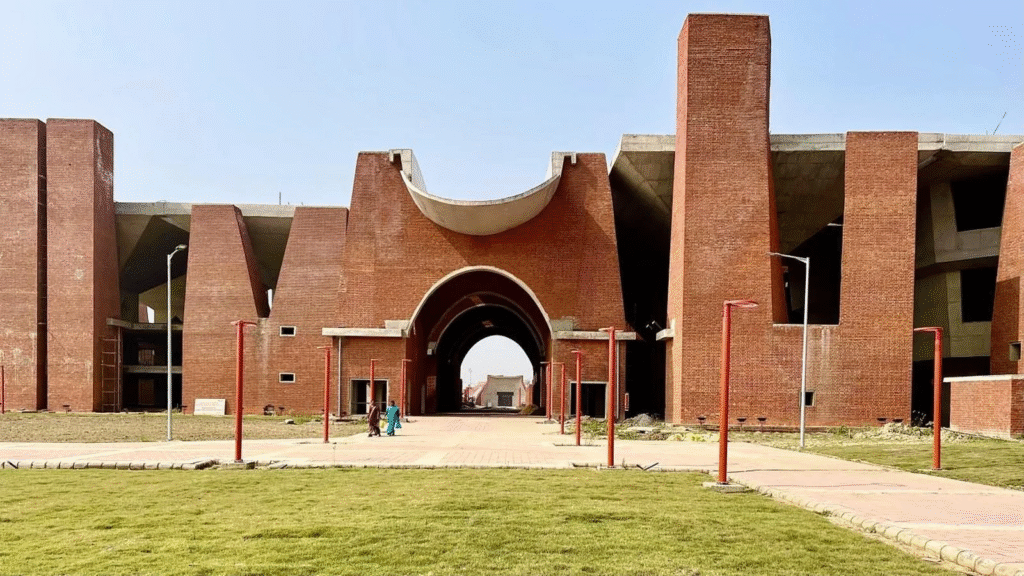
Nalanda offers postgraduate and doctoral programs across diverse disciplines:
Programs Offered: Historical Studies | MA & PhD in Asian, Global & Comparative History | | Ecology & Environment | MSc & PhD in Sustainability & Climate Action | | Buddhist Studies & Comparative Religion | MA in Buddhist Philosophy & World Religions | | Management Studies | MBA in Sustainable Development | | Languages & Literature | MA in World Literature, Diplomas in Sanskrit, Pali, Korean, Japanese | | Hindu Studies | MA in Sanatana Dharma & Indian Knowledge Systems |
Students engage in interdisciplinary research, experiential learning, and global collaborations with institutions like Peking University, Deakin University, and Otani University.
Nalanda’s New Role: Guiding the Future
- Aligns with UN Sustainable Development Goals (SDGs)—especially SDG 7, 12, and 13.
- Promotes peacebuilding, conflict resolution, and Bay of Bengal cooperation through dedicated centers.
- Embodies the spirit of inclusive learning, cultural revival, and ecological responsibility.