

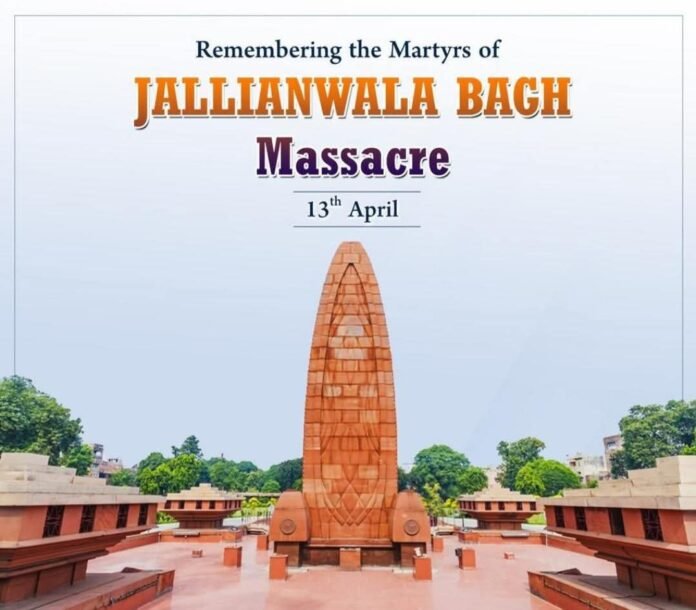
A Tragedy That Changed the Course of History
April 13, 2026, marks the 107th anniversary of the tragic Jallianwala Bagh Massacre —one of the darkest chapters in India’s struggle for independence. On this day in 1919, hundreds of innocent Indians lost their lives in a brutal act of colonial repression that shook the conscience of the nation and the world.
What Happened on April 13, 1919
The massacre took place at Jallianwala Bagh in Amritsar, where thousands had gathered peacefully. The day coincided with Baisakhi, a major festival in Punjab, and many people—men, women, and children—had assembled for celebrations. Others had gathered to protest against the oppressive Rowlatt Act , which allowed detention without trial. Many were also unaware that public gatherings had been banned.
Without warning, British officer General Reginald Dyer marched into the enclosed garden with armed troops and ordered them to open fire on the unarmed crowd. With narrow exits blocked, panic ensued as people tried desperately to escape. The firing continued for about 10 minutes, with soldiers aiming directly at civilians.
According to official British records, 379 people were killed and over 1,200 injured. However, Indian sources and later estimates suggest that the death toll may have ranged from 500 to over 1,000, reflecting the true scale of the tragedy. Many victims even jumped into a well inside the garden to escape the bullets, only to meet a tragic end.
A Turning Point in India’s Freedom Struggle
The massacre became a defining moment in India’s fight against British rule. It exposed the inhumanity of colonial governance and united Indians across regions and communities. Leaders like Mahatma Gandhi intensified the freedom movement through non-cooperation, while Rabindranath Tagore renounced his knighthood in protest against the atrocity.
Jallianwala Bagh transformed public opinion irreversibly, strengthening the demand for complete independence from British rule.
Nation Pays Tribute in 2026
On the 107th anniversary, the nation came together to pay heartfelt tributes to the martyrs. President Droupadi Murmu remembered the victims and honoured their sacrifice, emphasizing their role in shaping India’s journey to freedom.
Prime Minister Narendra Modi also paid homage, stating that the courage and sacrifice of those who perished continue to inspire generations.
Across the country, citizens observed the day with solemn remembrance. At the memorial in Amritsar, tribute ceremonies were held, while educational institutions and organizations conducted events to reflect on the historical significance of the tragedy. The day is observed as a tribute to the martyrs by the Jallianwala Bagh National Memorial Trust as well.
Why the Day Continues to Matter
Jallianwala Bagh Memorial Day is not just about remembering a tragic past—it is about acknowledging the cost of freedom and reaffirming the values of justice, liberty, and human dignity. The massacre remains a powerful reminder of the dangers of unchecked authority and the resilience of a people determined to be free.
Even after 107 years, the echoes of that fateful day continue to resonate. The sacrifice of those innocent lives stands as a solemn testament to India’s enduring spirit and its unwavering commitment to freedom.