

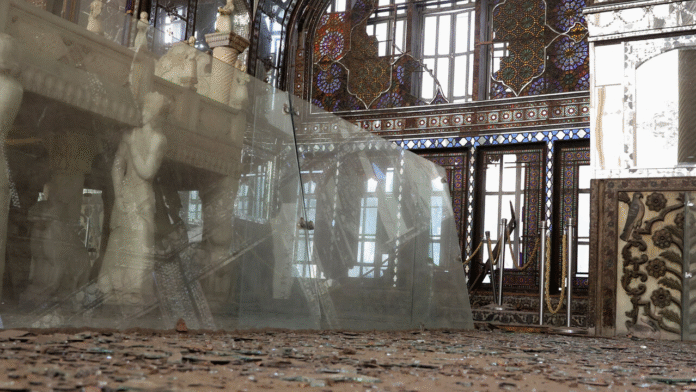
The ongoing conflict involving Iran, Israel, and the United States has raised serious global concern after several UNESCO World Heritage Sites in Iran were reported damaged during recent strikes. International bodies, including UNESCO, have warned that continued escalation could place some of the world’s most treasured cultural landmarks at irreversible risk.
Amid this legacy, Iranian authorities report that ongoing military actions involving the United States and Israel have damaged at least 56 Iranian Heritage sites across the country. According to the Ministry of Cultural Heritage, these affected locations include palaces, mosques, bazaars, and castles of significant historical and architectural value, underscoring the serious impact of the conflict on Iran’s architectural and cultural heritage.
According to preliminary assessments, multiple historic sites in Iran have suffered damage, largely due to blast shockwaves and nearby strikes. Among the affected UNESCO-listed properties are:
- Golestan Palace (Tehran) – Damage to windows and interior sections: The Golestan Palace in Tehran, Iran, was damaged in March 2026 due to shockwaves and debris from nearby U.S.-Israeli airstrikes. The 18th-century palace, known for its intricate mirror mosaics and as a repository of Qajar-era art, sustained broken windows, damaged ceilings, and shattered mirror work, particularly in the Diamond Hall.
- Naqsh-e Jahan Square (Isfahan) – Structural impact to surrounding monuments: This grand rectangular square is aligned with the four cardinal directions and framed by architectural masterpieces—the Imam (Shah) Mosque, Sheikh Lotfollah Mosque, Ali Qapu Palace, and the Qeysarieh Bazaar. Together, these landmarks are not just visual highlights but defining symbols of Isfahan’s cultural and architectural identity. Walking across the vast expanse of Naqsh-e-Jahan feels like stepping back in time. The square transforms with your imagination—you might find yourself strolling through a royal garden, standing on a historic polo ground, or witnessing a grand Safavid-era procession. At another moment, you could be a merchant navigating the bustling corridors of the Grand Bazaar, engaged in trade as it once thrived centuries ago. Originally conceived as a Persian garden, Naqsh-e-Jahan has stood the test of time, witnessing the rise and fall of powerful dynasties—from the Timurids and Aq Qoyunlus to the Seljuks, Safavids, Qajars, and Pahlavis. Every corner of the square holds echoes of its layered past. Now the war has left this pretty square in shatters.
- Masjed-e Jame, Isfahan – Partial damage reported: Located in the historic centre of Isfahan, the Masjed-e Jāmé (‘Friday mosque’) was seen as a stunning illustration of the evolution of mosque architecture over twelve centuries, starting in ad 841. It is the oldest preserved edifice of its type in Iran and a prototype for later mosque designs throughout Central Asia. The complex, covering more than 20,000 m2, is also the first Islamic building that adapted the four-courtyard layout of Sassanid palaces to Islamic religious architecture. Its double-shelled ribbed domes represent an architectural innovation that inspired builders throughout the region. The site also features remarkable decorative details representative of stylistic developments over more than a thousand years of Islamic art.
- Persian Garden (Chehel Sotoun Palace) – Decorative and structural damage: The historic Chehel Sotoun Palace, located in Isfahan, Iran, is one of the most celebrated architectural landmarks of the Persian Safavid era and part of a Unesco World Heritage cultural landscape. The centuries-old palace and garden complex represents the height of Persian art, architecture, and royal ceremonial culture. However, during the ongoing Iran-Israel war, this Unesco site, along with The Golestan Palace was destroyed, bringing Iran’s cultural heritage under fire. “Chehel Sotoun” meaning “forty columns” in Persian is a 17th-century pavilion built during the reign of Safavid rulers Abbas I and later expanded by Abbas II. It was originally constructed as a royal pavilion used for state receptions, diplomatic meetings and court ceremonies.