

Some civilisations are remembered in ruins—but Persia continues to live in words, art, and memory.
In today’s fast-moving world, nations are often reduced to headlines shaped by conflict and politics. Yet beneath these fleeting narratives lies something far more enduring. Iran, frequently seen through the prism of global tensions, carries within it the legacy of one of history’s most refined and resilient civilisations—Persia.
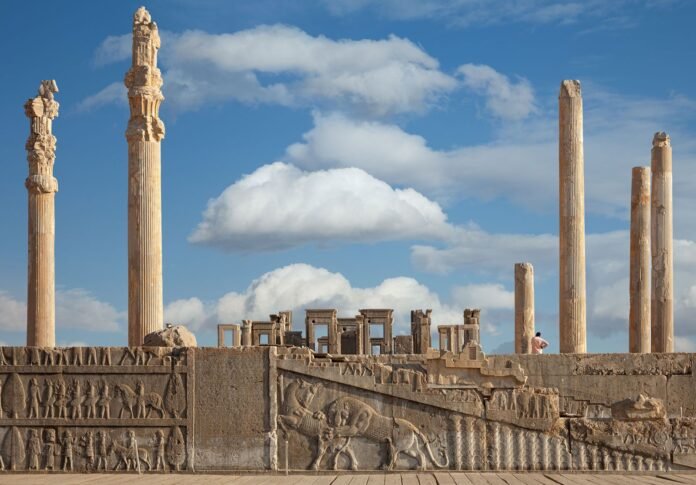
At the heart of this legacy stands Persepolis, a recognised UNESCO World Heritage Site that once symbolised the grandeur of the Achaemenid Empire. Founded in the 6th century BCE under Darius the Great, Persepolis was not merely a city—it was a ceremonial centre where art, architecture, and imperial vision came together. Delegations from across the empire gathered here, bringing tribute and celebrating a shared cultural identity.
History, however, carries both creation and destruction. In 330 BCE, during the campaign of Alexander the Great, Persepolis was set ablaze—an act whose intent historians still debate. The fire consumed palaces and treasures, symbolising the fall of an empire rather than causing it. What remains today are striking ruins—columns, gateways, and intricate reliefs—that continue to speak of both glory and loss.
And yet, even in ruin, Persepolis endures. It stands not as a relic of defeat, but as a powerful reminder that while empires may fall, the essence of a civilisation cannot be erased.
This enduring spirit defines Persian culture itself. It lives on not only in stone, but in thought and expression. The poetry of Rumi, Hafez, and Ferdowsi continues to resonate across centuries, shaping emotions and philosophies far beyond its origins. In Persian culture, poetry is not confined to books—it is woven into everyday life, offering a lens through which love, spirituality, and existence are understood.
From the symmetry of Persian gardens to the lyrical beauty of Farsi , every element reflects a deep pursuit of harmony and meaning. Even today, Persian art, literature, and cinema continue to influence global cultural conversations, quietly extending this ancient legacy into the modern world.
To look beyond the headlines is to discover more than a nation—it is to encounter a civilisation that has endured the rise and fall of empires, yet remains steady and luminous. In the silent stones of Persepolis and the timeless verses of its poets, Persia lives on—graceful, resilient, and impossible to forget.