


Even before India gained independence, there was one remarkable institution that united the princely states, not diplomacy, borders, or political negotiations, but education. Long before the idea of a united India took shape, royals from across regions travelled to Rajasthan to enroll in what the British proudly called the “Eton of the East”, Mayo College, Ajmer.
From the early 1900s to the mid-20th century, heirs to royal thrones travelled from every corner of the subcontinent—sometimes even beyond its borders, not for diplomacy or leisure, but to study together. Princes who would later rule or shape regions with distinct cultures, languages, and histories, first shared the same classrooms, sports fields, and dining halls at Mayo.
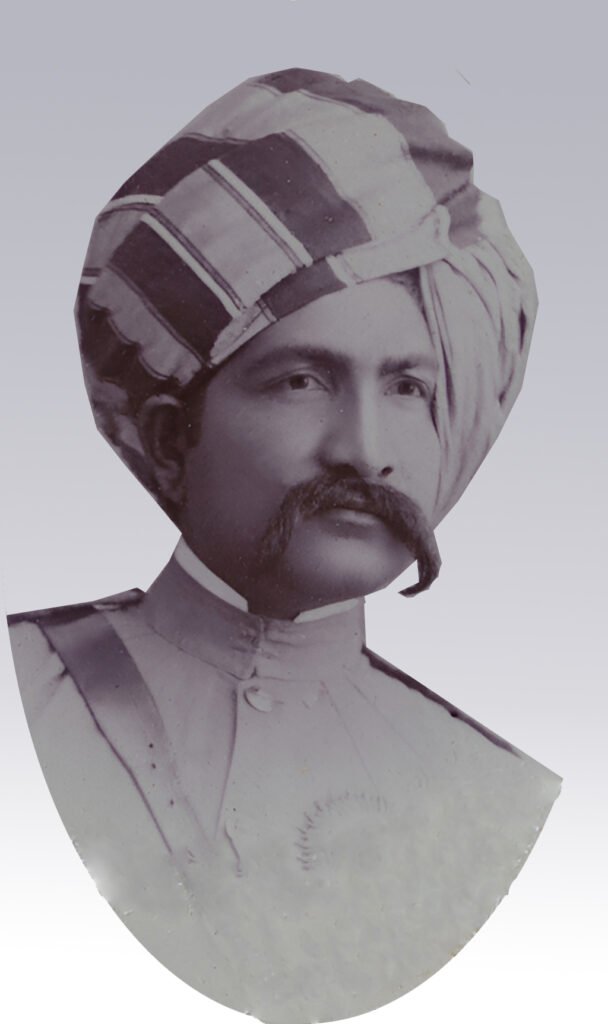
First student of Mayo College, HH Maharaja Mangal Singh from Alwar
A Training Ground for Future Monarchs
It is almost astonishing to imagine that Yuvaraja Sri Sir Kanteerava Narasimharaja Wadiyar of Mysore, from southern India, and princes as distant as Karan Singh of Jammu & Kashmir once walked the same campus hallways as classmates.
Among its most well-known alumni was Maharaja Hari Singh, the last ruling monarch of Jammu and Kashmir. He joined Mayo College in 1908 at age 13, just before the passing of his father in 1909. His years at the school profoundly shaped his administrative thinking, exposure to modern governance, and educational reform outlook.
Hari Singh remained steadily connected to the institution throughout his life. As a leading member of the school’s governing council, he played an active role in its development. In 1912, he funded the construction of the iconic Kashmir House, a historic boarding facility still in use today.
More than a century later, his family continues that legacy. In 2023, his grandson Vikramaditya Singh was nominated to the General Council of the college, reinforcing the royal family’s generational bond.
A Global Royal Connection: The Sultanate of Oman
Mayo’s influence extended beyond India’s borders. One of its most distinguished foreign alumni was Sultan Said bin Taimur, the 13th Sultan of Oman, who studied at Mayo College from 1922 to 1927. His time at the school marked the beginning of a deep and enduring cultural relationship between Oman and India.
The legacy continued when his nephew, Sayyid Fahr bin Taimur Al Said, also attended Mayo College. Years later, as the Deputy Prime Minister of Oman, he returned to the campus in 1985 as the chief guest for its prize-giving ceremony—symbolizing the continuity of royal ties.
This relationship was later commemorated through the construction of Oman House and the Oman Guest House on the Mayo campus, both bearing the name of the Sultanate and serving as architectural markers of a cross-cultural friendship. The educational legacy extended further when Sultan Qaboos bin Said Al Said, son of Sultan Said bin Taimur and one of the most influential monarchs of modern Oman, continued his education in India, completing part of his early schooling in Pune.
The Royal Network That Built Mayo
Much of Mayo College’s impressive campus and infrastructure was shaped through princely patronage. Some notable contributions include:
- Ajmer House (₹60,635; mainly from imperial funds)
- Colvin House (1913)—funded by rulers of Rajputana and other states
- Donation by the Maharaja of Mysore (1903) for racquet court repairs
- Expansion of Alwar Boarding House funded by H.H. the Maharaja of Alwar
- ₹20,000 donation from H.H. Scindia of Gwalior for science equipment in 1905
- Bikaner Pavilion for cricket gifted by the Maharaja of Bikaner
- ₹37,000 donation for medical infrastructure by the Maharao of Kotah
- ₹1 lakh contribution from the Maharaja of Jodhpur (1911) for additional land
- Donations from rulers of Tirwa, Tehri Garhwal, and Bhadawa
- Maharaj Deb Shamsher Jang of Nepal contributed ₹20,000 to the Endowment Fund (1912)
- The Mayo College Temple, built in 1936 by Maharaja Yagya Narayan Singh of Kishangarh
More Than a School, A Shared Heritage
Mayo College was not merely an educational institution; it was a transformative idea. It helped create a generation of rulers who, despite governing diverse territories, shared mutual respect, understanding, and a modern worldview. It served as one of the earliest spaces where the idea of a unified India began taking shape, not through political blueprints, but through friendships, shared learning, and lived experience.
In an era defined by princely autonomy, Mayo College became a bridge—linking kingdoms, cultures, and even nations.
A century later, its legacy continues, not just in its architecture or alumni records, but in the stories of those who were shaped within its sandstone walls.