

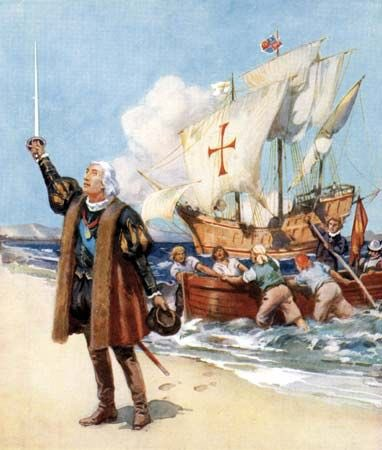
Columbus Day, observed on the second Monday of October, marks Christopher Columbus’s arrival in the Americas on October 12, 1492 — an event long celebrated as the beginning of the New World. But over time, the day has evolved from a symbol of exploration to a focal point of historical debate.
Though his voyage was financed by Spain’s King Ferdinand and Queen Isabella, Columbus himself hailed from Genoa, Italy. Italian Americans, proud of his heritage, became key advocates for honoring his legacy. The first major celebration took place in 1792 in New York City, organized by the Society of St. Tammany (also called the Columbian Order).
However, the national recognition of the holiday came under tragic circumstances. In 1891, the lynching of 11 Italian Americans in New Orleans — one of the largest mass lynchings in U.S. history — shocked the world and strained U.S.–Italy relations. To ease tensions, President Benjamin Harrison declared October 12, 1892, a one-time national holiday marking the 400th anniversary of Columbus’s voyage.
By 1937, Columbus Day had become a federal holiday, thanks to the efforts of Italian American groups and Congressman Peter Rodino. Across the U.S., it was celebrated with grand parades, patriotic speeches, and school events, often portraying Columbus’s ships — the Niña, Pinta, and Santa María.
Yet by the late 20th century, the holiday faced growing criticism. Many began to question the glorification of Columbus, linking his arrival to the colonization and suffering of Indigenous peoples. The 1992 quincentennial especially intensified this debate, leading to the rise of Indigenous Peoples’ Day — a reimagining of the holiday that honors Native American history, resilience, and culture.
Outside the U.S., the legacy of Columbus is marked differently. In Spain and Italy, it remains a day of commemoration. In much of Latin America, it’s known as Día de la Raza (“Day of the Race” or “Day of the People”), celebrating the blend of Indigenous and European cultures that shaped the region’s identity.
Today, Columbus Day continues to provoke reflection — not just about one explorer’s voyage, but about how history is remembered, retold, and reconciled.