

(image: Orissapost.com)
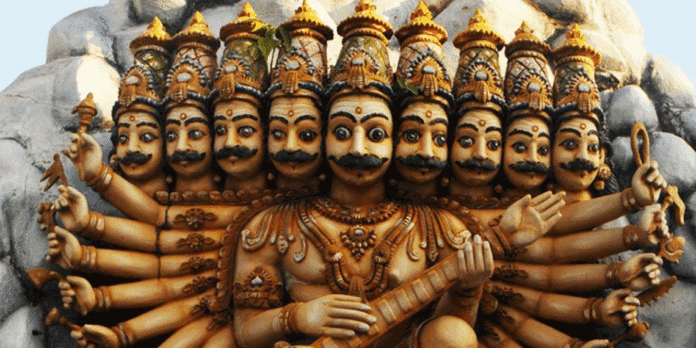
Every Dussehra, across India, flames rise and effigies fall — Ravan, the ten-headed villain, is vanquished again and again. But in the heart of Madhya Pradesh, a few defiant towns refuse to play along. No fire. No fury. No Ravan Dahan. Instead, they garland him. Pray to him. Protect his legacy.
Khanpura, Mandsaur
- Rituals: Locals offer prayers and garlands to Ravan’s statue instead of burning it.
- Reason: Mandsaur is believed to be the maika (maternal home) of Mandodari, Ravan’s wife. Hence, Ravan is considered a revered damaad (son-in-law). Burning his effigy would be culturally disrespectful.
Bhatkhedi, Rajgarh
- Rituals: Special pujas are held for Ravan, Kumbhkaran, and Meghnad. A royal procession is organized, ending with blessings from local priests.
- Reason: The village honors Ravan as a great devotee of Shiva and a learned scholar. The tradition promotes peace and brotherhood instead of destruction.
Ravan Gaon, Vidisha
- Rituals: Worship at a temple housing a 10-foot reclining idol of Ravan. Locals perform aarti and chant mantras.
- Reason: Ravan is seen as a symbol of intellect and Shiva devotion. The village name itself reflects pride in his legacy.
Sivda, Datia
- Rituals: Quiet prayers and oil lamps are lit in Shiva temples. No effigy burning.
- Reason: Deep-rooted belief that burning Ravan near a Shiv Mandir would anger Lord Shiva, who considered Ravan a devout follower.
Mandla, Mandla
- Rituals: Tribal communities perform folk dances and rituals honoring Ravan as an ancestor.
- Reason: Gond tribes in the region worship Ravan as a powerful king and spiritual figure, not a villain.