

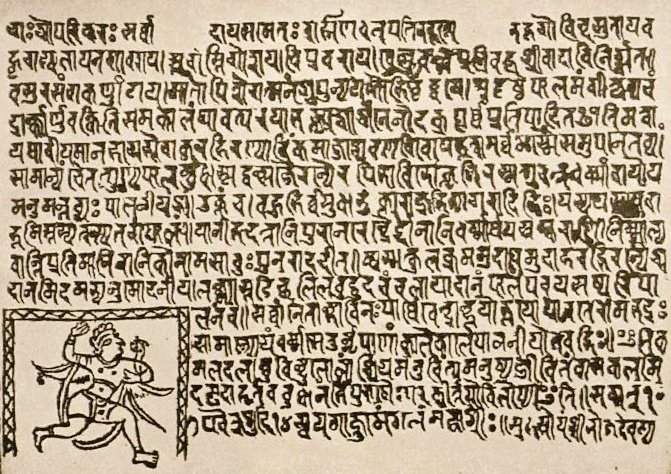
In a recent address during Mann Ki Baat, Narendra Modi brought national attention to the immense historical value of ancient manuscripts preserved at the Abhay Jain Granthalaya. His remarks were not merely ceremonial—they underscored a larger cultural and intellectual movement aimed at rediscovering and preserving India’s civilizational knowledge.
What Are Copper-Plate Manuscripts?
Copper-plate manuscripts are inscriptions engraved on sheets of copper, widely used in ancient and medieval India as a durable medium for recording important information. Unlike palm-leaf or paper manuscripts, copper plates were designed to withstand time, climate, and decay, making them one of the most reliable historical sources available today.
Historical and Cultural Significance
These manuscripts serve as a primary source of authentic historical data, offering deep insights into:
1. Governance and Administration
Copper plates frequently recorded:
- Royal land grants
- Taxation systems
- Administrative structures
They reveal how kingdoms functioned and how rulers exercised authority.
2. Religious and Philosophical Traditions
A significant portion of the manuscripts at Abhay Jain Granthalaya relates to Jainism, including:
- Agamas (canonical scriptures)
- Teachings of Jain Acharyas
- Biographies of Tirthankaras
These texts provide a window into India’s spiritual and ethical frameworks.
3. Socio-Economic Systems
The inscriptions often document:
- Land ownership patterns
- Donations to temples and institutions
- Community structures
This makes them invaluable for understanding ancient Indian society and economy.
Role of Abhay Jain Granthalaya in Preservation
The Abhay Jain Granthalaya has emerged as one of Rajasthan’s most important repositories of manuscripts. Built through decades of dedicated effort, it houses a vast collection that reflects India’s intellectual and cultural diversity.
Today, it stands as:
- A research hub for historians and scholars
- A model institution for manuscript preservation in India
- A bridge connecting traditional knowledge with modern technology
Bharatam Gyan Mission: A Nationwide Initiative
PM Modi also emphasized the importance of the Bharatam Gyan Mission, a large-scale effort to:
- Survey ancient manuscripts across India
- Digitize and catalog them
- Make them accessible to future generations
Key Achievements in Rajasthan:
- Survey of over 1.25 million manuscripts
- Digital uploading to a centralized portal
- Collaboration among scholars, archivists, and institutions
This initiative represents a systematic revival of India’s knowledge systems.
Why Preservation and Digitization Matter
The Prime Minister highlighted that preservation alone is not enough—digitization is essential. Here’s why:
- Prevents physical deterioration of fragile manuscripts
- Enables global access for researchers and students
- Helps integrate ancient wisdom into modern academic discourse
- Strengthens cultural identity and continuity
Analytical Perspective: Beyond Heritage
From an analytical standpoint, these manuscripts are not just relics—they are data archives of ancient India. Their study can contribute to:
- Rewriting historical narratives with primary evidence
- Understanding indigenous systems of knowledge in fields like governance, ethics, and ecology
- Enhancing India’s position in global intellectual history
Conclusion
The mention of copper-plate manuscripts in Mann Ki Baat signals a broader shift toward recognizing and revitalizing India’s intellectual heritage. Institutions like the Abhay Jain Granthalaya, supported by initiatives such as the Bharatam Gyan Mission, are playing a pivotal role in this transformation.
These manuscripts are not just artifacts of the past—they are living knowledge systems, waiting to be explored, understood, and integrated into the future.