

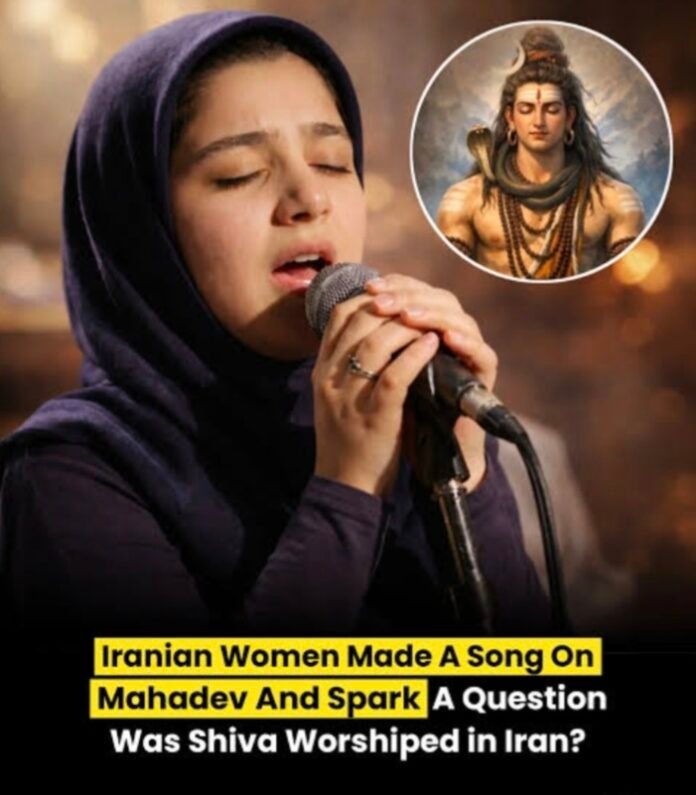
A viral video of an Iranian singer performing a devotional chant dedicated to Lord Shiva has captured widespread attention, igniting both admiration and debate across social media. The performance, where the singer chants “Har Har Mahadev, Shankara” in a blend of Persian and Sanskrit, has been praised for its soulful delivery and striking cultural fusion. For many viewers, it feels like a powerful moment of spiritual unity that transcends geography and religion.
https://www.instagram.com/reel/DWxrYaYk8Qe/?igsh=MW1mbGpjZ3A0OXV0aw==
What makes the video particularly compelling is its visual and emotional appeal. The imagery often accompanying the song—such as the Shiva lingam and traditional devotional settings—adds a sense of timelessness. Combined with the melodic richness of Persian vocals, the performance creates an atmosphere that feels ancient, almost as if it is reviving a forgotten cultural link between India and Persia.
However, this perception has also led to an important question: does the video point to a shared historical tradition of Shiva worship in Iran? Most historians and cultural experts suggest otherwise. While India and ancient Persia share Indo-Iranian roots, including linguistic and early cultural connections, there is no concrete evidence of an unbroken tradition of Shiva worship in Persian history. Over time, the religious and cultural trajectories of the two regions evolved in distinct ways.
So why does the song feel so authentic and rooted in history? The answer lies in the nature of artistic expression. Music has a unique ability to blend influences and evoke familiarity, even across cultures. In this case, the fusion of Persian language with Indian devotional elements creates something that feels deeply spiritual and historically connected, even if it is largely a modern artistic creation.
This viral moment reflects a broader trend of what can be called cross-cultural or fusion spirituality. In today’s interconnected world, artists are increasingly drawing from diverse traditions to create expressions that resonate globally. The Iranian singer’s performance is less about historical accuracy and more about shared human emotion—devotion, music, and connection.
Ultimately, whether viewed as a cultural bridge or a creative experiment, the song highlights the power of art to spark dialogue and bring people closer. It may not rewrite history, but it certainly adds a new, harmonious note to the ongoing conversation between civilizations.