

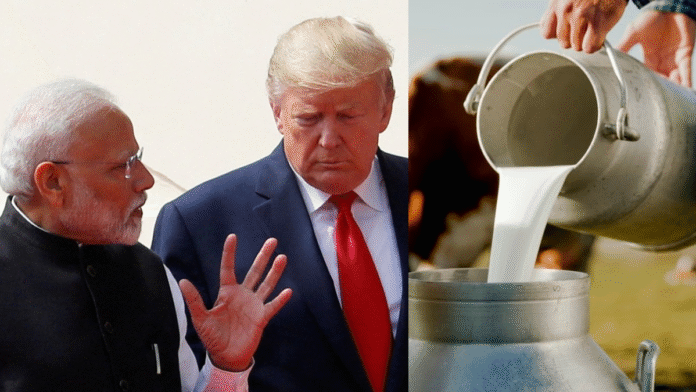
In India, milk is more than nourishment—it’s a ritual, a symbol of purity, and a thread woven into the spiritual and cultural fabric of daily life. From temple offerings to household prayers, it flows with reverence. But now, this sacred liquid has become the center of a storm that’s shaking diplomatic tables and rattling millions of Indian hearts. The controversy? Something called “non-veg milk.”
The term sounds absurd at first—how can milk, a vegetarian staple, be non-vegetarian? The answer lies not in the milk itself, but in the diet of the cow that produces it. In the United States and several other countries, cows are routinely fed animal-based products—bone meal, fish scraps, pig and horse blood, even poultry litter. These ingredients are used to boost protein and fat content in cattle feed, making dairy production more efficient and cost-effective. But in India, where cows are traditionally fed a strictly vegetarian diet, this practice is seen as spiritually contaminating. Milk from such cows is considered impure, unfit for consumption, and absolutely unacceptable for religious rituals.
This clash of dietary ethics has now become a major stumbling block in the India–US trade negotiations. Both nations are aiming to finalize a $500 billion bilateral trade deal by 2030, but India has drawn a firm line in the sand: no dairy imports unless the milk comes from cows fed a 100% vegetarian diet. The government insists on strict veterinary certification, demanding proof that imported dairy products are free from any connection to animal-based feed. For India, this isn’t just a technical requirement—it’s a matter of faith, tradition, and cultural sovereignty.
The United States, however, sees things differently. It argues that milk is vegetarian by nature, regardless of what the cow eats. American dairy exporters have labeled India’s demands as an “unnecessary trade barrier” and have taken the issue to the World Trade Organization (WTO). They point out that their dairy industry, which exported over $8.2 billion worth of products last year, stands to gain significantly from access to India’s vast market—the largest milk consumer and producer in the world.
But India isn’t budging. The stakes are too high. The dairy sector here supports over 80 million jobs and contributes ₹7.5–9 lakh crore to the national economy. According to a report by the State Bank of India, opening the market to US dairy could lead to an annual loss of ₹1.03 lakh crore, devastating small-scale farmers and rural livelihoods. With elections on the horizon, the government is under pressure to protect its domestic industry and uphold cultural values.
The emotional response from the public has been intense. Social media erupted with outrage as reports surfaced about the contents of American cattle feed. Hashtags like #MilkOfMenace and #SacredNotScientific began trending. Religious leaders condemned the idea of “blood-fed milk,” and activists called for boycotts. For many Indians, the thought of consuming butter or ghee made from such milk is not just distasteful—it’s sacrilegious.
This isn’t just a trade dispute—it’s a cultural collision. On one side is a nation rooted in tradition, where even the cow’s diet is a matter of spiritual importance. On the other is a global superpower driven by efficiency and economics. And caught in the middle is a humble glass of milk, now transformed into a symbol of resistance, identity, and belief.